EdX

Supporting Employee Wellbeing (edX)

Supporting Employee Wellbeing (edX)

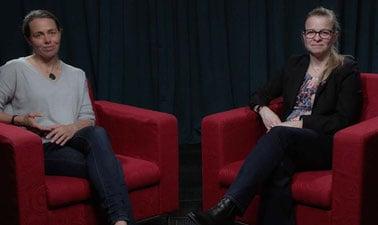
Learn the principles required to build psychologically healthy workplaces, as part of the UCx Organizational Psychology MicroMasters. Psychologically healthy workplaces are increasingly becoming a prerequisite for high performance. But how can organizations create workplaces that support and promote wellbeing among employees? Using psychological theories and the latest research, this course explores factors which promote wellbeing and create inclusive workplaces, where employees are able to perform at their best.

Class Deals by MOOC List - Click here and see EdX's Active Discounts, Deals, and Promo Codes.

We will start by defining wellbeing and how it links to other concepts that we’ve discussed in the course, like engagement. We’ll talk about what factors promote wellbeing at work and how organizations can ensure these factors are in place.
Another key topic in this course is how to prevent stress and burnout, and we’ll spend our next section learning about what these concepts mean, how they are related to each other and to wellbeing, and how they can be prevented.
The concept of work-life balance is often discussed in media as an important factor, and we’ll take a good look at what this is, how it relates to wellbeing, and how it can be supported by organizations.
Next, we move on to psychological safety and inclusion, two related and increasingly important topics in the workplace. We’ll look at how to create psychologically safe workplaces and how this supports inclusion, and performance.
Finally, we’ll spend some time exploring the role of meaningful work for wellbeing, how employees can be supported in feeling like their jobs matter, and what employees can do themselves to feel better about their work.
This course is part of the UCx Micromasters in Organisational Psychology, each teaching key topics that will increase your knowledge about this exciting field. In order to qualify for the MicroMasters Credential you will need to earn a Verified Certificate in each of the five courses.

What you'll learn

  • Definitions of wellbeing, stress, psychological safety, work-life balance
  • Models of wellbeing and stress
  • How organizations can support wellbeing and minimize stress
  • How workplaces can create inclusion by focusing on psychological safety
  • How organizations can support work-life balance and the experience of meaning at work
Go to Class
MOOC List is learner-supported. When you buy through links on our site, we may earn an affiliate commission.

Related Courses

Bienestar, equidad y derechos humanos (Coursera) Coursera
Universidad de los Andes

Bienestar, equidad y derechos humanos (Coursera)

En la actualidad es muy frecuente escuchar debates en torno a los derechos humanos, la equidad y el bienestar de la población. Muchas personas incluyen estos conceptos en sus conversaciones cotidianas y también son parte de la mayoría de documentos de política pública, programas de gobierno y proyectos de diversas organizaciones. Sin embargo, nuestra experiencia en docencia, investigación, intervención y evaluación nos ha permitido establecer que pocas veces lo que se plantea acerca de estos temas se materializa en acciones concretas que cambien tanto la manera como las personas se relacionan entre sí como la valoración que hacen de la vida que tienen.

Sep 28th 2026
3 Weeks
Well and Able - Improving the Physical Health of People with Intellectual Disability (edX) EdX
University of Queensland,UQx

Well and Able - Improving the Physical Health of People with Intellectual Disability (edX)

Learn how to help those with intellectual disability achieve better health. This health course will examine the specific physical health issues that affect people with an intellectual disability including, oral health, syndrome specific health issues, health communication, especially for non-verbal patients, sexual health, and interactions between tertiary and primary healthcare systems. There is a special section on complex care including issues associated with aging and spasticity, and the health impacts of epilepsy.

Self Paced
Self-Paced
Meditation: A way to achieve your goals in your life (Coursera) Coursera
Korea Advanced Institute of Science and Technology - KAIST

Meditation: A way to achieve your goals in your life (Coursera)

Do we truly think that we have lived for ourselves? Perhaps we have lived for money, love, fame, family and pride etc.? Therefore, we don’t seem to be satisfied even though we are full of those things. It is because that we don’t know ourselves. Eric Fromm talked about human nature as two modes of being: “To Have” and “To Be”. If we are “Having” the nature of possessions, we are not satisfied, and feel empty and futile. Then, how can we be “Being” the nature of our inner-selves? Sometimes, we happened to be aware of this “Being” nature and try to change ourselves, but fail. But, because of our daily routines, it’s easily forgotten. And more it is hard to escape from our unwanted minds controlling us.

Sep 28th 2026
5-12 Weeks
Psychological Safety: Keys to Effective Virtual Teamwork (edX) EdX
Indiana University,IUx

Psychological Safety: Keys to Effective Virtual Teamwork (edX)

This course will unlock the key metrics, strategies and techniques to create psychological safety in order to build effective remote teams. Psychological safety is the determining factor in effective, high-performing teams. Upwork estimates 22% of the workforce (36.2 million Americans) will work remotely by 2025.

Self Paced
Self-Paced
Reign of Pain (Coursera) Coursera
Michigan State University

Reign of Pain (Coursera)

Welcome to the comprehensive course on understanding and addressing chronic pain and associated conditions. This course spans seven modules, each designed to provide valuable insights and practical knowledge. From exploring the brain's role in pain perception to identifying the emotional and psychological factors at play, we delve deep into the mind-body connection.

Oct 5th 2026
5-12 Weeks
The Science of Generosity: Do Good...Feel Good (Coursera) Coursera
University of Pennsylvania

The Science of Generosity: Do Good...Feel Good (Coursera)

What does it mean to be generous? Can doing good actually make you feel good? In this course, we’ll hear from multiple experts and explore the many facets of generosity by looking closely at the meanings, traits, and motivations behind giving behaviors across communities and cultures. We’ll discuss how generosity contributes to our own happiness and well-being as well as the happiness and well-being of our loved ones, our local communities, and our global society.

Oct 5th 2026
4 Weeks
Positive Psychiatry and Mental Health (Coursera) Coursera
The University of Sydney

Positive Psychiatry and Mental Health (Coursera)

In today’s world, mental illness and distress are common and these account for a significant burden of disability within our community. At the same time, there is a growing interest in understanding and enhancing positive mental health and wellbeing; particularly from developments in the fields of positive psychology and mental health promotion. Positive Psychiatry is a new term (Jeste et al 2016) that describes a dual approach to mental health, where we build strengths, supports and healthy lifestyles as well as treating illness and distress.

Oct 5th 2026
5-12 Weeks
Existential Well-being Counseling: A Person-centered Experiential Approach (edX) EdX
KU Leuven University,KULeuvenX

Existential Well-being Counseling: A Person-centered Experiential Approach (edX)

Explore existential themes in your personal and professional life. Develop strengths and counseling skills to improve your well-being and the well-being of others. This humanities course offers you the opportunity to explore what really matters in life and teaches you how to nurture your well-being and enhance the well-being of others.

Self Paced
Self-Paced
Diseño de proyectos para promover el bienestar (Coursera) Coursera
Universidad de los Andes

Diseño de proyectos para promover el bienestar (Coursera)

Tú y yo, al igual que la mayoría de personas, con las acciones que realizamos tenemos el propósito de mejorar las circunstancias en las que viven las personas. Pero ¿Cómo llevamos a cabo esa tarea? ¿Qué tan claro tenemos qué es lo que queremos hacer, para qué lo queremos hacer y cómo lo vamos a hacer? ¿Qué tanto anticipamos los posibles resultados de lo que proponemos y los factores del contexto que pueden facilitarlos u obstaculizarlos para aprovecharlos o contrarrestarlos? ¿Cómo sustentamos que con lo que hacemos efectivamente podemos contribuir al bienestar de las personas? Nuestra experiencia nos muestra que muchas iniciativas para promover el bienestar se realizan sin que previamente se adelante un proceso riguroso de planificación.

Sep 28th 2026
5-12 Weeks