Managing Emotions in Times of Uncertainty & Stress (Coursera)

Offered by Yale University,
Managing Emotions in Times of Uncertainty & Stress (Coursera)

Developed by the Yale Center for Emotional Intelligence, Managing Emotions in Times of Uncertainty & Stress will provide participants with the knowledge, skills, and strategies to understand and manage their emotions and those of their students. The 10-hour online course is designed for school staff, including teachers, paraprofessionals, counselors, principals, and non-teaching staff in preK-12 schools.

Class Deals by MOOC List - Click here and see Coursera's Active Discounts, Deals, and Promo Codes.

What You Will Learn

  • Educate school staff in the science and impact of stress
  • Provide school staff with the opportunity to build and apply social and emotional skills and strategies
  • Offer strategies for helping students to identify and manage their emotions
  • Provide resources and ideas that are relevant during this time of heightened stress and uncertainty

Syllabus

WEEK 1
Introduction to SEL and Why Emotions Matter
Social and emotional skills are more important now than ever. As educators, we can find ways to better identify and manage our own emotions, which in turn, can help our students identify and manage theirs. In this introductory week, we’ll unpack how emotions can help and hinder attention, decision making, relationships, health, and performance.

WEEK 2
Identifying Our Emotions
In this section, you'll focus on how to identify your own emotions, which is an essential first step to building emotional intelligence skills. You'll explore how to recognize, understand, and accurately label emotions using the Mood Meter. This section builds a foundation for the rest of the course, where you'll learn how to manage your emotions and help students to manage theirs.

WEEK 3
Managing Our Own Emotions with Action Strategies
In this section, you'll apply what you've learned about identifying your emotions to the practice of managing your emotions. You'll explore and reflect on a series of "action strategies" to help you manage your emotions in healthy, productive ways.

WEEK 4
Managing Emotions by Shifting How We Think
While the previous section focused on "action strategies" to support healthy emotion management, this section focuses on "thought strategies." You'll consider research-based ways to shift the way you think to shift the way you feel, and consider how you can incorporate these strategies into your daily life.

WEEK 5
Becoming a Culturally Responsive Emotion Scientist
This section focuses on applying strategies for approaching your own and others' emotions in scientific and culturally responsive ways. You'll have the opportunity to describe the biases involved in identifying and managing emotions, as well as to reflect on the potential impact of your own biases on your interactions with others.

WEEK 6
Identifying Others' Emotions
While the first half of the course focused on identifying your own emotions, this section focuses on strategies for improving your awareness of others' emotions (especially the emotions of your students). You'll explore the barriers to understanding others' emotions and ways to improve this skill as an emotion scientist.

WEEK 7
Helping Others Manage Emotions
This section takes your skills in identifying others' emotions a step further, providing research-based steps to help others manage their emotions. You will be introduced to the concept of emotion co-regulation, as well as a five-step process to support students in moments of high stress.

WEEK 8
Making a Commitment to Lasting Change
This final section brings together everything so far in the course. You'll look at your action plans from each section of the course and make a commitment to lasting change.


Go to Class
MOOC List is learner-supported. When you buy through links on our site, we may earn an affiliate commission.

Related Courses

Music for Wellness (Coursera) Coursera
Berklee College of Music

Music for Wellness (Coursera)

You love music. You listen to music all the time. Maybe you sing, play an instrument, or compose music. You don’t need to have musical talent to use music to enhance your well being, and even your health. Learn simple techniques to enrich your mind, body, and spirit through music. The methods can be applied in your daily life, particularly when you are feeling down or stressed out.

Aug 17th 2026
4 Weeks
Positive Psychology: Applications and Interventions (Coursera) Coursera
University of Pennsylvania

Positive Psychology: Applications and Interventions (Coursera)

Positive interventions are one of the building blocks for the application of positive psychology in our day-to-day lives. In this course taught by Dr. James Pawelski, we explore positive interventions through theory, research and practice. We provide learners the basic tools for using and measuring positive psychology in professional or personal contexts. Suggested prerequisite: Positive Psychology: Martin E. P. Seligman’s Visionary Science.

Aug 3rd 2026
4 Weeks
Mindfulness_An Approach to Stress Reduction (Coursera) Coursera
Korea Advanced Institute of Science and Technology - KAIST

Mindfulness_An Approach to Stress Reduction (Coursera)

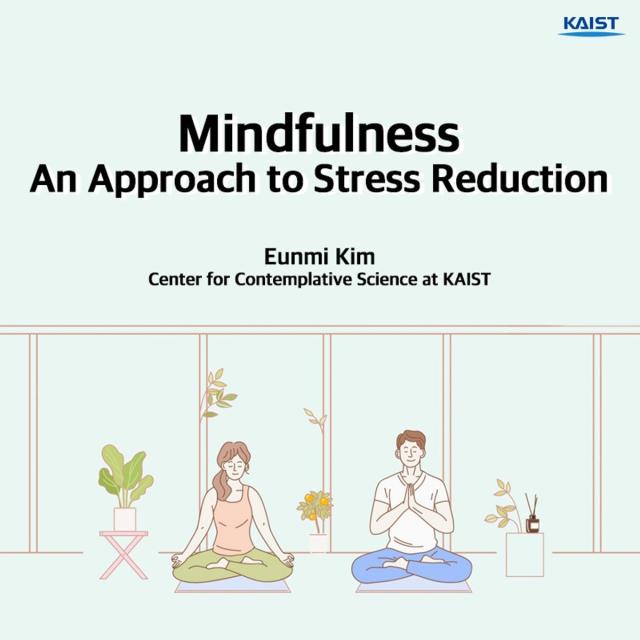
An essential guide to cultivating a healthy mindset and a stress-free lifestyle through practicing the art of mindfulness meditation—a discipline that ultimately leads to a profound understanding ourselves and our surroundings. Mindfulness is a simple, yet effective practice achievable by all people of all ages. It alleviates stress and negativity, while it restores a calm and serene lifestyle. Learning the practice of mindfulness is straightforward and its benefits come fast. In this course, we provide essential tips through sample guided meditations to get you started on living a happier and less stressful life. Take a deep breath, relax, and focus your attention.

Aug 17th 2026
5-12 Weeks
The Softer Side of Science Communication (Coursera) Coursera
University of Colorado Boulder

The Softer Side of Science Communication (Coursera)

In this course, you will continue to explore how to develop and implement evidence-based methods for science communication. Here we’ll be looking at the softer but no less important side of science communication. We’ll cover the basics of human emotion, building connection with your audience through empathy and authenticity, how improv can improve your science communication game, non-verbal communication, and managing adversity in science communication. We’ll close with a discussion of how to be an inclusive and trauma-informed science communicator.

Aug 3rd 2026
4 Weeks
Self Awareness and the Effective Leader (Coursera) Coursera
Rice University

Self Awareness and the Effective Leader (Coursera)

Part of being an effective leader is learning how to play to your strengths and overcome characteristics that don't lend to good leadership practices. During the course, you will examine your own strengths and learn ways to use them in a leadership role. Learn to manage stress and solve problems creatively. Throughout the course, you will also build a tool kit of useful techniques that you can begin using right away in your engineering career.

Aug 3rd 2026
5-12 Weeks
Synapses, Neurons and Brains (Coursera) Coursera
Hebrew University of Jerusalem

Synapses, Neurons and Brains (Coursera)

These are very unique times for brain research. The aperitif for the course will thus highlight the present “brain-excitements” worldwide. You will then become intimately acquainted with the operational principles of neuronal “life-ware” (synapses, neurons and the networks that they form) and consequently, on how neurons behave as computational microchips and how they plastically and constantly change - a process that underlies learning and memory.

Jul 27th 2026
5-12 Weeks
Life 101: Mental and Physical Self-Care (Coursera) Coursera
University of California, Irvine

Life 101: Mental and Physical Self-Care (Coursera)

This course will cover various topics that would teach students healthy lifestyle choices, the importance of mental and physical health and self-care. For each topic, an evidence-based lecture that would include scientific evidence will be presented and then students will be provided practical methods to practice what they have learned from the lectures. One of the main goals of this course is to inspire students to adopt a healthy lifestyle.

Aug 17th 2026
5-12 Weeks
Tools and Techniques for Managing Stress (Coursera) Coursera
Starweaver

Tools and Techniques for Managing Stress (Coursera)

Welcome to the "Tools and Techniques for Managing Stress" course! This course offers valuable tools and techniques to effectively manage and cope with stress in both personal and professional domains. Through this program, students will acquire strategies to identify stressors, develop comprehensive stress management plans, and implement relaxation techniques that foster overall well-being.

Aug 17th 2026
1 Week
Mindfulness and Well-being: Living with Balance and Ease (Coursera) Coursera
Rice University

Mindfulness and Well-being: Living with Balance and Ease (Coursera)

This is the sequel course to Foundations of Mindfulness that will continue to provide a broad overview of the fundamental concepts, principles, and practices of mindfulness. With interactive exercises to help students explore their own attitudes, mental habits and behaviors, Foundations of Mindfulness series offers a pathway for living with more freedom, authenticity and ease. Featured components of the course include experiential exercises, guided meditations, personal reflection and interactive discussions.

Aug 17th 2026
4 Weeks
Introduction to Psychology (Coursera) Coursera
Yale University

Introduction to Psychology (Coursera)

What are people most afraid of? What do our dreams mean? Are we natural-born racists? What makes us happy? What are the causes and cures of mental illness? This course tries to answer these questions and many others, providing a comprehensive overview of the scientific study of thought and behavior. It explores topics such as perception, communication, learning, memory, decision-making, persuasion, emotions, and social behavior. We will look at how these aspects of the mind develop in children, how they differ across people, how they are wired-up in the brain, and how they break down due to illness and injury.

Aug 3rd 2026
5-12 Weeks
Digital Communication and Emotion (Coursera) Coursera
Arizona State University

Digital Communication and Emotion (Coursera)

Communication online can be hard, especially when emotions get involved. Whether you’re facing someone’s sarcastic joke or a heated discussion, digital communication requires finesse. Even in normal situations, this communication can benefit from specific skills that let you get your message across clearly on any medium. However, you may still wonder about the best ways to go about online communication.

Aug 3rd 2026
5-12 Weeks
Psicología (Coursera) Coursera
Universidad de Palermo

Psicología (Coursera)

¿Qué estudia la psicología? ¿Qué hacen los psicólogos? ¿La conciencia, qué es? ¿Y el estrés? ¿Cómo aprendemos? La sensación y la percepción ¿son lo mismo? ¿El lenguaje depende de las ideas? ¿O será que nuestro pensamiento es dependiente del lenguaje que hablamos? ¿Querés conocer las respuestas a estos interrogantes? En este curso de Psicología podrás explorar sobre todo esto y mucho más. Al culminar su recorrido no solo vas a haber aprendido sobre las bases del cautivante mundo de la psicología, sino que contarás con herramientas que te permitirán conocerte mejor.

Aug 10th 2026
4 Weeks