Primeros Auxilios Psicológicos (Coursera)

Primeros Auxilios Psicológicos (Coursera)

Este curso de primeros auxilios psicológicos, o primera ayuda psicológica (PAP), busca mostrarte uno de los modos de rescate y asistencia de primera línea para las personas afectadas por incidentes críticos y potencialmente traumáticos, como son los incendios, inundaciones, actos de terrorismo y otras situaciones similares.

Class Deals by MOOC List - Click here and see Coursera's Active Discounts, Deals, and Promo Codes.

La prestación del apoyo básico, seguridad física y atención, inmediatamente después de un evento crítico, se consideran importantes para la reducción de los efectos negativos a corto, mediano y largo plazo de los desastres y otras situaciones de emergencia. La PAP es un modo de rescate y asistencia que pueden aplicar tanto rescatistas profesionales como personas sin formación profesional.

A su vez, se persiguen los siguientes objetivos generales:
• Reconocer las características de los desastres.
• Conocer la respuesta de estrés de las personas ante situaciones de peligro.
• Aprender sobre los trastornos mentales.
• Conocer cuáles son y qué características tienen los trastornos mentales asociados a los desastres.
• Conocer las características de la intervención de primeros auxilios psicológicos: fundamentos, principios, y objetivos.
• Conocer qué características de las personas pueden ayudar a actuar más efectivamente en el rescate de personas afectadas por desastres.

Syllabus

WEEK 1
Los desastres
¿Qué son los desastres? Este es el tema central al que te abocarás esta semana.
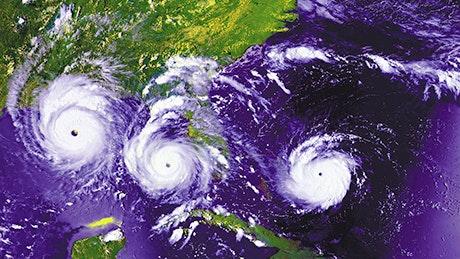
Los desastres pueden tomar muchas formas. Algunos de ellos son naturales, como un tornado, una inundación o un incendio. Otros son consecuencia de las acciones de los seres humanos, como los atentados terroristas. Nos interesan los desastres porque como eventos de alto impacto pueden causar consecuencias negativas en la salud física y mental de las personas afectadas. Conocer sobre los posibles desastres también puede ayudar para que las comunidades intenten tener una preparación.

WEEK 2
Los trastornos mentales y los desastres
En esta semana explorarás cómo, naturalmente, los desastres pueden tener un impacto negativo en el ser humano a corto, mediano o largo plazo. Uno de los desenlaces de los desastres es que pueden desencadenar en el ser humano un tipo de malestar, llamado trastorno mental. Los trastornos mentales han sido estudiados por largo tiempo y pueden pensarse como la contraparte de los trastornos físicos o médicos comunes, ya que pueden provocar un grado de sufrimiento o deterioro de la vida diaria de las personas. Actualmente, existen dos clasificaciones de los trastornos mentales que son muy relevantes para la clínica y la investigación psicológicas. Por una parte, el Manual diagnóstico y estadístico de los trastornos mentales (DSM-5) , por otra, la Clasificación internacional de enfermedades, que es una publicación de la Organización Mundial de la Salud. Dentro de esos manuales encontramos algunos de los trastornos más frecuentes provocados por los desastres, por ejemplo, el trastorno de estrés postraumático, la depresión y la ansiedad generalizada.

WEEK 3
Tratamientos para trastornos mentales vinculados a desastres
La semana anterior aprendiste qué son los trastornos mentales y dos sistemas de clasificación de estos. En esta semana verás que hay tratamientos para ayudar a las personas que han sufrido impactos psicológicos negativos y que mucho tiempo después permanecen con malestar psicológico persistente.

WEEK 4
Primeros auxilios psicológicos
En esta semana explorarás el concepto de “primeros auxilios psicológicos” o primera ayuda psicológica (PAP), considerándolos como un modo de asistir y rescatar a las personas afectadas por desastres en los momentos iniciales de esa situación. Es algo que se hace en el terreno con la persona afectada. Como modo de asistencia a las personas afectadas por desastres, la PAP tiene el respaldo de importantes y reconocidas instituciones a nivel mundial, como la Organización Mundial de la Salud, la Organización del Tratado del Atlántico Norte o el Instituto Nacional de la Salud Mental de EE. UU. La PAP puede ser ofrecida inclusive por personas sin formación académica universitaria profesional en Psicología, Medicina o carreras afines, pero formadas en la PAP. La PAP puede considerarse como un tipo de rescate humano y racional destinado a las personas afectadas por desastres de modo que permita prevenir o reducir los efectos psicológicos negativos desencadenados por los desastres y prevenir los trastornos mentales a corto, mediano y a largo plazo.

Go to Class
MOOC List is learner-supported. When you buy through links on our site, we may earn an affiliate commission.

Related Courses

When Disaster Meets Conflict (Coursera) Coursera
Erasmus University Rotterdam

When Disaster Meets Conflict (Coursera)

This MOOC teaches you to develop accountable, high-quality and ethical responses to disaster in conflict-affected areas. The E-course is meant primarily for practitioners, but also open to students or otherwise interested people. It stimulates participants to think about humanitarian aid, DRR and disaster response in contexts where conflict is ongoing, lingering, or has characterized the setting in recent times, as well as about the hard choices and dilemmas faced by humanitarian actors in conflict settings.

May 25th 2026
5-12 Weeks
Stress First Aid for Healthcare Workers: A Peer Support Tool (Coursera) Coursera
Duke University

Stress First Aid for Healthcare Workers: A Peer Support Tool (Coursera)

Stress First Aid (SFA) is a peer support toolkit designed to preserve life, prevent further harm, and promote recovery. Stress First Aid offers a flexible menu of options for recognizing and addressing stress reactions. It can be used for self-care, to help co-workers with stress reactions, or to help someone seek other types of support. Stress First Aid is a framework of practical actions that can help reduce the likelihood that stress reactions will develop into more severe or long-term problems.

May 25th 2026
4 Weeks
Application of Digital Health Interventions (FutureLearn) FutureLearn
Taipei Medical University

Application of Digital Health Interventions (FutureLearn)

Research on digital heath interventions in mental health. In this course, you’ll learn digital health applications on complex diseases. Based on WHO guidelines, digital health intervention is defined as a discrete functionality of digital technology that is applied to achieve health objectives. We will explore research on the development of digital health. Issues like why digital health is important and how digital health can affect our future will be discussed.

Feb 8th 2021
4 Weeks
Mindfulness for Wellbeing and Peak Performance (FutureLearn) FutureLearn
Monash University

Mindfulness for Wellbeing and Peak Performance (FutureLearn)

Learn mindfulness techniques to reduce stress and improve your wellbeing and work/study performance in this free online course. Learn mindfulness techniques to reduce stress and improve performance. Stressed by the pace of modern life? Mindfulness might be the answer. Research shows that when you’re not deliberately paying attention to something, your brain goes into default mode causing increased anxiety and poor communication.

Jan 17th 2022
4 Weeks
From neuron to behavior (FUN) FUN
Institut Pasteur

From neuron to behavior (FUN)

Brain function determines our behavior and dictates who we are. Our brain function governs our every thoughts and every action. The brain processes information through the concerted activity of many neurons, which communicate with each other through contacts we call synapses organized in highly dynamic networks. In this course, we are taking a bottom up approach to studying the brain, starting from molecules to end with behaviors and mental disorders.

No sessions available
5-12 Weeks
Introduction to Clinical Psychology (edX) EdX
University of Queensland,UQx

Introduction to Clinical Psychology (edX)

Learn about the principles underlying psychological therapy and the features and treatment of common mental disorders, including anxiety, depression and schizophrenia. Have you ever wondered what causes mental illness, or why we react to stress the way we do? Or what to expect as you get older? Clinical psychology is the study of psychological disorders and the treatments designed to improve the day-to-day lives of people suffering from them.

Self Paced
Self-Paced
AP® Psychology - Course 5: Health and Behavior (edX) EdX
The University of British Columbia,UBCx

AP® Psychology - Course 5: Health and Behavior (edX)

Learn about the relationship between stress and physical and mental health and the treatment of abnormal behavior, including psychological disorders. This psychology course is all about the relationship between health and behavior. We will examine stress as a concept and learn about its relation to health and psychological adjustment. We will discuss abnormal behavior and how psychologists assess it as well as a wide range of psychological disorders and approaches to their treatment.

Self Paced
Self-Paced
Engineering of Structures: Shear and Bending (Coursera) Coursera
Dartmouth College

Engineering of Structures: Shear and Bending (Coursera)

This course deals with shear and bending. Shear is a set of parallel, non-collinear forces acting across an element and bending is the curved form taken by a slender element when subjected to loads perpendicular to the element. These forces are easy to understand. You will study how stress and bending force acts for different structures and also, identify what role these forces play in their designs.

May 25th 2026
3 Weeks
Machine Design Part I (Coursera) Coursera
Georgia Institute of Technology

Machine Design Part I (Coursera)

“Machine Design Part I” is the first course in an in-depth three course series of “Machine Design.” The “Machine Design” Coursera series covers fundamental mechanical design topics, such as static and fatigue failure theories, the analysis of shafts, fasteners, and gears, and the design of mechanical systems such as gearboxes. Throughout this series of courses we will examine a number of exciting design case studies, including the material selection of a total hip implant, the design and testing of the wing on the 777 aircraft, and the impact of dynamic loads on the design of an bolted pressure vessel. In this first course, you will learn robust analysis techniques to predict and validate design performance and life.

May 25th 2026
5-12 Weeks
Introduction to Abnormal Psychology (Coursera) Coursera
Wesleyan University

Introduction to Abnormal Psychology (Coursera)

This course presents an overview of the major domains of abnormal psychology. The course is made up of 5 modules, the first of which provides an introduction to the field through discussions of the concept of psychological abnormality, assessment and classification, and the major models in use for understanding psychological abnormality. The remaining four modules provide overviews of major domains of abnormal psychology, including mood disorders, anxiety disorders, stress and trauma-related disorders, and schizophrenia spectrum disorders.

Jun 1st 2026
4 Weeks
Mechanics of Materials I: Fundamentals of Stress & Strain and Axial Loading (Coursera) Coursera
Georgia Institute of Technology

Mechanics of Materials I: Fundamentals of Stress & Strain and Axial Loading (Coursera)

This course explores the topic of solid objects subjected to stress and strain. The methods taught in the course are used to predict the response of engineering structures to various types of loading, and to analyze the vulnerability of these structures to various failure modes. Axial loading with be the focus in this course.

May 25th 2026
5-12 Weeks
Be Ready: Staying Safe During Disasters (FutureLearn) FutureLearn
International Federation of Red Cross and Red Crescent Societies

Be Ready: Staying Safe During Disasters (FutureLearn)

Learn about the key preparedness actions you can take to stay safe during various disasters and extreme weather events. Discover what to do when disaster strikes. As extreme weather events continue to affect the lives of millions of people across the globe, it’s never been more important to know how to stay safe when disaster strikes. On this course, you’ll find out about the key actions you can take to reduce the risks associated with disasters and extreme weather events.

No sessions available
2 Weeks