Uncertainty and Research (Coursera)

Uncertainty and Research (Coursera)

This course teaches the fundamentals of scientific research. We approach the research process as a means of systematically reducing uncertainty and demonstrate how conducting a scientific investigation can be posed as an exercise in Bayesian uncertainty quantification. We begin by exploring the scientific landscape to understand the different types of research, where they are conducted, how they are supported, and why each of these types of research is important.

Class Deals by MOOC List - Click here and see Coursera's Active Discounts, Deals, and Promo Codes.

We then formalize scientific inquiry and the scientific method and elaborate the research process and its scientific merits. Basic concepts in probability theory are introduced leading to a conceptually simple presentation of Bayes’ Rule. We then illustrate how Bayes’ Rule provides a mathematical framework for the research process. We place an emphasis on the role that research plays in our daily and professional lives and how research skills can help us think critically, whether you’re in a technical field or not. Exercises are designed to help you improve your research skills and think more scientifically.
Learners who are new to research fields or would like to improve their research skills in any field for career/professional or personal growth are encouraged to enroll. The course is taught at an introductory level such that, by the end of the course, you will be able to formulate a research hypothesis and devise a scientific research plan to test that hypothesis. To be successful in this course, you will need entrance-level college mathematics.

Syllabus

WEEK 1
Introduction to the Research Landscape
In this module, you will be introduced to the landscape of scientific research. Why do we perform research? Who conducts research and where do they conduct it? What different kinds of research are undertaken? Why are the various types of research important?

WEEK 2
Scientific Inquiry
In this module, you will be introduced to the fundamentals of scientific inquiry. What makes an investigation scientific? How do we tell the difference between a scientific and a non-scientific inquiry?

WEEK 3
Scientific Method & the Research Process
In this module, you will be introduced to the different methods of inquiry, most notably the scientific method. You will learn the terminology used in scientific inquiries and define hypotheses and theories. You will learn the steps of the research process and how the research process is scientific.

WEEK 4
Uncertainty & Probability
In this module, you will learn about the different types of uncertainty and how these uncertainties are modeled. You will learn some fundamentals in probability theory, specifically conditional probabilities and Bayes’ Rule, necessary to understand how uncertainty is modeled.

WEEK 5
Research as an Exercise in Uncertainty Quantification (UQ)
In this module, you will learn how the research process relates to uncertainty quantification. You will learn how to pose the research process through Bayesian hypothesis testing. You will learn how to develop a hypothesis and design a plan to test it using UQ methods.

Go to Class
MOOC List is learner-supported. When you buy through links on our site, we may earn an affiliate commission.

Related Courses

Combinatorics and Probability (Coursera) Coursera
University of California, San Diego,Higher School of Economics - HSE University

Combinatorics and Probability (Coursera)

Counting is one of the basic mathematically related tasks we encounter on a day to day basis. The main question here is the following. If we need to count something, can we do anything better than just counting all objects one by one? Do we need to create a list of all phone numbers to ensure that there are enough phone numbers for everyone? Is there a way to tell that our algorithm will run in a reasonable time before implementing and actually running it? All these questions are addressed by a mathematical field called Combinatorics.

Jul 27th 2026
5-12 Weeks
Media ethics & governance (Coursera) Coursera
University of Amsterdam

Media ethics & governance (Coursera)

This course explores some of the basic theories, models and concepts in the field of media ethics. We will introduce influential ethical theories and perspectives, explore changing societal demands and expectations of media creation and media use, and we will elaborate on existing ethical norms for media professionals. After following this course, you will be able to reflect on ethical dilemmas and develop a well-substantiated argumentation for ethical decision making in a variety of media-related contexts.

Jul 27th 2026
4 Weeks
Researcher Management and Leadership Training (Coursera) Coursera
University of Colorado System

Researcher Management and Leadership Training (Coursera)

This course is for early career researchers and mentors who believe that modern scientific careers require management skills and want to be research leaders. This curriculum gives you skills to effectively implement funded projects, thereby enhancing your career success. Research leaders take on a number of new roles, rights, and responsibilities--as scientific leaders, financial administrators, managers, and mentors. In this course, we explain how to optimize the people, teams, projects, and finances for which you are responsible.

Aug 3rd 2026
5-12 Weeks
Managing Uncertainty in Marketing Analytics (Coursera) Coursera
Emory University

Managing Uncertainty in Marketing Analytics (Coursera)

Marketers must make the best decisions based on the information presented to them. Rarely will they have all the information necessary to predict what consumers will do with complete certainty. By incorporating uncertainty into the decisions that they make, they can anticipate a wide range of possible outcomes and recognize the extent of uncertainty on the decisions that they make. In Incorporating Uncertainty into Marketing Decisions, learners will become familiar with different methods to recognize sources of uncertainty that may affect the marketing decisions they ultimately make.

Jul 27th 2026
4 Weeks
Introduction to Statistics (Coursera) Coursera
Stanford University

Introduction to Statistics (Coursera)

Stanford's "Introduction to Statistics" teaches you statistical thinking concepts that are essential for learning from data and communicating insights. By the end of the course, you will be able to perform exploratory data analysis, understand key principles of sampling, and select appropriate tests of significance for multiple contexts. You will gain the foundational skills that prepare you to pursue more advanced topics in statistical thinking and machine learning.

Aug 10th 2026
5-12 Weeks
Whole genome sequencing of bacterial genomes - tools and applications (Coursera) Coursera
Technical University of Denmark - DTU

Whole genome sequencing of bacterial genomes - tools and applications (Coursera)

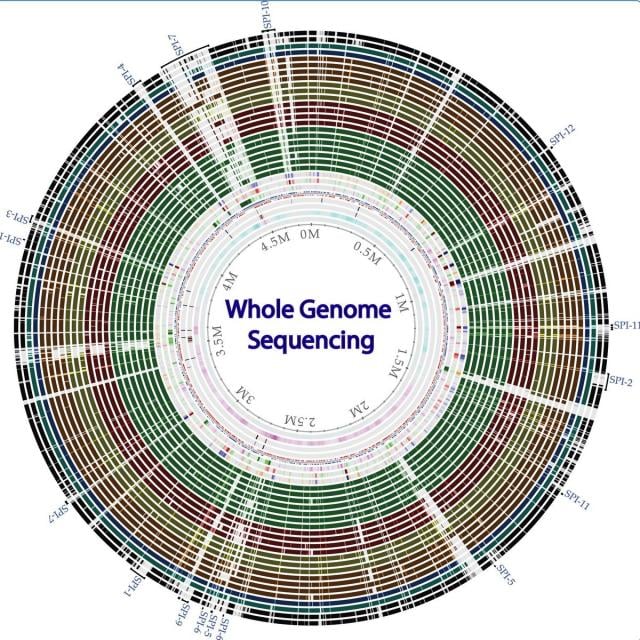
This course will cover the topic of Whole genome sequencing (WGS) of bacterial genomes which is becoming more and more relevant for the medical sector. WGS technology and applications are high on international political agenda, as the classical methods are being replaced by WGS technology and therefore bioinformatic tools are extremely important for allowing the people working in this sector to be able to analyze the data and obtain results that can be interpreted and used for different purposes.

Aug 10th 2026
5-12 Weeks
Basic Data Descriptors, Statistical Distributions, and Application to Business Decisions (Coursera) Coursera
Rice University

Basic Data Descriptors, Statistical Distributions, and Application to Business Decisions (Coursera)

The abilities to understand and apply Business Statistics are becoming increasingly important in the industry. A good understanding of Business Statistics is a requirement to make correct and relevant interpretations of data. Lack of knowledge could lead to erroneous decisions which could potentially have negative consequences for a firm. This course is designed to introduce you to Business Statistics. We begin with the notion of descriptive statistics, which is summarizing data using a few numbers.

Jul 27th 2026
4 Weeks
Understanding Research Methods (Coursera) Coursera
University of London,SOAS University of London

Understanding Research Methods (Coursera)

This MOOC is about demystifying research and research methods. It will outline the fundamentals of doing research, aimed primarily, but not exclusively, at the postgraduate level. It places the student experience at the centre of our endeavours by engaging learners in a range of robust and challenging discussions and exercises befitting SOAS, University of London's status as a research-intensive university and its rich research heritage.

Jul 27th 2026
4 Weeks
Operations Analytics (Coursera) Coursera
University of Pennsylvania

Operations Analytics (Coursera)

This course is designed to impact the way you think about transforming data into better decisions. Recent extraordinary improvements in data-collecting technologies have changed the way firms make informed and effective business decisions. The course on operations analytics, taught by three of Wharton’s leading experts, focuses on how the data can be used to profitably match supply with demand in various business settings. In this course, you will learn how to model future demand uncertainties, how to predict the outcomes of competing policy choices and how to choose the best course of action in the face of risk.

Jul 27th 2026
4 Weeks
Precision Medicine (Coursera) Coursera
University of Geneva

Precision Medicine (Coursera)

This course will provide you with the key knowledge and tools to understand the fundamentals and practical implications of precision medicine, its opportunities and challenges. It will address precision-medicine era diagnostics, treatment selection, genetic counseling, public health interventions, and biomedical research. It will also deal with data science and ethical issues. From genomic analysis and genetic counseling to cancer biomarkers, from risk assessment of chronic diseases to the understanding of gene-environment interactions, from pharmacogenomics to multi-omics data integration, experts will walk you through the many aspects of precision medicine, from the bench to the bedside and to population health.

Jul 27th 2026
5-12 Weeks
Healthy Aging and the Future of Cannabis Research (Coursera) Coursera
University of Colorado Boulder

Healthy Aging and the Future of Cannabis Research (Coursera)

This Healthy Aging and Future of Cannabis Research course is designed to have you think critically about the health effects of cannabis (i.e., marijuana) in the context of inflammation, exercise, and aging. You'll learn how inflammation and the microbiome may be related to the disorders discussed in class, and how cannabis may influence these disorder through modulating inflammation.

Jul 27th 2026
4 Weeks