Frozen in the Ice: Exploring the Arctic (Coursera)

Frozen in the Ice: Exploring the Arctic (Coursera)

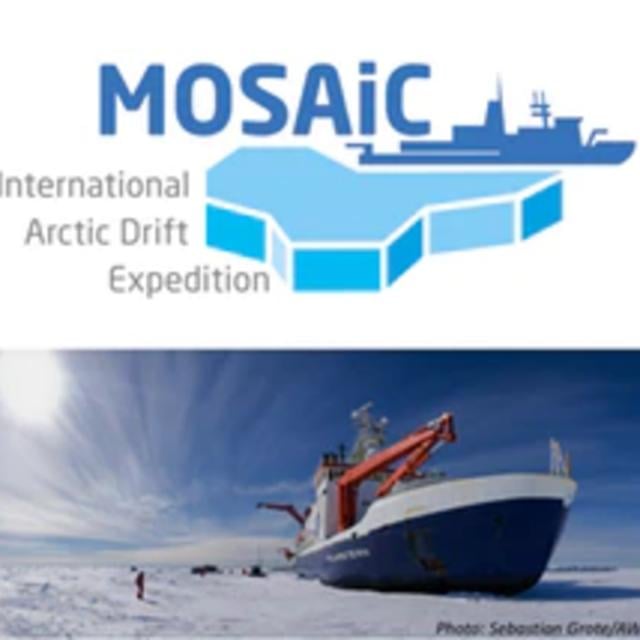
Why would hundreds of scientists from around the world intentionally freeze a ship in Arctic sea ice for an entire year, braving subzero temperatures and months of polar darkness? This may sound like a fictional adventure movie plot, but from September 2019 through October 2020, the MOSAiC (Multidisciplinary drifting Observatory for the Study of Arctic Climate) Arctic research expedition did just this.

Class Deals by MOOC List - Click here and see Coursera's Active Discounts, Deals, and Promo Codes.

In this course, you’ll hear directly from MOSAiC scientists and Arctic experts as they describe why this expedition is so key for increasing our understanding of the Arctic and global climate systems and what kinds of data they will be collecting during MOSAiC on the ice, under the sea, and in the air. The course kicks off with content around Arctic geography, climate, and exploration history, and then walks learners through the basics of the components of the Arctic system: atmosphere, ocean, sea ice and ecosystems. You will also learn how the data collected during MOSAiC will be used to improve climate model projections. Finally, we will wrap up the course by exploring challenges the new Arctic faces, including how indigenous peoples in the Arctic are being impacted in different ways by a changing Arctic environment.

What You Will Learn

  • As virtual participants of the MOSAiC expedition, learners will explore all components of the Arctic climate system and how they are interconnected.
  • Explore what climate science is, what data scientists collect in the Arctic, and how their findings inform our understanding of weather and climate
  • Discuss the critical challenges the Arctic faces under a changing climate and how these changes impact our lives in the mid-latitudes

Syllabus

WEEK 1
Course Introduction and Course Basics
In this module, we will take you on a tour of the Arctic and discuss topics like Arctic geography and geopolitics before introducing the MOSAiC (Multidisciplinary drifting Observatory for the Study of Arctic Climate) expedition. The module wraps up with a brief look back at the historic Fram expedition to the Arctic 150 years ago that inspired MOSAiC.

WEEK 2
Atmosphere in the Arctic and Beyond
In this module, you will learn about the basic physics of the atmosphere with a specific focus on the Arctic. We will explore Earth’s energy budget and look at the structure of the atmosphere. Arctic clouds are an important player in the Arctic atmosphere and their role will be part of one video lecture. Finally, we will introduce you to the concept of feedbacks, systems responses that modulate the climate system and are the basis for connections to the lower latitudes. The module concludes with an overview of the goals of the MOSAiC Atmosphere research group and the data they are collecting.

WEEK 3
The Arctic Ocean
In this module, we will take you on a tour of the Arctic Ocean. We will explore topics like ocean circulation and ocean stratification with a specific focus on processes that are happening in the Arctic. You will begin to draw connections to the coupling of the atmosphere, ocean, and sea ice and explore the chemistry of the ocean, nutrient distribution, and ocean productivity. The module concludes with an overview of the goals of the MOSAiC Ocean research group and the data they are collecting.

WEEK 4
Sea Ice
In this module, you will learn about sea ice and the important role it plays in the Arctic climate system. We will discuss how sea ice forms, how sea ice interacts with sunlight, and how sea ice moves and behaves. We will also explore the change in sea ice thickness and distribution in the Arctic over time and in response to a changing climate. The module concludes with an overview of the goals of the MOSAiC Sea Ice research group and the data they are collecting.

WEEK 5
Arctic Biochemistry/Ecosystem
In this module, you will learn about the ecosystems of the Arctic Ocean. We will briefly explore the megafauna, such as polar bears, but then focus the exploration on the importance of the microfauna, such as algae and plankton, and their connections to oceanic nutrient cycles and atmospheric phenomena. The module concludes with an overview of the goals of the MOSAiC Biogeochemistry and Ecosystems research group and the data they are collecting.

WEEK 6
Modeling Using Data from the Arctic
In this module, you will dive into the world of climate modeling. You will learn from MOSAiC researchers what the different modeling approaches are, what we can learn from models, and how we can use field data from expeditions like MOSAiC to improve model forecasts. The module concludes with an overview of the goals of the MOSAiC Modeling research group and the data they are collecting.

WEEK 7
Challenges in the Arctic
In this module, we will tie together what we learned in the previous modules and explore challenges that the new Arctic faces. We will discuss the impacts of a changing climate on the Arctic as a whole, discuss the research frontiers around connections between the Arctic and lower latitudes, and explore the potential impacts of climate change on shipping lanes, energy exploration and fishing as well as related environmental challenges such as plastics and oil spills. Finally, you will learn how climate change is already impacting and will continue to impact indigenous communities in the Arctic in different ways.

Go to Class
MOOC List is learner-supported. When you buy through links on our site, we may earn an affiliate commission.

Related Courses

社会调查与研究方法 (下)Methodologies in Social Research (Part 2) (Coursera) Coursera
Peking University

社会调查与研究方法 (下)Methodologies in Social Research (Part 2) (Coursera)

社会调查与研究方法, 首先,是一套观察社会现象、测量社会现象的工具; 其次,是一套分析和运用社会现象数据的科学方法; 最高境界,则是一套针对社会、经济、教育、政治、法律、管理、公共卫生、新闻报道等人类的生产与生活现象,进行科学沟通的思维逻辑与表达方式。

Aug 10th 2026
5-12 Weeks
Quantitative Methods (Coursera) Coursera
University of Amsterdam

Quantitative Methods (Coursera)

Discover the principles of solid scientific methods in the behavioral and social sciences. Join us and learn to separate sloppy science from solid research! This course will cover the fundamental principles of science, some history and philosophy of science, research designs, measurement, sampling and ethics. The course is comparable to a university level introductory course on quantitative research methods in the social sciences, but has a strong focus on research integrity. We will use examples from sociology, political sciences, educational sciences, communication sciences and psychology.

Aug 17th 2026
5-12 Weeks
Whole genome sequencing of bacterial genomes - tools and applications (Coursera) Coursera
Technical University of Denmark - DTU

Whole genome sequencing of bacterial genomes - tools and applications (Coursera)

This course will cover the topic of Whole genome sequencing (WGS) of bacterial genomes which is becoming more and more relevant for the medical sector. WGS technology and applications are high on international political agenda, as the classical methods are being replaced by WGS technology and therefore bioinformatic tools are extremely important for allowing the people working in this sector to be able to analyze the data and obtain results that can be interpreted and used for different purposes.

Aug 10th 2026
5-12 Weeks
Uncertainty and Research (Coursera) Coursera
Johns Hopkins University

Uncertainty and Research (Coursera)

This course teaches the fundamentals of scientific research. We approach the research process as a means of systematically reducing uncertainty and demonstrate how conducting a scientific investigation can be posed as an exercise in Bayesian uncertainty quantification. We begin by exploring the scientific landscape to understand the different types of research, where they are conducted, how they are supported, and why each of these types of research is important.

Aug 3rd 2026
5-12 Weeks
Global Arctic (Coursera) Coursera
École Polytechnique Fédérale de Lausanne

Global Arctic (Coursera)

The GlobalArctic MOOC introduces you the dynamics between global changes and changes in the Arctic. This course aims to highlight the effects of climate change in the Polar region. In turn, it will underline the impacts of a warmer Arctic on the planet Earth. For human civilization, the Arctic stands both as a laboratory and a warning for human kind.

Aug 7th 2026
4 Weeks
Research for Impact (Coursera) Coursera
University of Cape Town,Oxfam International

Research for Impact (Coursera)

In this course, you will learn more about the Research for Impact approach - a set of principles and practices that will help you to make your research more impactful. Traditionally, the goals and outcomes of research projects were to contribute knowledge and communicate this knowledge through academic publications and journal articles. But If we truly want our research to have an impact, we need to do research differently. Research that influences change in policy, practice, behaviour and attitudes.

Aug 24th 2026
5-12 Weeks
Aeroecology: Exploring Biodiversity with Radar (Coursera) Coursera
University of Leeds

Aeroecology: Exploring Biodiversity with Radar (Coursera)

Learn how aeroecology, a discipline that studies airborne life forms, has been revolutionised with the use of radar with this unique course. This course is designed to help scientists, researchers as well as ecology enthusiasts to develop skills in using radar to explore biodiversity. You will explore the origins and evolution of radar from a military technology to a powerful tool with multiple scientific applications, including aeroecology. You will then be introduced to studying global biodiversity trends and learn how to evaluate traditional methods and emerging technologies used by scientists to monitor the natural world.

Aug 10th 2026
2 Weeks
Research kitchen (Coursera) Coursera
Ludwig-Maximilians-Universität München

Research kitchen (Coursera)

The research kitchen is a unique format that we have developed extra for you: curious learners interested in competitive strategy and organization design yearning for a first glimpse into the world of research. It is voluntary and "just for fun" - so please, go on and have a look! Different to other courses of our specialization Competitive Strategy and Organization Design it is comprised of brief paper sessions rather than modules. For a change, you will experience the instructor Tobias Kretschmer at the whiteboard of his very own institute at LMU Munich. Here he will summarize key findings of recent research papers on topics relating to the three courses Competitive Strategy, Advanced Competitive Strategy and Strategic Organization Design. Topics that researchers today are working on to enhance the knowledge of tomorrow. We hope you enjoy this innovative format and possibly even find some inspiration and motivation for your own future research.

Jul 27th 2026
1 Week
User Research and Design (Coursera) Coursera
University of Minnesota

User Research and Design (Coursera)

In this course you will learn and practice techniques of user research and early UI design exploration. First, you will learn and practice several techniques for user research, including in-person research and survey and log-analysis techniques. Then, you will learn to analyze and deliver user research in forms that support UI design, including personas, use cases, tasks, and scenarios. Finally, you will learn and practice ideation techniques that start from user research and broadly generate potential design ideas.

Jul 27th 2026
4 Weeks
Researcher Management and Leadership Training (Coursera) Coursera
University of Colorado System

Researcher Management and Leadership Training (Coursera)

This course is for early career researchers and mentors who believe that modern scientific careers require management skills and want to be research leaders. This curriculum gives you skills to effectively implement funded projects, thereby enhancing your career success. Research leaders take on a number of new roles, rights, and responsibilities--as scientific leaders, financial administrators, managers, and mentors. In this course, we explain how to optimize the people, teams, projects, and finances for which you are responsible.

Aug 3rd 2026
5-12 Weeks