Data Literacy Capstone – Evaluating Research (Coursera)

Data Literacy Capstone – Evaluating Research (Coursera)

This is the final course in the Data Literacy Specialization. In this capstone course, you'll apply the skills and knowledge you have acquired in the specialization to the critical evaluation of an original quantitative analysis. The project will first require you to identify and read a piece of high-quality, original, quantitative research on a topic of your choosing. You’ll then interpret and evaluate the findings as well as the methodological approach. As part of the project, you’ll also review other students’ submissions. By the end of the project, you should be empowered to be a critical consumer and user of quantitative research.

Class Deals by MOOC List - Click here and see Coursera's Active Discounts, Deals, and Promo Codes.

Course 5 of 5 in the Data Literacy Specialization

Syllabus

WEEK 1
Capstone Project Overview
Welcome to the Capstone Course for the Data Literacy Specialization! The capstone project will allow you to apply the knowledge and skills you've acquired throughout the specialization to the evaluation of a published piece of scholarly work. In this first module, I'll present an overview of the project's purpose and components.

WEEK 2
Locating Quality Scholarship
In this module, I'll present information that will help you identify an article or report that you'll evaluate for the capstone project. We'll explore sources that frequently publish high-quality, original, quantitative research. We'll also discuss the difference between primary and secondary research.

WEEK 3
Final Paper Submission
Welcome to the final module in the Data Literacy Specialization. In this module, you'll complete and submit your capstone project via the peer review system. You'll also review three submissions from other students in the specialization. I hope this specialization has given you a set of tools and skills that empower you to be a critical consumer and user of quantitative research.

Go to Class
MOOC List is learner-supported. When you buy through links on our site, we may earn an affiliate commission.

Related Courses

The Art and Science of Economic Policy (Coursera) Coursera
Indian Institute for Human Settlements

The Art and Science of Economic Policy (Coursera)

Economic policy affects every citizen. And economic policymaking is best done as a collaborative process with a wide range of stakeholders. This course brings an understanding of the relevance and impacts of economic policymaking in everyday life, and the ways for citizens to be involved in shaping economic policy, in an accessible and interesting manner. Taught by Dr. Vijay Kelkar and Dr. Ajay Shah, along with Aromar Revi, Director, IIHS, the course synthesises more than one hundred years of their combined experience as professional economists and public intellectuals.

Aug 10th 2026
5-12 Weeks
Muestreo de personas, redes y registros (Coursera) Coursera
University of Michigan

Muestreo de personas, redes y registros (Coursera)

Para hacer una buena recopilación de datos se necesitan buenas muestras. Pero las muestras pueden elegirse de muchas maneras. Pueden ser selecciones fortuitas o convenientes de personas, registros, redes u otras unidades, pero uno se cuestiona la calidad de tales muestras, especialmente cómo se relacionan estos métodos de selección con el hecho de sacar buenas conclusiones sobre una población tras la recopilación y el análisis de los datos. Las muestras pueden seleccionarse con más cuidado según el criterio del investigador, pero entonces uno se pregunta si ese criterio puede estar sesgado por factores personales.

Aug 17th 2026
5-12 Weeks
Research for Impact (Coursera) Coursera
University of Cape Town,Oxfam International

Research for Impact (Coursera)

In this course, you will learn more about the Research for Impact approach - a set of principles and practices that will help you to make your research more impactful. Traditionally, the goals and outcomes of research projects were to contribute knowledge and communicate this knowledge through academic publications and journal articles. But If we truly want our research to have an impact, we need to do research differently. Research that influences change in policy, practice, behaviour and attitudes.

Aug 24th 2026
5-12 Weeks
Research Design: Inquiry and Discovery (Coursera) Coursera
University of North Texas

Research Design: Inquiry and Discovery (Coursera)

The main purpose of this course is to focus on good questions and how to answer them. This is essential to making considered decisions as a leader in any organization or in your life overall. Topics will include the basis of human curiosity, development of questions, connections between questions and approaches to information gathering design, variable measurement, sampling, the differences between experimental and non-experimental designs, data analysis, reporting and the ethics of inquiry projects.

Aug 17th 2026
4 Weeks
Structuring Values in Modern China (Coursera) Coursera
The Chinese University of Hong Kong

Structuring Values in Modern China (Coursera)

This sequence of four courses will propose a multi-disciplinary approach to the study of Chinese cultural history conceived of as a succession of modes of rationality (philosophical, bureaucratic, and economic). The focus will be on the moments of paradigm shift from one mode of rationality to another. For each of these moments, cultural facts and artifacts—thought, literature, ritual—will be examined in relationship to changing social, political, and economic systems.

Aug 17th 2026
5-12 Weeks
Quantitative Methods (Coursera) Coursera
University of Amsterdam

Quantitative Methods (Coursera)

Discover the principles of solid scientific methods in the behavioral and social sciences. Join us and learn to separate sloppy science from solid research! This course will cover the fundamental principles of science, some history and philosophy of science, research designs, measurement, sampling and ethics. The course is comparable to a university level introductory course on quantitative research methods in the social sciences, but has a strong focus on research integrity. We will use examples from sociology, political sciences, educational sciences, communication sciences and psychology.

Aug 17th 2026
5-12 Weeks
Operational Research for Humanitarians (Coursera) Coursera
University of Geneva

Operational Research for Humanitarians (Coursera)

Evidence is central to good decision-making both in the humanitarian sector and beyond. Every day, a vast amount of evidence is generated that is relevant to humanitarian actors, much of it through research by academics and practitioners. This evidence can be incredibly valuable. It can help us better understand a situation and make humanitarian action more effective and accountable. The difficulty comes with understanding what evidence is relevant to our circumstances, where to find it, and how to assess its quality.

Aug 17th 2026
5-12 Weeks
Chinese Politics Part 1 - China and Political Science (Coursera) Coursera
The Hong Kong University of Science and Technology - HKUST

Chinese Politics Part 1 - China and Political Science (Coursera)

This course offers a conceptual framework for understanding China that highlights the intersection of politics and economics. It shows that rather than develop into a full blown market economy, state and party officials at all levels of the political system maintain significant influence in economic development. Such a “political” economy has had both positive and negative outcomes, which we will assess in detail.

Aug 17th 2026
5-12 Weeks
社会调查与研究方法 (下)Methodologies in Social Research (Part 2) (Coursera) Coursera
Peking University

社会调查与研究方法 (下)Methodologies in Social Research (Part 2) (Coursera)

社会调查与研究方法, 首先,是一套观察社会现象、测量社会现象的工具; 其次,是一套分析和运用社会现象数据的科学方法; 最高境界,则是一套针对社会、经济、教育、政治、法律、管理、公共卫生、新闻报道等人类的生产与生活现象,进行科学沟通的思维逻辑与表达方式。

Aug 10th 2026
5-12 Weeks
Data intelligence for businesses and managers (Coursera) Coursera
Institut Mines-Telecom

Data intelligence for businesses and managers (Coursera)

With the proliferation of connected objects (computers, tablets, watches, etc.), huge masses of data are generated every second. This Big Data has led to the emergence of a data economy, where data is the main source of competitive advantage for companies. In this sense, data and its processing tools have become a strategic priority for companies, and the main gas pedal of their digital transformation.

Aug 10th 2026
5-12 Weeks
Understanding Medical Research: Your Facebook Friend is Wrong (Coursera) Coursera
Yale University

Understanding Medical Research: Your Facebook Friend is Wrong (Coursera)

How can you tell if the bold headlines seen on social media are truly touting the next big thing or if the article isn't worth the paper it's printed on? Understanding Medical Studies, will provide you with the tools and skills you need to critically interpret medical studies, and determine for yourself the difference between good and bad science. The course covers study-design, research methods, and statistical interpretation. It also delves into the dark side of medical research by covering fraud, biases, and common misinterpretations of data. Each lesson will highlight case-studies from real-world journal articles.

Aug 10th 2026
5-12 Weeks
Whole genome sequencing of bacterial genomes - tools and applications (Coursera) Coursera
Technical University of Denmark - DTU

Whole genome sequencing of bacterial genomes - tools and applications (Coursera)

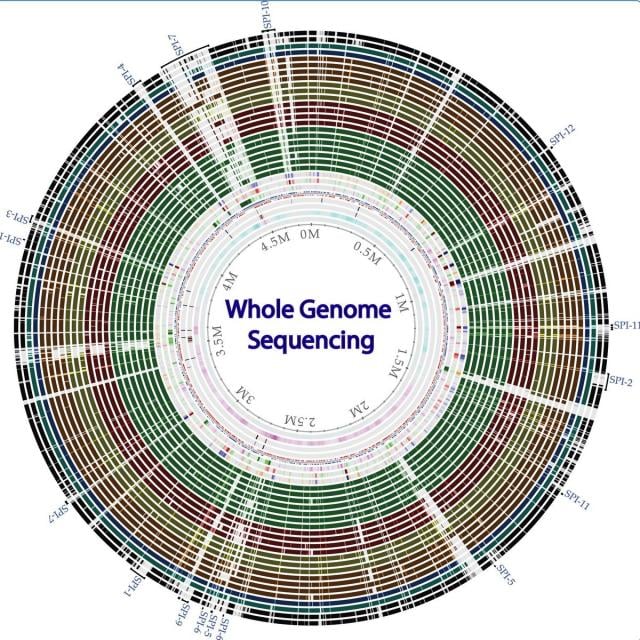
This course will cover the topic of Whole genome sequencing (WGS) of bacterial genomes which is becoming more and more relevant for the medical sector. WGS technology and applications are high on international political agenda, as the classical methods are being replaced by WGS technology and therefore bioinformatic tools are extremely important for allowing the people working in this sector to be able to analyze the data and obtain results that can be interpreted and used for different purposes.

Aug 10th 2026
5-12 Weeks