Aromatherapy: Clinical Use of Essential Oils (Coursera)

Aromatherapy: Clinical Use of Essential Oils (Coursera)

This course provides an overview of essential oil therapy and current aromatherapy practices in clinical settings and gives you the skills to bring aromatherapy into your own practice. By the end of the course, you will be able to: a) explain what essential oils are to a patient and how they work; b) assess if an essential oil might be beneficial to a patient, considering patient preference and the research evidence, as well as any safety issues or contraindications; and c) suggest a protocol for use in a clinical setting.

Class Deals by MOOC List - Click here and see Coursera's Active Discounts, Deals, and Promo Codes.

Completing this course will count towards your learning in any of the following programs:

What You Will Learn

  • Describe the current and potential role of aromatherapy in health and healthcare.
  • Identify safety and ethical issues and discuss their application in practice situations.
  • Assess, administer, and evaluate the use of essential oils for management of pain, anxiety, nausea, and fatigue.
  • Discuss logistics of establishing and sustaining a clinical aromatherapy program.

Syllabus

WEEK 1: What is Aromatherapy and its Role in Health and Healthcare?
WEEK 2: What Do I Need to Know About Safety and Quality?
WEEK 3: Application and Delivery Methods
WEEK 4: Essential Oils for Managing Pain and Anxiety
WEEK 5: Essential Oils for Managing Nausea and Fatigue
WEEK 6: Establishing and Sustaining a Clinical Aromatherapy Program
Go to Class
MOOC List is learner-supported. When you buy through links on our site, we may earn an affiliate commission.

Related Courses

Understanding Patient Perspectives on Medications (Coursera) Coursera
University of Copenhagen

Understanding Patient Perspectives on Medications (Coursera)

Inappropriate use of medicines harms patients’ health and increases healthcare costs. When healthcare professionals and patients engage together, healthcare can be based on the patient perspective, so the use of medicines is better tailored to each patients’ needs and preferences. The result is a better relationship between patients and healthcare professionals, more appropriate medicines use, improved patients’ outcomes, and reduced healthcare costs. In this course you will learn about the patient perspective on medicines use, and how to explore and apply it in healthcare and health policy.

Oct 19th 2026
4 Weeks
Telehealth Best Practices and Uses (Coursera) Coursera
University of California, Davis

Telehealth Best Practices and Uses (Coursera)

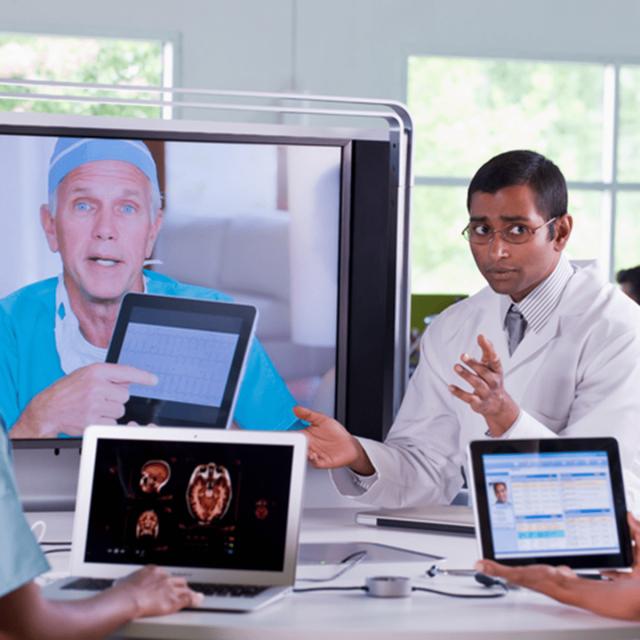
Telehealth uses technology tools such as a cellphone or laptop to give patients and doctors the ability to support healthcare communication and services remotely. The field of telehealth has seen tremendous growth, with telehealth use increasing across all specialties and becoming even more accessible. This course is designed for healthcare professionals and employees in organizations that practice telehealth or are aspiring to work within the field. As a leading pioneer in the field of telehealth, UC Davis Health began offering telehealth services in 1992 and providing a formal telehealth academic curriculum in 1999.

Oct 19th 2026
4 Weeks
Personalised Medicine from a Nordic Perspective (Coursera) Coursera
University of Iceland,University of Copenhagen

Personalised Medicine from a Nordic Perspective (Coursera)

The technical revolution has generated large amounts of data in healthcare and research, and a rapidly increasing knowledge about factors of importance for the individual’s health. This holds great potential to support a change from the one-size-fits-all paradigm to personalised or precision medicine, to guide and thereby improve each health decision of expected benefit for the patient.

Oct 19th 2026
5-12 Weeks
Intro to Managing Healthcare Supply Chain Operations (Coursera) Coursera
Northeastern University

Intro to Managing Healthcare Supply Chain Operations (Coursera)

This course is best suited for individuals currently in the healthcare sector, as a provider, payer, or administrator. Individuals pursuing a career change to the healthcare sector may also be interested in this course. In this course, you will have an opportunity to explore concepts and topics related to the design and management of operations and supply chains in the healthcare sector.

Oct 19th 2026
4 Weeks
The Science of Well-Being for Teens (Coursera) Coursera
Yale University

The Science of Well-Being for Teens (Coursera)

A recent survey found that 37% of teens say they have poor mental health. This 6-week course aims to curb this mental health crisis by bringing together the best insights from Dr. Laurie Santos’ popular Yale course Psychology and the Good Life. In this course, you will explore what the field of psychology teaches us about how to be happier, how to feel less stressed, and how to thrive in high school and beyond. The lessons along with short weekly ‘happiness homework’ assignments will ultimately prepare you to put these scientific findings into practice. The ultimate goal is for you to feel better and build healthier habits. Parents, teachers, and other professionals supporting teenagers may also find the course beneficial.

Oct 19th 2026
5-12 Weeks
Fixing Healthcare Delivery 2.0: Advanced Lean (Coursera) Coursera
University of Florida

Fixing Healthcare Delivery 2.0: Advanced Lean (Coursera)

Lean or Toyota Production System (TPS) is responsible for revolutionizing the auto industry by creating highly reliable and safe cars and trucks. In this course healthcare providers, administrators, engineers, and healthcare professional students will be taught how to apply the principles and tools of Lean to health care. They will learn how to identify and remove of waste, design standardized work, apply 5S, map Value streams, create process maps, conduct rapid improvement events (RIEs), level workflow, use A3 forms and Paredo charts, apply error proofing, and create effective visual controls.

Oct 12th 2026
5-12 Weeks
How Music Can Change Your Life (Coursera) Coursera
University of Melbourne

How Music Can Change Your Life (Coursera)

Did you ever wonder how music works? This course provides free video, audio and journal resources that explain six basic principles about how music can influence individual and community health and wellbeing. From biology and neuroscience, to psychotherapy and politics, the ways we engage with music can make all the difference. Music has always played an integral role in the lives of individuals and communities all around the globe.

Oct 12th 2026
5-12 Weeks
Future Healthcare Payment Models (Coursera) Coursera
Northeastern University

Future Healthcare Payment Models (Coursera)

This course will review the drivers of healthcare cost and solutions that have been proposed to address cost, quality and value of health care. Many point blame for high costs on payment models that pay healthcare providers for every service they provide to patients, essentially paying more for volume and service intensity. This is called a Fee for Service (FFS) payment model. Some solutions, arguably the more sustainable solutions, are the combined strategies of new payment models, care management, insurance plan designs, consumer engagement tools, and technology.

Oct 14th 2026
4 Weeks
Addiction Treatment: Clinical Skills for Healthcare Providers (Coursera) Coursera
Yale University

Addiction Treatment: Clinical Skills for Healthcare Providers (Coursera)

This course is designed with a singular goal: to improve the care you provide to your patients with substance use disorders. By delving into a model case performed by actors, seven Yale instructors from various fields provide techniques to screen your patients for substance use disorder risk, diagnose patients to gauge the severity of their use, directly manage treatment plans, refer out to treatment services, and navigate the various conditions that may limit your patient’s access to treatment.

Oct 19th 2026
5-12 Weeks
Population Health: Panel Management Next Level (Coursera) Coursera
Leiden University

Population Health: Panel Management Next Level (Coursera)

How can you, as a healthcare professional, identify patients that share the same risk of an adverse event? How do you transform your healthcare practice in such a way that you are not only able to provide proactive care but you are also able to improve the health of populations at risk? In this course you will learn how to apply the panel management approach to tackle these questions in order to change from reactive to proactive care.

Oct 19th 2026
4 Weeks