Addiction Treatment: Clinical Skills for Healthcare Providers (Coursera)

Offered by Yale University,
Addiction Treatment: Clinical Skills for Healthcare Providers (Coursera)

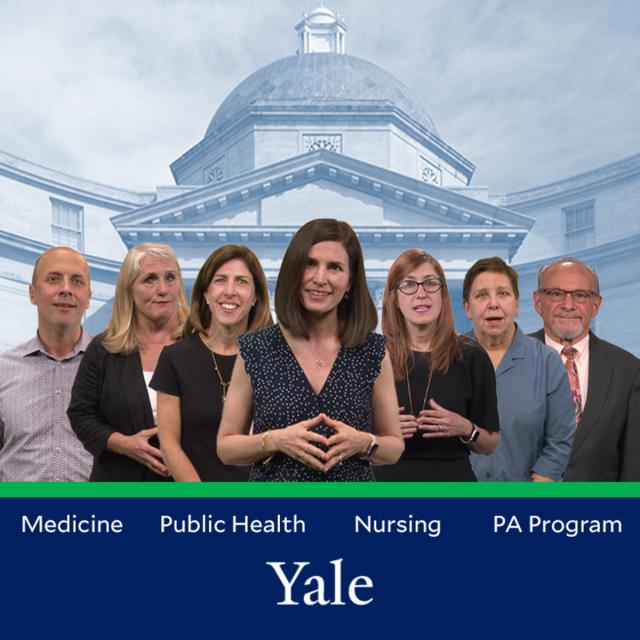
This course is designed with a singular goal: to improve the care you provide to your patients with substance use disorders. By delving into a model case performed by actors, seven Yale instructors from various fields provide techniques to screen your patients for substance use disorder risk, diagnose patients to gauge the severity of their use, directly manage treatment plans, refer out to treatment services, and navigate the various conditions that may limit your patient’s access to treatment.

Class Deals by MOOC List - Click here and see Coursera's Active Discounts, Deals, and Promo Codes.

You will ultimately be prepared to provide compassionate and evidence-based care to a large population of patients living with addiction— a chronic, often relapsing-remitting disease, but a treatable one.
Distribution of this course is made possible through a SAMHSA-funded grant initiative, the Expansion of Interprofessional Healthcare Practitioner SUD Education, which provides a foundational level of evidence-based training in preventing and treating substance use disorders. AAAP is working in collaboration with Yale University, the American College of Academic Addiction Medicine (ACAAM), and a coalition of 37 multidisciplinary healthcare learning institutions across the country to train health professionals including medicine, nursing, physician associate, social work, pharmacy and public health.
Note: The content in this course is intended solely to inform and educate medical professionals. This site shall not be used for medical advice and is not a substitute for the advice or treatment of a qualified medical professional.

Syllabus

WEEK 1: “How can I show compassion toward patients with substance use disorders?”
WEEK 2: “How do I know if my patient has a substance use disorder?”
WEEK 3: "How do I recommend treatment options?”
WEEK 4: “What medications help patients manage their substance use disorders?”
WEEK 5: “What psychosocial or behavioral therapies are available for patients with substance use disorders?”
WEEK 6: "What societal factors impact successful recovery?”

Go to Class
MOOC List is learner-supported. When you buy through links on our site, we may earn an affiliate commission.

Related Courses

Guided Imagery (Coursera) Coursera
University of Minnesota

Guided Imagery (Coursera)

In this course, you will learn how you can use imagery and imagery interventions to help with symptom management and healing, as well as to enhance overall health and wellbeing. You will experience a variety of imagery interventions and evaluate how they might be helpful in providing relief or enhancing quality of life.

Jun 3rd 2026
5-12 Weeks
Medical Technology and Evaluation (Coursera) Coursera
University of Minnesota

Medical Technology and Evaluation (Coursera)

Innovations in medical technologies are one of the leading areas of economic growth in the world. Whether new technologies take the form of pharmaceutical, medical device, biotechnology, information technology of some combination of these innovations, the opportunities for both private enterprise and social welfare are substantial. However, these innovations are not without cost, and require reimbursement from either a privately or publicly financed health care delivery system to enter the marketplace.

Jun 1st 2026
4 Weeks
Healthcare Delivery Providers (Coursera) Coursera
University of Minnesota

Healthcare Delivery Providers (Coursera)

Welcome to the exciting world of Healthcare Delivery Providers! This second course in the Healthcare Marketplace Specialization will help you understand the various providers of healthcare across the U.S. delivery continuum. We will explore the unique value proposition of the various providers- from hospitals and clinics to physicians to community based providers. We will dissect this important value chain using various lenses such as- site of care delivery, people who provide the care and payers who pay for care. You will also learn about the challenges facing these providers and the innovations they are creating in order to help transform this important industry.

Jun 1st 2026
5-12 Weeks
Herbal Medicine (Coursera) Coursera
University of Minnesota

Herbal Medicine (Coursera)

There is strong demand for alternatives to pharmaceuticals for a variety of common illnesses due to concerns of safety, efficacy, and a desire for more “natural” products. Despite this growing interest, “conventional” healthcare providers may have little to no knowledge about herbal medicines, which is further compounded by the sometimes misleading information in the media and on the internet. This course provides the necessary background for providers to begin to incorporate herbal medicines into their practice, particularly in regards to their therapeutic properties, efficacy (or lack thereof), and safety concerns, including quality control and potential adverse effects.

Jun 3rd 2026
5-12 Weeks
Setting the Stage for Success: An Eye on Safety Culture and Teamwork (Patient Safety II) (Coursera) Coursera
Johns Hopkins University

Setting the Stage for Success: An Eye on Safety Culture and Teamwork (Patient Safety II) (Coursera)

Safety culture is a facet of organizational culture that captures attitudes, beliefs, perceptions, and values about safety. A culture of safety is essential in high reliability organizations and is a critical mechanism for the delivery of safe and high-quality care. It requires a strong commitment from leadership and staff. In this course, a safe culture is promoted through the use of identifying and reporting patient safety hazards, accountability and transparency, involvement with patients and families, and effective teamwork.

Jun 1st 2026
4 Weeks
Dentistry 101 (Coursera) Coursera
University of Michigan

Dentistry 101 (Coursera)

Dentistry 101 is an introduction to the exciting and diverse field of dentistry through the lens of its many practitioners. If you’re interested in exploring dentistry as a profession, or if you’re ready to pursue a career in it and want to prepare yourself for dental school and the profession that lies ahead, Dentistry 101 will help you better envision the paths you can take.

Jun 3rd 2026
4 Weeks
Introduction to Translational Science (Coursera) Coursera
University of Rochester

Introduction to Translational Science (Coursera)

Translational science seeks to speed up the process of moving research discoveries from the laboratory into healthcare practices. Numerous scientific and organizational roadblocks can act as obstacles along the path of translation and ultimately hinder the speed of progress in medical research. The National Center for Advancing Translational Sciences (NCATS) was established by the National Institutes of Health (NIH) to transform and accelerate the translational research process, with the intended result of getting treatments to more patients faster.

Jun 1st 2026
3 Weeks
Healthcare Marketplace (Coursera) Coursera
University of Minnesota

Healthcare Marketplace (Coursera)

In this course in the Healthcare Marketplace specialization you will identify, define, and describe potential business and public policy solutions to the challenges facing society’s growing demand for health services. Students will master a body of knowledge on the health care sectors major components through reading and reflection.

Jun 1st 2026
5-12 Weeks
Planning a Patient Safety or Quality Improvement Project (Patient Safety III) (Coursera) Coursera
Johns Hopkins University

Planning a Patient Safety or Quality Improvement Project (Patient Safety III) (Coursera)

This course provides students with a set of tools and methodologies to plan and initiate a Problem Solving or Quality Improvement project. The first module presents methods for selecting, scoping and structuring a project before it is even initiated. It also introduces the project classifications of implementation and discovery. The second module describes the A3 problem solving methodology and the tool itself. Further in that same module, the student is shown tools to identify problems in flow, defects, and waste and to discover causes, brainstorm, and prioritize interventions. Module 3 shows a methodology within the implementation class. These methods are designed to overcome emotional and organizational barriers to translating evidence-based interventions into practice. The fourth and last module looks at one more way to approach improvement projects in the discovery class. These tools are specifically for new, out-of-the-box design thinking.

Jun 1st 2026
4 Weeks
Public Involvement in Research (Coursera) Coursera
Imperial College London

Public Involvement in Research (Coursera)

This course focuses on participatory approaches in research, known as 'public involvement' in the UK. You'll specifically, consider why citizens and patients would be involved in research and explore participatory approaches across and within the research cycle in more detail, diving into questions such as: What kinds of participation can be undertaken at each of the 7 stages of the cycle? How can you utilise participation in research? What examples of using participatory approaches exist in research?

Jun 3rd 2026
4 Weeks
Instructional Methods in Health Professions Education (Coursera) Coursera
University of Michigan

Instructional Methods in Health Professions Education (Coursera)

This course provides those involved in educating members of the health professions an asynchronous, interdisciplinary, and interactive way to obtain, expand, and improve their teaching skills. These skills can then be applied within their own professional context, with a variety of learners, extending across many stages.

Jun 1st 2026
5-12 Weeks