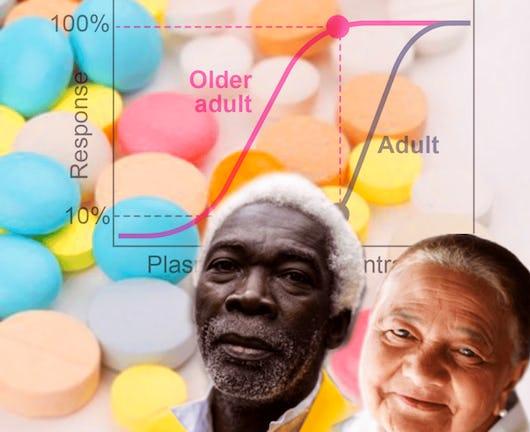
Older adults are more likely to consume more prescription and non-prescription medications, and this can place them at high risk for unintended harmful effects. An important component of the care of older adults relates to medication management. This course offers healthcare professionals and learners a comprehensive understanding of the physiological changes that occur with aging and their implications on medication management. It aims to equip participants with essential knowledge and skills to ensure safe and appropriate prescribing for older adults.
Class Deals by MOOC List - Click here and see Coursera's Active Discounts, Deals, and Promo Codes.
Through a series of engaging presentations, attendees will explore key concepts in pharmacology, evidence-based frameworks, and interdisciplinary practical strategies to optimize prescribing practices and enhance patient care across the continuum of care sites.
What you'll learn
- Recognize physiologic changes of aging as it relates to medication management.
- Define and discuss concepts & strategies related to medication prescribing & inappropriate prescribing practices in older adults.
- Identify system-based practice resources like interprofessional teams and EMR optimization to improve safe medication management.
Syllabus
Introduction & Module I: Medication Management and Physiology of Aging
Older adults are more likely to consume more prescription and non-prescription medications, and this can place them at high risk for unintended harmful effects. An important component of the care of older adults relates to medication management. This course offers healthcare professionals and learners a comprehensive understanding of the physiological changes that occur with aging and their implications on medication management. It aims to equip participants with essential knowledge and skills to ensure safe and appropriate prescribing for older adults. Through a series of engaging presentations, attendees will explore key concepts in pharmacology, evidence-based frameworks, and interdisciplinary practical strategies to optimize prescribing practices and enhance patient care across the continuum of care sites. This introductory module will introduce the Geriatric 5Ms framework and then discuss the basic science concepts of pharmacokinetics and pharmacodynamics as it relates to medication management in older adults. It will emphasize the importance of calculating accurate renal function in older adults and explore the reasoning behind the prescribing mantra “Start Low and Go Slow” in older people. It will highlight the special considerations of medication prescribing in older adults with certain geriatric syndromes like frailty, dementia and multimorbidity.
Module II: Key Concepts in Prescribing for Older Adults
This module will delve into key concepts and definitions of polypharmacy, adverse drug events (ADE), prescribing cascades and medication nonadherence. The module will explore types of ADEs using examples of drug-drug, drug-disease and drug-herbal interactions, and highlight the impact of ADEs on morbidity and mortality. These will serve as foundational knowledge for course participants in building their skill and behavior on safe prescribing for older adults, as they navigate through the rest of the modules of the course.
Module III: Tools and Strategies to Reduce Inappropriate Prescribing
This module will identify tools and strategies to reduce inappropriate prescribing including smart phone applications, physical adherence aids and guidelines such as the AGS Beers criteria. It will also introduce a Hierarchy of Medication Evaluation which can help prescribers assess medications before they prescribe them. Patient case examples will be used to apply the concepts of rationale prescribing and deprescribing.
Module IV: Role of Interdisciplinary Teams and System-based interventions in Improving Safe Prescribing during Care Transitions
Older adults are more likely to experience more complex care transitions within the health care system and require additional support to address issues such as polypharmacy and adverse drug effects. This module will explore the essential components involved in safe care transitions between different settings of care for older patients. It will emphasize the role of interdisciplinary teams in ensuring seamless transitions and effective information sharing. Additionally, this module will introduce practical tools to guide clinicians in safe prescribing practices for this vulnerable patient population.
Module V: Integrating Geriatric Prescribing Principles Using Evidence-Based Frameworks
Medication management in older adults is complex and requires careful consideration to address issues such as polypharmacy and adverse drug effects. In this final module of the course, participants will review several case-based scenarios to apply concepts learned in previous modules of this course and integrate the Geriatric 5Ms framework and American Geriatrics Society (AGS) and American Society of Clinical Pharmacists (ASCP) Choosing Wisely recommendations to help guide clinical decisions related to medical management for older adults.