Understanding Patient Perspectives on Medications (Coursera)

Understanding Patient Perspectives on Medications (Coursera)

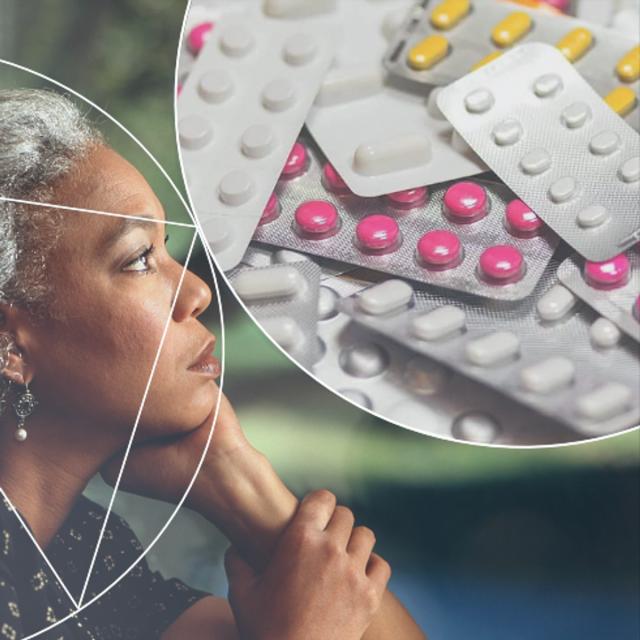
Inappropriate use of medicines harms patients’ health and increases healthcare costs. When healthcare professionals and patients engage together, healthcare can be based on the patient perspective, so the use of medicines is better tailored to each patients’ needs and preferences. The result is a better relationship between patients and healthcare professionals, more appropriate medicines use, improved patients’ outcomes, and reduced healthcare costs. In this course you will learn about the patient perspective on medicines use, and how to explore and apply it in healthcare and health policy.

Class Deals by MOOC List - Click here and see Coursera's Active Discounts, Deals, and Promo Codes.

Syllabus

WEEK 1
Why is the patient perspective important?
This module will give an overview of society-wide challenges related to medicines use. You will learn why it is important to understand the patient perspective on medicines use, and be introduced to issues that will be discussed during the course, such as patients’ perspectives versus professionals’ perspectives on medicines use.

WEEK 2
Patient stories
In this module you will learn about patients’ views on medicines use and how medicines are incorporated in their daily lives. You will be introduced to a model summarizing different aspects of the patient perspective on medicines use. You will also meet patients who will tell about their personal experiences with medicines use.

WEEK 3
The professional perspective
In this module you will learn that the patient's rationality regarding medicines use is not always in sync with the professionals’ rationality. You will be introduced to various ways of how healthcare professionals evaluate the patient perspective on medicines use. This relates to satisfaction, patients’ attitudes towards medicines, as well as knowledge of, and behavior related to medicines. Lastly, the module will enable you to reflect upon your own assumptions about patients’ medicine use.

WEEK 4
How to apply and explore the patient perspective
In this module, you will be presented with examples of how the patient perspective has been implemented into health policy and healthcare practice. You will get acquainted with different aspects of the qualitative interview – a method you can use to explore the patient perspective in depth. Lastly, you will reflect on how to use this knowledge in your professional setting. Please note! This week you must hand in a graded assignment and review three assignments from fellow students.
Go to Class
MOOC List is learner-supported. When you buy through links on our site, we may earn an affiliate commission.

Related Courses

Stories of Infection (Coursera) Coursera
Stanford University

Stories of Infection (Coursera)

This course introduces learners to a variety of infectious diseases using a patient-centered, story-based approach. Through illustrated, short videos, learners will follow the course of each patient’s illness, from initial presentation to resolution. Integrating the relevant microbiology, pathophysiology and immunology, this course aims to engage and entice the learner towards future studies in microbiology, immunology and infectious diseases.

Aug 17th 2026
5-12 Weeks
Case Studies in Personalized Medicine (Coursera) Coursera
Vanderbilt University

Case Studies in Personalized Medicine (Coursera)

Learn how advances in biomedicine hold the potential to revolutionize drug development, drug treatments, and disease prevention: where are we now, and what does the future hold? This course will present short primers in genetics and mechanisms underlying variability in drug responses. A series of case studies will be used to illustrate principles of how genetics are being brought to bear on refining diagnoses and on personalizing treatment in rare and common diseases. The ethical and operational issues around how to implement large scale genomic sequencing in clinical practice will be addressed.

Aug 17th 2026
5-12 Weeks
Diabetes - a Global Challenge (Coursera) Coursera
University of Copenhagen

Diabetes - a Global Challenge (Coursera)

Diabetes and obesity are growing health problems in rich and poor countries alike. With this course you will get updated on cutting-edge diabetes and obesity research including biological, genetic and clinical aspects as well as prevention and epidemiology of diabetes and obesity. All lectures are provided by high-profile scientists from one the world's leading universities in diabetes research.

Aug 17th 2026
5-12 Weeks
Dopage : Sports, Organisations et Sciences (Coursera) Coursera
University of Lausanne

Dopage : Sports, Organisations et Sciences (Coursera)

L'objectif du cours est de permettre une compréhension distanciée du dopage. C’est pour atteindre cet objectif que le cours s’appuie sur une approche pluridisciplinaire qui constitue une opportunité d'observer comment diverses disciplines abordent un même objet, selon différents angles et de manière complémentaire. Il s'agit également de donner des repères permettant d'appréhender le dopage dans sa complexité.

Aug 17th 2026
4 Weeks
The Social Context of Mental Health and Illness (Coursera) Coursera
University of Toronto

The Social Context of Mental Health and Illness (Coursera)

Learn how social factors promote mental health, influence the onset and course of mental illness, and affect how mental illnesses are diagnosed and treated. This course explores how our understanding of mental health and illness has been influenced by social attitudes and social developments in North America and around the world. The course begins by situating our contemporary mental health practices in historical context, then looks at different aspects of mental health, mental illness and mental health services and their connections to what’s going on in our social environment.

Aug 17th 2026
5-12 Weeks
Traditional herbal medicine in supportive cancer care: From alternative to integrative (Coursera) Coursera
Technion - Israel Institute of Technology

Traditional herbal medicine in supportive cancer care: From alternative to integrative (Coursera)

Please join us for an exciting and innovative journey, examining one of the most important and often overlooked aspects of the oncology setting: Traditional Herbal Medicine in Supportive Cancer Care. This course is presented with short lectures offering a wide range of issues related to the principles and practice of herbal medicine in cancer care.

Aug 17th 2026
13-24 Weeks
Childbirth: A Global Perspective (Coursera) Coursera
Emory University

Childbirth: A Global Perspective (Coursera)

This course will review challenges for maternal and newborn health in the developing world, where a great many women and babies are suffering from complications during pregnancy, childbirth, and the days following birth. Themes covered include the epidemiology of maternal and newborn mortality and morbidity, relevant issues for the global health workforce, community-based interventions to improve maternal and newborn health and survival, and sociocultural dynamics surrounding birth.

Aug 24th 2026
5-12 Weeks
Chemicals and Health (Coursera) Coursera
Johns Hopkins University

Chemicals and Health (Coursera)

This course covers chemicals in our environment and in our bodies and how they impact our health. It addresses policies and practices related to chemicals, particularly related to how they get into our bodies (exposures), what they do when they get there (toxicology), how we measure them (biomonitoring) and their impact on our health. Most examples are drawn from the US.

Aug 17th 2026
5-12 Weeks
Confronting Gender Based Violence: Global Lessons for Healthcare Workers (Coursera) Coursera
Johns Hopkins University

Confronting Gender Based Violence: Global Lessons for Healthcare Workers (Coursera)

This course introduces participants from the healthcare sector to gender based violence (GBV), including global epidemiology of GBV; health outcomes; seminal research; and clinical best practices for GBV prevention, support, and management. A core curriculum is supplemented by lectures that contextualize the content with specific examples and programs from around the world.

Aug 17th 2026
4 Weeks
Clinical Kidney, Pancreas and Islet Transplantation (Coursera) Coursera
Leiden University,Leiden University Medical Center

Clinical Kidney, Pancreas and Islet Transplantation (Coursera)

Kidney transplantation is a major advance of modern medicine which provides high-quality of life for patients with end-stage renal disease. What used to be an experimental, risky, and very limited treatment option more than 50 years ago is now routinely performed in many countries worldwide. The number of renal transplants is expected to rise sharply in the next decade since the proportion of patients with end stage renal disease is increasing.

Aug 17th 2026
4 Weeks
Training and Learning Programs for Volunteer Community Health Workers (Coursera) Coursera
Johns Hopkins University

Training and Learning Programs for Volunteer Community Health Workers (Coursera)

Volunteer community health workers (CHWs) are a major strategy for increasing access to and coverage of basic health interventions. Our village health worker training course reviews the process of training and continuing education of CHWs as an important component of involving communities in their own health service delivery. Participants will be guided through the steps of planning training and continuing education activities for village volunteers. The course draws on real-life examples from community-directed onchocerciasis control, village health worker programs, community case management efforts, peer educators programs and patent medicine vendor training programs, to name a few.

Aug 17th 2026
5-12 Weeks