Chemical Biology (Coursera)

Offered by University of Geneva,
Chemical Biology (Coursera)

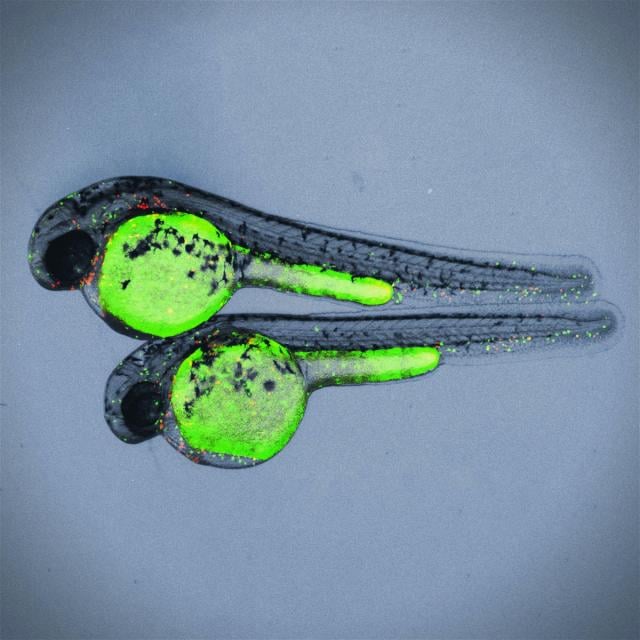
Chemical biology is a burgeoning field that has rapidly risen to prominence. This surge of interest has been fuelled by chemical biology’s applicability to understanding critical processes in live cells or model organisms in real time. This success has arisen because chemical biology straddles a nexus between chemistry, biology, and physics. Thus, chemical biology can harness rapid chemistry to observe or perturb biological processes, that are in turn reported using physical assays, all in an otherwise unperturbed living entity. Although its boundaries are endless, the multidisciplinary nature of chemical biology can make the field seem daunting; we beg to differ! Here, we deconstruct chemical biology into its core components, and repackage the material.

Class Deals by MOOC List - Click here and see Coursera's Active Discounts, Deals, and Promo Codes.

In the process we build up for each student a practical and theoretical knowledge bank that will set these students on their way to understanding and designing their own chemical biology experiments. We will discuss fluorescence as a general language used to read out biological phenomena as diverse as protein localization, membrane tension, surface phenomena, and enzyme activity. We will proceed to discuss protein labeling strategies and fusion protein design. Then we will discuss larger and larger scale chemical biology mechanism and screening efforts. Highlights include a large amount of new data, tailored in the lab videos, and a large number of skilled presenters.
What You Will Learn

  • Foundational comprehension of chemical biology
  • Interfacial science problem solving and method design
  • Understanding of applied, translational concepts in life sciences

Syllabus

WEEK 1
Welcome to Chemical Biology: Concepts and techniques
A very warm welcome to you, our new recruits! We'll start you off by acquainting you with the answers to big questions like why study chemical biology and what makes it special. We'll then show some highlights of the course that you are about to take. Finally, we want you to understand some fundamentals, so we are going to start off with some core concepts framed from the perspective of chemical biology.

WEEK 2
The Devil is in the Minutest Detail
A picture used to paint a thousand words. But with the advent of multiple color imaging, microscopy can open a lens with which to view life that few other techniques are capable of. We are thus going to take you on a colorful tour that will show you specific fluorophores, explain why different fluorophores have different colors, and how to rationalize why a molecule is fluorescent. Then we will use these fluorophores in cells, to visualize important cellular processes.

WEEK 3
A ruler over time and space! Fluorescent assays to measure complex parameters in real time
Here we will discuss how different fluorescent techniques have found fantastically useful applications to understand specific biological regulation processes in vitro and in live cells. We will focus on chromatin regulation and regulation of membrane tension as these are two systems which, without such techniques, we would not have the level of understanding we have today.

WEEK 4
Putting proteins to work for us
The classical view of biological science is the laboratory worker working hard to understand a specific protein of interest. But through chemical biology, we have been able to employ proteins to do some of this important work for us. In this module you will learn how to deploy modified protein domains to perform custom-designed functions using light-based techniques as a readout.

WEEK 5
Making light work of it on a larger and larger scale
In recent years numerous chemical biology processes have harnessed light-induced chemistry to control biology in terms of turning on or off inhibition, and exerting remote control of localization or chemical reactivity, amongst numerous other examples not covered here. We shed some light on these processes and exemplify the full spectrum of procedures possible using such approaches.

WEEK 6
Casting wide your net
We've learned how complex biology is, and how resourceful chemical biologist have started to peer into this complex landscape using custom-designed probes. But given the huge complexity of biology, we often have to start from ground zero, screening for a specific molecule or identifying a target of an interesting molecule. Here we will discuss methods that are ideal for these purposes in cells and in vitro.

Go to Class
MOOC List is learner-supported. When you buy through links on our site, we may earn an affiliate commission.

Related Courses

Thermodynamique : fondements (Coursera) Coursera
École Polytechnique Fédérale de Lausanne

Thermodynamique : fondements (Coursera)

Ce cours vous apportera une compréhension des concepts fondamentaux de la thermodynamique du point de vue de la physique, de la chimie et de l’ingénierie. Il est scindé un deux MOOCs. Dans la première partie, le Professeur J.-Ph. Ansermet de l’EPFL et son collaborateur le Dr. Sylvain Bréchet ont rassemblé en quatre leçons tous les principes fondamentaux de la thermodynamique. La deuxième partie du MOOC illustre l’approche thermodynamique par une série d’applications présentées par des spécialistes provenant de diverses institutions partenaires du réseau RESCIF.

Aug 17th 2026
4 Weeks
Dynamical Modeling Methods for Systems Biology (Coursera) Coursera
Icahn School of Medicine at Mount Sinai

Dynamical Modeling Methods for Systems Biology (Coursera)

An introduction to dynamical modeling techniques used in contemporary Systems Biology research. We take a case-based approach to teach contemporary mathematical modeling techniques. The course is appropriate for advanced undergraduates and beginning graduate students. Lectures provide biological background and describe the development of both classical mathematical models and more recent representations of biological processes. The course will be useful for students who plan to use experimental techniques as their approach in the laboratory and employ computational modeling as a tool to draw deeper understanding of experiments.

Aug 10th 2026
5-12 Weeks
Mechanics of Materials I: Fundamentals of Stress & Strain and Axial Loading (Coursera) Coursera
Georgia Institute of Technology

Mechanics of Materials I: Fundamentals of Stress & Strain and Axial Loading (Coursera)

This course explores the topic of solid objects subjected to stress and strain. The methods taught in the course are used to predict the response of engineering structures to various types of loading, and to analyze the vulnerability of these structures to various failure modes. Axial loading with be the focus in this course.

Aug 17th 2026
5-12 Weeks
Contemporary Biology (Coursera) Coursera
University of North Texas

Contemporary Biology (Coursera)

This course is an introduction to biology as it applies to our everyday life. Learners will explore the interplay between science and self through a personalized case study of themselves and their environment. By the end of the course, learners will be able to recognize the interactions among natural phenomena and the implications of the scientific principles behind the physical world and their experiences living in it.

Aug 17th 2026
4 Weeks
Mastering bitumen for better roads and innovative applications (Coursera) Coursera
École des Ponts ParisTech

Mastering bitumen for better roads and innovative applications (Coursera)

During the four coming weeks, best experts in bitumen will bring you their knowledge and experience to build a strong understanding of today’s realities and new perspectives on the future of bitumen. Total is the European leader on bitumen markets. Innovation has always been the key to sustainability and durability in the products they develop. Their main objective here is to share technical knowledge and experience to insure bitumen are being used in the most effective and efficient ways for their different applications in road works.

Aug 10th 2026
4 Weeks
Introduction to Genomic Technologies (Coursera) Coursera
Johns Hopkins University

Introduction to Genomic Technologies (Coursera)

This course introduces you to the basic biology of modern genomics and the experimental tools that we use to measure it. We'll introduce the Central Dogma of Molecular Biology and cover how next-generation sequencing can be used to measure DNA, RNA, and epigenetic patterns. You'll also get an introduction to the key concepts in computing and data science that you'll need to understand how data from next-generation sequencing experiments are generated and analyzed.

Aug 17th 2026
4 Weeks
Bugs 101: Insect-Human Interactions (Coursera) Coursera
University of Alberta

Bugs 101: Insect-Human Interactions (Coursera)

Of all the animals on earth, which are the strongest for their size? What about the fastest? Who were the first animals to evolve flight? Insects take all of these titles and more! As the most abundant animals on the planet, insects and other arthropods affect our lives in so many ways. From beneficial interactions like pollination and biological pest control, to the transmission of life threatening diseases; this course will teach you about the big ways that these little arthropods impact our lives.

Aug 17th 2026
13-24 Weeks
Act on Climate: Steps to Individual, Community, and Political Action (Coursera) Coursera
University of Michigan

Act on Climate: Steps to Individual, Community, and Political Action (Coursera)

Are you concerned about climate change? Would you like to learn how to address and respond to this challenge? If so, this course is for you. Act on Climate: Steps to Individual, Community, and Political Action is intended to help learners understand, address and respond to climate change as individuals and in partnership with their communities and political leaders.

Aug 10th 2026
5-12 Weeks
Introduction to Systems Biology (Coursera) Coursera
Icahn School of Medicine at Mount Sinai

Introduction to Systems Biology (Coursera)

This course will introduce the student to contemporary Systems Biology focused on mammalian cells, their constituents and their functions. Biology is moving from molecular to modular. As our knowledge of our genome and gene expression deepens and we develop lists of molecules (proteins, lipids, ions) involved in cellular processes, we need to understand how these molecules interact with each other to form modules that act as discrete functional systems.

Aug 10th 2026
5-12 Weeks