Basics of Extracellular Vesicles (Coursera)

Basics of Extracellular Vesicles (Coursera)

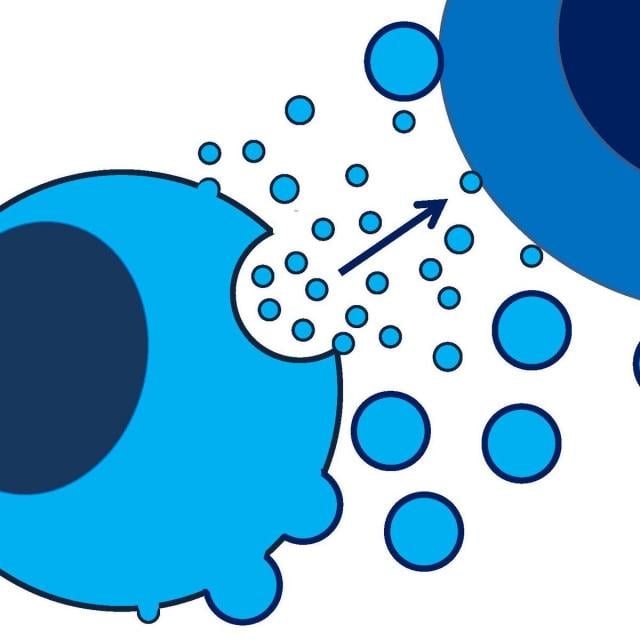
This course aims to provide the basic knowledge about extracellular vesicles (EV) a generic term including exosomes, microvesicles, microparticles, ectosomes, oncosomes, prostasomes, and many others. It covers areas such as EV history, nomenclature, biogenesis, EV cargo as well as the release and uptake mechanisms, collection and processing prior to isolation, different isolation methods, characterization and quantification techniques.

Class Deals by MOOC List - Click here and see Coursera's Active Discounts, Deals, and Promo Codes.

This course is divided into five modules. Module 1 is an introduction to the field and will cover the nomenclature and the history of EVs. Module 2 will focus on the biogenesis, release and uptake mechanisms of EVs as well as the different EV cargos (RNA, protein, lipids). In Module 3, we will focus on the collection and processing of cell culture media and body fluids such as blood, breast milk, cerebrospinal fluid and urine prior to isolation of EVs. Module 4 and 5 will present different isolation methods and characterization/quantification techniques, respectively. Here differential ultracentrifugation, size exclusion chromatography, density gradient, kit based precipitation, electron microscopy (EM), cryo-TEM, flow cytometry, atomic-force microscopy and nanoparticle tracking analysis will be presented.
The recommended prerequisites are college-freshman-level biology and biochemistry.
After a completed course you should be able to:
+ Discuss the nomenclature and subgroups of extracellular vesicles.
+ Describe the RNA, protein and lipid content of extracellular vesicles.
+ Describe the basic concepts about the most common isolation and characterization techniques and how these techniques are used in the EV field.
+ State the benefits and limitations of the most common isolation and characterization techniques for extracellular vesicles. + Explain the considerations that are important during the collection and isolation of EVs from different body fluid.
+ Describe the release and uptake mechanisms of extracellular vesicles
All lectures are given in English.
Each of the five modules will be followed by an exam. All exams will be in the format of multiple choice questions.
The course is organized in collaboration between the International Society for Extracellular Vesicles (ISEV), University of California Irvine (USA), University of Gothenburg (Sweden) and Pohang University of Science and Technology (South Korea).

Syllabus

WEEK 1
Introduction to the Course and the Field of Extracellular Vesicles
In this module, we will introduce the course and the field of extracellular vesicles. We will discuss the nomenclature and the history of extracellular vesicles as well as the organisms and places that have been shown to release/contain extracellular vesicles.

WEEK 2
Biogenesis, Cargo and Uptake of Extracellular Vesicles
In this module, we will focus on the biogenesis and release of extracellular vesicles as well as the uptake mechanisms of extracellular vesicles when they are encountered by a recipient cell. This module also covers the different RNA, protein and lipid types present in extracellular vesicles as well as a brief overview what the functions of these molecules are. Furthermore, the techniques that are commonly used to detect these molecules as well as databases that can be useful to use when analyzing the cargo of extracellular vesicles will be highlighted.

WEEK 3
Collection and Processing of Cell Culture Media and Body Fluids Prior to Isolation of Extracellular Vesicles
In this module, we will focus on the collection and processing of cell culture media and body fluids prior to isolation of extracellular vesicles. We will discuss some of the considerations and guidelines that are important during the collection of staring material and isolation of extracellular vesicles. This module will help you with the different choices, such as anticoagulants, collection time points and protein inhibitors, which are important for the outcome when working with a particular body fluid compared to conditional media or other body fluids. This module will also illustrate some example of studies on extracellular vesicles from body fluid such as blood, urine, breast milk and cerebrospinal fluid and why it is of interest to analyse extracellular vesicles from these body fluids.

WEEK 4
Methods for Isolating Extracellular Vesicles
This module highlights some of the different methods used to isolate extracellular vesicles. Here the basic concepts for methods such as differential ultracentrifugation, density gradient, size exclusion and kit-based precipitation will be covered and some guidelines will be presented. Furthermore, this module will cover how the techniques are used in the field of extracellular vesicles as well as their limitations and benefits.
WEEK 5
Techniques for Characterization and Quantification of Extracellular Vesicles
This module highlights some of the different techniques used to characterize extracellular vesicles. Here the basic concepts for techniques such as electron microscopy (EM), cryo-TEM, flow cytometry, atomic-force microscopy and nanoparticle tracking analysis will be covered and some guidelines will be presented. Furthermore, this module will cover how the techniques are used in the field of extracellular vesicles as well as their limitations and benefits.
Go to Class
MOOC List is learner-supported. When you buy through links on our site, we may earn an affiliate commission.

Related Courses

Введение в биоинформатику (Introduction to Bioinformatics) (Coursera) Coursera
Saint Petersburg State University

Введение в биоинформатику (Introduction to Bioinformatics) (Coursera)

Курс «Введение в биоинформатику» адресован тем, кто хочет получить расширенное представление о том, что такое биоинформатика и как она помогает биологам и медикам в их работе. The course is aimed at those who would like to have a better idea of what bioinformatics is and how it helps biologists and medical scientists in research and clinical work.

Jul 27th 2026
5-12 Weeks
Antimicrobial resistance - theory and methods (Coursera) Coursera
Technical University of Denmark - DTU

Antimicrobial resistance - theory and methods (Coursera)

The course will cover the topics related to antimicrobial resistance with basic definitions and overview on antimicrobials their use and the emergence and spread of resistance. The course will guide you through the concepts and the importance of resistance spread and dissemination and how that happens. It will show you how bacteria become resistant and which mechanisms they might use for this. And as part of the course you will also receive some training in methods for antimicrobial susceptibility testing (AST) and detection of specific resistance in the microbiological laboratories with the basic methods available and with focus on the obtention of good quality results which can be interpreted and used for different purposes.

Jul 27th 2026
5-12 Weeks
Biology Everywhere Foundations (Coursera) Coursera
University of Colorado Boulder

Biology Everywhere Foundations (Coursera)

In this course, we will explore the nature of science and biology. We will discuss what the “biology everywhere” philosophy means and the history of the “biology everywhere” project. We will also discuss what science (and biology) are as a discipline of inquiry and how chemistry is foundational to understanding biology.

Jul 27th 2026
4 Weeks
Evolution: A Course for Educators (Coursera) Coursera
American Museum of Natural History

Evolution: A Course for Educators (Coursera)

How are all of the species living on Earth today related? How does understanding evolutionary science contribute to our well-being? In this course, participants will learn about evolutionary relationships, population genetics, and natural and artificial selection. Participants will explore evolutionary science and learn how to integrate it into their classrooms.

Jul 27th 2026
4 Weeks
Pensamiento Científico (Coursera) Coursera
Universidad Nacional Autónoma de México

Pensamiento Científico (Coursera)

¿El pensamiento científico es sólo para científicos? Su utilidad va mucho más allá, ayudando a las personas a tomar mejores decisiones todos los días. El objetivo de este curso es fomentar en pensamiento científico en los alumnos para ayudarles a tomar mejores decisiones profesionales, personales y sociales.

Aug 3rd 2026
5-12 Weeks
Experimental Methods in Systems Biology (Coursera) Coursera
Icahn School of Medicine at Mount Sinai

Experimental Methods in Systems Biology (Coursera)

Learn about the technologies underlying experimentation used in systems biology, with particular focus on RNA sequencing, mass spec-based proteomics, flow/mass cytometry and live-cell imaging. A key driver of the systems biology field is the technology allowing us to delve deeper and wider into how cells respond to experimental perturbations. This in turns allows us to build more detailed quantitative models of cellular function, which can give important insight into applications ranging from biotechnology to human disease. This course gives a broad overview of a variety of current experimental techniques used in modern systems biology, with focus on obtaining the quantitative data needed for computational modeling purposes in downstream analyses.

Jul 27th 2026
5-12 Weeks
Genomics: Decoding the Universal Language of Life (Coursera) Coursera
University of Illinois at Urbana-Champaign

Genomics: Decoding the Universal Language of Life (Coursera)

What is a genome? A genome contains all of the information that a cell needs to develop, function, and reproduce itself, and all the information needed for those cells to come together to form a person, plant, or animal. Genomes contain an organism’s complete set of genes, and also the even tinier genetic structures that help regulate when and how those genes are used. The ability to regrow a torn ligament, the clues that might predict the onset of mental illness, the nutritional potential of crops, and even the history of life itself, are all encoded in genomes. By taking this course, you will discover how scientists are deciphering the language of genomes to learn how to develop sustainable food and fuel supplies, improve disease treatment and prevention, and protect our environment.

Aug 3rd 2026
5-12 Weeks
Extracellular Vesicles in Health and Disease (Coursera) Coursera
University of California, Irvine

Extracellular Vesicles in Health and Disease (Coursera)

This course aims to provide current understanding about extracellular vesicles (EVs) and their role in health and diseases. The EVs are known to be involved in cell to cell communication. Apart from maintaining normal cell physiology, EVs deliver messages that can drive or influence the progression of a disease. This course discusses recent advances made in the field to give an introduction on their function in health as well as in disease.

Jul 27th 2026
4 Weeks
Advanced Neurobiology I (Coursera) Coursera
Peking University

Advanced Neurobiology I (Coursera)

Hello everyone! Welcome to advanced neurobiology! Neuroscience is a wonderful branch of science on how our brain perceives the external world, how our brain thinks, how our brain responds to the outside of the world, and how during disease or aging the neuronal connections deteriorate. We’re trying to understand the molecular, cellular nature and the circuitry arrangement of how nervous system works.

Jul 27th 2026
5-12 Weeks