Epigenetic Control of Gene Expression (Coursera)

Epigenetic Control of Gene Expression (Coursera)

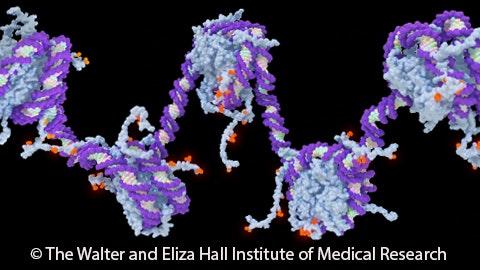
While the human genome sequence has transformed our understanding of human biology, it isn’t just the sequence of your DNA that matters, but also how you use it! How are some genes activated and others are silenced? How is this controlled? The answer is epigenetics.

Class Deals by MOOC List - Click here and see Coursera's Active Discounts, Deals, and Promo Codes.

pigenetics has been a hot topic for research over the past decade as it has become clear that aberrant epigenetic control contributes to disease (particularly to cancer). Epigenetic alterations are heritable through cell division, and in some instances are able to behave similarly to mutations in terms of their stability. Importantly, unlike genetic mutations, epigenetic modifications are reversible and therefore have the potential to be manipulated therapeutically. It has also become clear in recent years that epigenetic modifications are sensitive to the environment (for example diet), which has sparked a large amount of public debate and research.
This course will give an introduction to the fundamentals of epigenetic control. We will examine epigenetic phenomena that are manifestations of epigenetic control in several organisms, with a focus on mammals. We will examine the interplay between epigenetic control and the environment and finally the role of aberrant epigenetic control in disease.
All necessary information will be covered in the lectures, and recommended and required readings will be provided. There are no additional required texts for this course.

Syllabus

WEEK 1
Introduction to Epigenetic Control
An introduction to and definition of epigenetic control of gene expression, and its importance in normal development. We will learn what chromatin is, and how its composition and packaging can alter gene expression. We’ll also discuss the best-characterised epigenetic modification, DNA methylation, and how it is not only implicated in regulating gene expression, but also in maintaining genome stability.

WEEK 2
Epigenetic Modifications and Organisation of the Nucleus
We’ll discuss the molecular mechanisms for regulating gene expression in some detail, from how the DNA is packaged at a local level, right up to how the chromatin is positioned within the nucleus. We’ll learn about the chromatin modifications implicated in gene silencing and activation, the role of non-coding RNA, and higher order chromatin structures. This week will provide you with a good understanding of the basic mechanisms that will help you understand the processes we discuss throughout the rest of the course.

WEEK 3
Dosage Compensation
X chromosome inactivation is a really well-characterised epigenetic process that is now used as a model system to study epigenetic processes that are relevant more broadly. This is because it uses many epigenetic mechanisms, at many levels, to achieve really stable silencing of a whole chromosome. We’ll learn about this process and how it occurs in a mouse in great detail, which will greatly add to the mechanistic understanding gained in week two. We will then briefly discuss alternate mechanisms for dosage compensation that occur in other organisms.

WEEK 4
Genomic Imprinting and Epigenetic Reprogramming
We’ll learn about the two important periods during development for the erasure and resetting of the epigenome. There are two well-characterised features that are treated differently during epigenetic reprogramming; imprinted genes and repeats. We’ll learn about mechanisms for genomic imprinting, and study three examples in more depth.

WEEK 5
The Influence of the Environment on Epigenetic Control
We start to look at some of the big areas of interest in human epigenetics, including environmental influence on the epigenome, reprogramming of somatic cells back to stem cells, cloning, and potential transgenerational epigenetic inheritance. We’ll discuss what is known to happen to the epigenome during these process, and look at some seminal case studies.

WEEK 6
Mechanisms of Environmental Influence on Epigenetic Control and Transgenerational Epigenetic Inheritance Through the Gametes
A look at the mechanisms underlying some of the observations we discussed in week 5, through the study of model organisms. We’ll learn about metastable epialleles, which have allowed the study of transgenerational epigenetics in mice, and provided some evidence for transgenerational epigenetics in mammals.

WEEK 7
Cancer Epigenetics
This week we’ll bring together much of what we’ve learned in previous weeks of the course, to understand how the epigenome is affected, and can also affect, cancer development and progression. We’ll then go on to discuss the potential therapeutic benefits that can come from using epigenetic biomarkers, and targeting epigenetic modifiers in cancer.
Go to Class
MOOC List is learner-supported. When you buy through links on our site, we may earn an affiliate commission.

Related Courses

Agroforestry IV: Climate, Carbon Storage and Agroforestry (Coursera) Coursera
University of Florida

Agroforestry IV: Climate, Carbon Storage and Agroforestry (Coursera)

Welcome to Agroforestry IV: Climate Change, Carbon Storage and Agroforestry Systems, a detailed review of fundamental principles and best practices for successful agroforestry projects. This interdisciplinary module, presented by leading experts in the field, is the fourth in the five-module course covering the various aspects of agroforestry including the global distribution of the practices, their underlying principles, and major scientific advances during the past nearly five decades.

Jul 6th 2026
1 Week
Bioinformatic Methods II (Coursera) Coursera
University of Toronto

Bioinformatic Methods II (Coursera)

Large-scale biology projects such as the sequencing of the human genome and gene expression surveys using RNA-seq, microarrays and other technologies have created a wealth of data for biologists. However, the challenge facing scientists is analyzing and even accessing these data to extract useful information pertaining to the system being studied. This course focuses on employing existing bioinformatic resources – mainly web-based programs and databases – to access the wealth of data to answer questions relevant to the average biologist, and is highly hands-on.

Jul 6th 2026
5-12 Weeks
Toxicology 21: Scientific Applications (Coursera) Coursera
Johns Hopkins University

Toxicology 21: Scientific Applications (Coursera)

This course familiarizes students with the novel concepts being used to revamp regulatory toxicology in response to a breakthrough National Research Council Report “Toxicity Testing in the 21st Century: A Vision and a Strategy.” We present the latest developments in the field of toxicology—the shift from animal testing toward human relevant, high content, high-throughput integrative testing strategies. Active programs from EPA, NIH, and the global scientific community illustrate the dynamics of safety sciences.

Jul 6th 2026
5-12 Weeks
Basics of Extracellular Vesicles (Coursera) Coursera
University of California, Irvine

Basics of Extracellular Vesicles (Coursera)

This course aims to provide the basic knowledge about extracellular vesicles (EV) a generic term including exosomes, microvesicles, microparticles, ectosomes, oncosomes, prostasomes, and many others. It covers areas such as EV history, nomenclature, biogenesis, EV cargo as well as the release and uptake mechanisms, collection and processing prior to isolation, different isolation methods, characterization and quantification techniques.

Jul 6th 2026
5-12 Weeks
Fundamentals of Immunology: Dueling with the Dark Side (Coursera) Coursera
Rice University

Fundamentals of Immunology: Dueling with the Dark Side (Coursera)

Fundamentals of Immunology, Course 4: Dueling with the Dark Side, covers the constant battle between your immune system and threats to your health. The first two lectures discuss viral and cellular pathogens, focusing on specific tactics they use to deflect immune attack. Next, a cheerier lecture describes other immune-based therapies, beginning with the use of engineered antibodies to treat specific diseases.

Jul 6th 2026
5-12 Weeks
Agroforestry II: Major Systems of the World (Coursera) Coursera
University of Florida

Agroforestry II: Major Systems of the World (Coursera)

Welcome to Agroforestry II: Major Systems of the World. A focused exploration of agroforestry practices from around the world. This is the second module of the five-module course covering the various aspects of agroforestry including the global distribution of the practices, their underlying principles, and major scientific advances during the past nearly five decades, presented by leading experts in the field.

Jul 6th 2026
2 Weeks
Easing the burden of obesity, diabetes and cardiovascular disease (Coursera) Coursera
The University of Sydney

Easing the burden of obesity, diabetes and cardiovascular disease (Coursera)

This course is multidisciplinary in nature, and aims to equip the global audience of interested lay people, people with chronic disease, public health researchers, health clinicians, students, administrators, and researchers to reflect on the overall impact of the burden of chronic disease. It shows how all chronic diseases (obesity, diabetes, cardiovascular disease, chronic obstructive pulmonary disease, and cancer) are related by a set of common causes, and that such diseases should be tackled, not individually, but as part of a complex system, with interrelated contributing factors. These factors are genetic, environmental, psychological, economic, social, developmental, and media related.

Jul 6th 2026
5-12 Weeks
Understanding Plants - Part II: Fundamentals of Plant Biology (Coursera) Coursera
Tel Aviv University

Understanding Plants - Part II: Fundamentals of Plant Biology (Coursera)

This class is aimed at people interested in understanding the basic science of plant biology. In this four lecture series, we'll first learn about the structure-function of plants and of plant cells. Then we'll try to understand how plants grow and develop, making such complex structures as flowers. Once we know how plants grow and develop, we'll then delve into understanding photosynthesis - how plants take carbon dioxide from the air and water from soil, and turn this into oxygen for us to breathe and sugars for us to eat. In the last lecture we'll learn about the fascinating, important and controversial science behind genetic engineering in agriculture.

Jul 6th 2026
4 Weeks
Natural Attenuation of Groundwater Contaminants: New Paradigms, Technologies, and Applications (Coursera) Coursera
Rice University

Natural Attenuation of Groundwater Contaminants: New Paradigms, Technologies, and Applications (Coursera)

Cleaning up the large number of groundwater contamination sites is a significant and complex environmental challenge. The environmental industry is continuously looking for remediation methods that are both effective and cost-efficient. Over the past 10 years there have been amazing, important developments in our understanding of key attenuation processes and technologies for evaluating natural attenuation processes, and a changing institutional perspective on when and where Monitored Natural Attenuation (MNA) may be applied.

Jul 6th 2026
5-12 Weeks
Agroforestry III: Principles of Plant and Soil Management (Coursera) Coursera
University of Florida

Agroforestry III: Principles of Plant and Soil Management (Coursera)

Agroforestry III: Principles of Plant and Soil Management is a detailed review of fundamental principles and best practices for successful agroforestry projects through understanding plant and soil interactions. This interdisciplinary module, presented by leading experts in the field, is the third in the five-module course covering the various aspects of agroforestry including the global distribution of the practices, their underlying principles, and major scientific advances during the past nearly five decades.

Jul 6th 2026
3 Weeks
Understanding Plants - Part I: What a Plant Knows (Coursera) Coursera
Tel Aviv University

Understanding Plants - Part I: What a Plant Knows (Coursera)

For centuries we have collectively marveled at plant diversity and form—from Charles Darwin’s early fascination with stems and flowers to Seymour Krelborn’s distorted doting in Little Shop of Horrors. This course intends to present an intriguing and scientifically valid look at how plants themselves experience the world—from the colors they see to the sensations they feel. Highlighting the latest research in genetics and more, we will delve into the inner lives of plants and draw parallels with the human senses to reveal that we have much more in common with sunflowers and oak trees than we may realize.

Jul 6th 2026
5-12 Weeks
Molecular Tumoral Board 2020-21 (Coursera) Coursera
University of Barcelona

Molecular Tumoral Board 2020-21 (Coursera)

Se trata de un curso que nace a raíz de una de las sesiones formativas que realiza cada 15 días el Servicio de Oncología Médica del Hospital Clínic de Barcelona (HCB). En este curso se presentan casos clínicos simulando un MTB de tumores sólidos, con un objetivo principal, mejorar el conocimiento específico del impacto clínico del perfil molecular en tumores sólidos. Está destinado a médicos oncólogos y a estudiantes y profesionales vinculados a la oncología médica. Cada seminario que conforma el curso lo presenta un profesional de una patología diferente del Servicio de Oncología Médica del HCB.

Jul 6th 2026
5-12 Weeks