The Addicted Brain (Coursera)

Offered by Emory University,
The Addicted Brain (Coursera)

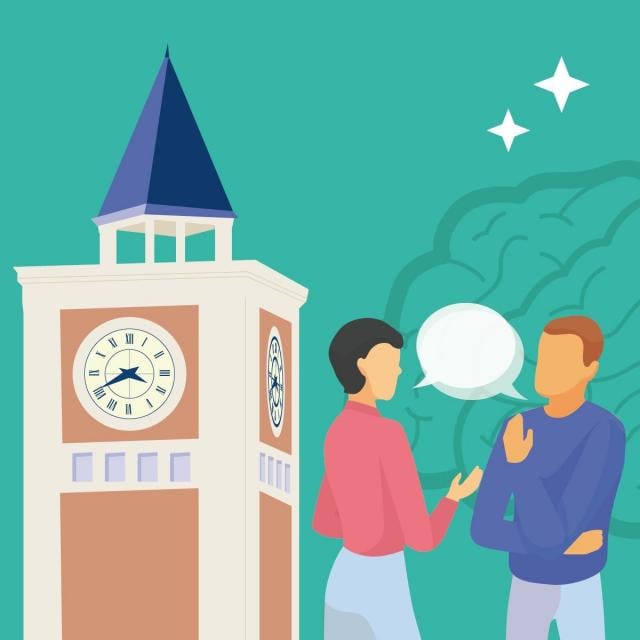
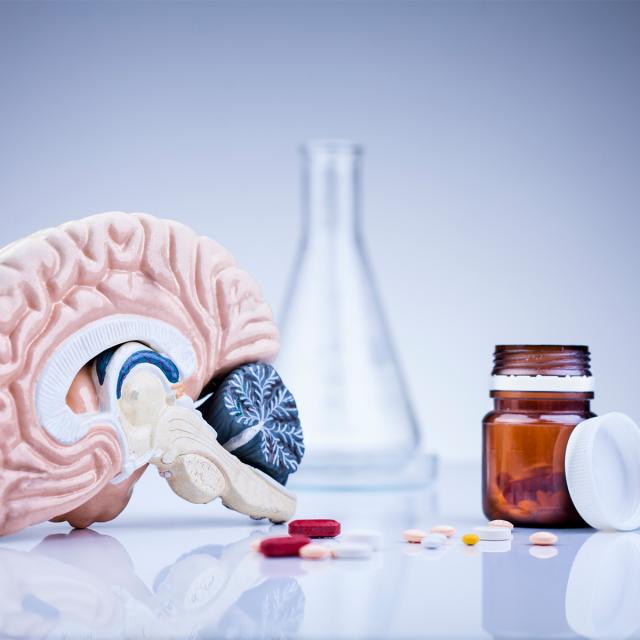
This is a course about addiction to drugs and other behaviors. It will describe what happens in the brain and how this information helps us deal with and overcome addiction. It will also discuss other topics such as government policy and our vulnerability to take drugs.

Class Deals by MOOC List - Click here and see Coursera's Active Discounts, Deals, and Promo Codes.

Syllabus

WEEK 1
The Background & Overview of Drug Use
In this first week, we'll explore drug abuse, types of addictions, and the behaviors associated with them.

WEEK 2
Drugs & How the Brain Works
In this second week, we'll get a glimpse at why certain drugs are addicting and how they affect different regions of the brain.

WEEK 3
Classes of Drugs
In this third week, we'll take a deep dive into the different types of drugs and their individual effects.

WEEK 4
Classes of Drugs with Animal Models
In this fourth week, we'll take a look at the drug self-administration model in animals and the implications of these results.

WEEK 5
Neurotransmission & Brain Imaging
In this fifth week, we'll consider synaptic transmission and how drugs alter it.

WEEK 6
Vulnerability: Drug Use, Abuse, & Prevention
In this sixth week, we'll have the chance to consider the concept of vulnerability and the value and effectiveness of treatment.

WEEK 7
Treatment, Policy, & Decriminalization
In this seventh week, we'll explore drug treatment and government drug policies that exist.

WEEK 8
Drugs & Society
In this final week, we'll explore the recent opioid epidemic as well as the topic of medical and recreational marijuana.
Go to Class
MOOC List is learner-supported. When you buy through links on our site, we may earn an affiliate commission.

Related Courses

Sleep: Neurobiology, Medicine, and Society (Coursera) Coursera
University of Michigan

Sleep: Neurobiology, Medicine, and Society (Coursera)

The objective of this course is to give students the most up-to-date information on the biological, personal, and societal relevance of sleep. Personal relevance is emphasized by the fact that the single best predictor of daytime performance is the quality of the previous night's sleep. The brain actively generates sleep, and the first section of the course is an overview of the neurobiological basis of sleep control.

Oct 12th 2026
5-12 Weeks
Pensamiento Científico (Coursera) Coursera
Universidad Nacional Autónoma de México

Pensamiento Científico (Coursera)

¿El pensamiento científico es sólo para científicos? Su utilidad va mucho más allá, ayudando a las personas a tomar mejores decisiones todos los días. El objetivo de este curso es fomentar en pensamiento científico en los alumnos para ayudarles a tomar mejores decisiones profesionales, personales y sociales.

Sep 28th 2026
5-12 Weeks
Advanced Neurobiology II (Coursera) Coursera
Peking University

Advanced Neurobiology II (Coursera)

Hello everyone! Welcome to advanced neurobiology! Neuroscience is a wonderful branch of science on how our brain perceives the external world, how our brain thinks, how our brain responds to the outside of the world, and how during disease or aging the neuronal connections deteriorate. We’re trying to understand the molecular, cellular nature and the circuitry arrangement of how nervous system works.

Oct 5th 2026
5-12 Weeks
The Science of Stem Cells (Coursera) Coursera
American Museum of Natural History

The Science of Stem Cells (Coursera)

What promise do stem cells hold for the treatment of medical conditions? In this five-part online course you will explore the history and basic biology of stem cells, learn about new research techniques, and find out how stem cells could lead to cures for diseases and to individualized medicine.

Oct 5th 2026
5-12 Weeks
Dynamical Modeling Methods for Systems Biology (Coursera) Coursera
Icahn School of Medicine at Mount Sinai

Dynamical Modeling Methods for Systems Biology (Coursera)

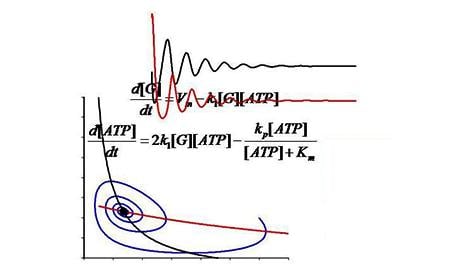
An introduction to dynamical modeling techniques used in contemporary Systems Biology research. We take a case-based approach to teach contemporary mathematical modeling techniques. The course is appropriate for advanced undergraduates and beginning graduate students. Lectures provide biological background and describe the development of both classical mathematical models and more recent representations of biological processes. The course will be useful for students who plan to use experimental techniques as their approach in the laboratory and employ computational modeling as a tool to draw deeper understanding of experiments.

Oct 5th 2026
5-12 Weeks
Engineering Life: Synbio, Bioethics & Public Policy (Coursera) Coursera
Johns Hopkins University

Engineering Life: Synbio, Bioethics & Public Policy (Coursera)

Synbio is a diverse field with diverse applications, and the different contexts (e.g., gain-of-function research, biofuels) raise different ethical and governance challenges. The objective of this course is to increase learners’ awareness and understanding of ethical and policy/governance issues that arise in the design, conduct and application of synthetic biology. The course will begin with a short history of recombinant DNA technology and how governance of that science developed and evolved, and progress through a series of areas of application of synbio.

Oct 5th 2026
5-12 Weeks
Introduction to Forensic Science (Coursera) Coursera
Nanyang Technological University

Introduction to Forensic Science (Coursera)

We have all seen forensic scientists in TV shows, but how do they really work? What is the science behind their work? The course aims to explain the scientific principles and techniques behind the work of forensic scientists and will be illustrated with numerous case studies from Singapore and around the world.

Oct 19th 2026
5-12 Weeks
Introducción a la Psicología (Coursera) Coursera
Universidad Austral

Introducción a la Psicología (Coursera)

¿Qué es el inconsciente? ¿Qué es la autoestima? ¿Qué es el apego y cómo incide en los vínculos adultos ? ¿Cómo funciona nuestro cerebro y cómo se modifica a lo largo de la vida? En este curso se abordarán estos interrogantes y diversos temas vinculados con la Psicología desde una mirada académica y mediante el estudio de los principales autores que han realizado significativos aportes a esta ciencia.

Oct 12th 2026
5-12 Weeks
Nanotechnology and Nanosensors, Part 1 (Coursera) Coursera
Technion - Israel Institute of Technology

Nanotechnology and Nanosensors, Part 1 (Coursera)

Nanotechnology and nanosensors are broad, interdisciplinary areas that encompass (bio)chemistry, physics, biology, materials science, electrical engineering and more. The present course will provide a survey on some of the fundamental principles behind nanotechnology and nanomaterials and their vital role in novel sensing properties and applications. The course will discuss interesting interdisciplinary scientific and engineering knowledge at the nanoscale to understand fundamental physical differences at the nanosensors.

Oct 5th 2026
5-12 Weeks