Genomics: Decoding the Universal Language of Life (Coursera)

Genomics: Decoding the Universal Language of Life (Coursera)

What is a genome? A genome contains all of the information that a cell needs to develop, function, and reproduce itself, and all the information needed for those cells to come together to form a person, plant, or animal. Genomes contain an organism’s complete set of genes, and also the even tinier genetic structures that help regulate when and how those genes are used. The ability to regrow a torn ligament, the clues that might predict the onset of mental illness, the nutritional potential of crops, and even the history of life itself, are all encoded in genomes. By taking this course, you will discover how scientists are deciphering the language of genomes to learn how to develop sustainable food and fuel supplies, improve disease treatment and prevention, and protect our environment.

Class Deals by MOOC List - Click here and see Coursera's Active Discounts, Deals, and Promo Codes.

Professor Robinson is the main instructor for this course. In addition, each module features several guest instructors. These guest instructors come from diverse fields of study—biology, physics, computer science, and many others—and pursue diverse research goals, yet they share a common interest in genomic approaches and technologies. The guest instructors include:

  • Elizabeth (Lisa) Ainsworth, Associate Professor of Plant Biology
  • Mark Band, Director of the Functional Genomics Facility
  • Alison Bell, Associate Professor of Animal Biology
  • Jenny Drnevich, Functional Genomics Bioinformatics Specialist with High-Performance Biological Computing
  • Christopher Fields, Associate Director of High-Performance Biological Computing
  • Bruce Fouke, Director of the Roy J. Carver Biotechnology Center
  • Glenn Fried, Director of the Carl R. Woese Institute for Genomic Biology Core Facilities
  • Nigel Goldenfeld, Professor of Physics
  • Brendan Harley, Assistant Professor of Chemical and Biomolecular Engineering
  • Alvaro Hernandez, Director of the High-Throughput Sequencing and Genotyping Facility
  • Victor Jongeneel, former NCSA Director of Bioinformatics and former Director of High-Performance Biological Computing
  • Kingsley Boateng, Senior Research Specialist with the Carl R. Woese Institute for Genomic Biology Core Facilities
  • Stephen Long, Professor of Plant Biology and Crop Sciences
  • Ruby Mendenhall, Associate Professor of African American Studies
  • William Metcalf, Professor of Microbiology
  • Karen Sears, Assistant Professor of Animal Biology
  • Saurabh Sinha, Associate Professor of Computer Science
  • Lisa Stubbs, Professor of Cell and Developmental Biology
  • Rachel Whitaker, Associate Professor of Microbiology
  • Derek Wildman, Professor of Molecular and Integrative Physiology
  • Peter Yau, Director of the Protein Sciences Facility

Syllabus

WEEK 1
Course Orientation
You will become familiar with the course, your classmates, and our learning environment. The orientation will also help you obtain the technical skills required for the course.
What Is a Genome and Why Do We Care?
Genes, genomes, DNA: these words have slipped into our daily news cycles and our awareness, but what they actually mean often remains unclear. In these lessons, we aim to give you, not just the Biology 101 explanation of what a genome is, but a real-life perspective on why you already care about genomics – perhaps in ways you didn’t even realize. Are you interested in where your food comes from, what health conditions you are most likely to develop, what fish will share your aquarium most successfully? Genomes are a key to finding a better answer to these and other everyday questions.

WEEK 2
What Were the First Genomes Like and How Do They Work Now?
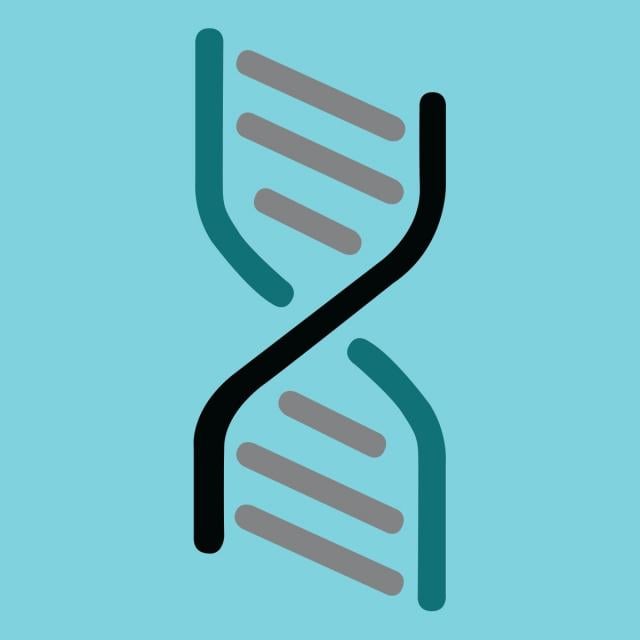
You may have seen DNA visually represented in different ways: a twisted ladder, a tangle of string, an array of sloppy X shapes, a row of letters. But what is DNA actually doing, and how does it relate to genes and the genome? How are scientists able to move from studying the physical structure of the genome to understanding its functionality? This module will help you become more comfortable with these ideas.

WEEK 3
How Can We Use Genomes to Understand the Healthy Body and Fight Diseases?
Often, we hear about genes only when something goes wrong – when mutations, mistakes made in the DNA sequence, cause a disease like cancer cystic fibrosis. But what happens inside our cells that leads from a mutation in DNA to the physical symptoms of a disease? Why do some mutations cause positive outcomes, or no change at all? To answer these questions, we take a closer look at how information flows from genes, to RNA, to proteins, to all the physical structures and processes that make up living things.

WEEK 4
What Can Genomes Tell Us About How to Grow New Organs or New Crops?
If all the cells in all the tissues and organs of our bodies have the same genome, how is it that they can look so different? How does a hair cell, a white blood cell, or a brain cell know what to do or where to go? The answer can be found by looking beyond the structure of the genome, into the timing of its activities. Recognizing how the information stored in the genome can be used in flexible ways shows us how living things can develop and change over time.

WEEK 5
How Might Genomes Allow Us to Predict Health Problems Before They Occur?
You may have heard of "nature vs. nurture" or the modern day response, "nature AND nurture!" But how does "nurture," the environment, act through the genome? Can the biological effects of experience be passed from one generation to the next? And what does all of this have to do with everyday issues, like our physical and mental health? A closer look at two mechanisms that help regulate the activity for genes, epigenetic modifications and transcription factors, provides some answers.

WEEK 6
How Do the Genomes of Ecosystem Members Cooperate or Conflict?
The world is a big and sometimes incomprehensibly complex place. Just as no gene in the genome acts in isolation, no living thing on this planet exists in isolation. In this final module of the course, we explore some of the rich, complicated interactions between living things, their genomes, and the world that surrounds them.
Go to Class
MOOC List is learner-supported. When you buy through links on our site, we may earn an affiliate commission.

Related Courses

Evolution: A Course for Educators (Coursera) Coursera
American Museum of Natural History

Evolution: A Course for Educators (Coursera)

How are all of the species living on Earth today related? How does understanding evolutionary science contribute to our well-being? In this course, participants will learn about evolutionary relationships, population genetics, and natural and artificial selection. Participants will explore evolutionary science and learn how to integrate it into their classrooms.

Jun 1st 2026
4 Weeks
Nutrition and Lifestyle in Pregnancy (Coursera) Coursera
Ludwig-Maximilians-Universität München

Nutrition and Lifestyle in Pregnancy (Coursera)

Nutrition and Lifestyle in Pregnancy offers an overview of the latest research findings and international recommendations on a variety of nutrition-related aspects and outcomes of pregnancy. Ensuring a healthy nutritional status and lifestyle prior to and during pregnancy is one of the best ways to help support the healthy growth and development of the unborn child. We will look at how a healthy diet and lifestyle should ideally be achieved prior to conception and provide recommendations for pre-conception counselling of women.

Jun 1st 2026
4 Weeks
In the footsteps of Zika… approaching the unknown (Coursera) Coursera
University of Geneva

In the footsteps of Zika… approaching the unknown (Coursera)

Welcome to this on-demand MOOC “In the footsteps of Zika… approaching the unknown”. This MOOC has been produced by Université de Genève Institut Pasteur, Université Paris Descartes and Centre Virchow-Villermé. With the help of the intervention of faculty members and international experts, we will explore together the recent Zika phenomenon, a previously rare benign virus that recently turned unexpectedly into the limelight when on the 1st of February 2016 it was declared by the WHO as a Public Health Emergency of International Concern.

Jun 1st 2026
5-12 Weeks
MRI Fundamentals (Coursera) Coursera
Korea Advanced Institute of Science and Technology - KAIST

MRI Fundamentals (Coursera)

Welcome! In this course learners will develop expertise in basic magnetic resonance imaging (MRI) physics and principles and gain knowledge of many different data acquisition strategies in MRI. In particular, learners will get to know what is magnetic resonance phenomenon, how magnetic resonance signals are generated, how an image can be formulated using MRI, how soft tissue contrast can change with imaging parameters.

Jun 1st 2026
5-12 Weeks
Ebola: Essential knowledge for health professionals (Coursera) Coursera
University of Amsterdam,Universiteit Utrecht

Ebola: Essential knowledge for health professionals (Coursera)

March 2014 marked the starting point of the largest outbreak of Ebola virus disease in history. Although the disease seems to be on a decrease, we are not there yet and new outbreaks will surely emerge. New efforts to combat the outbreak are necessary. This is why we developed this online course about Ebola, targeted at health professionals across the world. In this course you will cover the fundamental knowledge any health professional should have with expected or confirmed cases or a general interest in the Ebola disease.

Jun 1st 2026
5-12 Weeks
Health Coaching Conversations (Coursera) Coursera
Imperial College London

Health Coaching Conversations (Coursera)

Are you a healthcare practitioner or student in a healthcare field? Do you want to learn how to have more empowering conversations with your patients and support them to take control of their own health and wellbeing? Are you looking for a course to start learning these skills that also fits with your busy life? If so, this is the course for you!

Jun 3rd 2026
4 Weeks
International Women's Health and Human Rights (Coursera) Coursera
Stanford University

International Women's Health and Human Rights (Coursera)

This course focuses on women’s health and human rights issues from infancy through old age, including information about positive interventions relating to those issues. Learners are encouraged to interact with each other through interactive discussions. It is important to us that this course be available to all learners. We encourage you to apply for Coursera's financial aid (see link to left) if the cost of the course certificate is difficult for you to afford. Please note that you may view all materials in this course, and participate in it, without purchasing a certificate.

Jun 1st 2026
5-12 Weeks
Herbal Medicine (Coursera) Coursera
University of Minnesota

Herbal Medicine (Coursera)

There is strong demand for alternatives to pharmaceuticals for a variety of common illnesses due to concerns of safety, efficacy, and a desire for more “natural” products. Despite this growing interest, “conventional” healthcare providers may have little to no knowledge about herbal medicines, which is further compounded by the sometimes misleading information in the media and on the internet. This course provides the necessary background for providers to begin to incorporate herbal medicines into their practice, particularly in regards to their therapeutic properties, efficacy (or lack thereof), and safety concerns, including quality control and potential adverse effects.

Jun 3rd 2026
5-12 Weeks
Classical papers in molecular genetics (Coursera) Coursera
University of Geneva

Classical papers in molecular genetics (Coursera)

You have all heard about the DNA double helix and genes. Many of you know that mutations occur randomly, that the DNA sequence is read by successive groups of three bases (the codons), that many genes encode enzymes, and that gene expression can be regulated. These concepts were proposed on the basis of astute genetic experiments, as well as often on biochemical results. The original articles were these concepts appeared are however not frequently part of the normal curriculum of biologists, biochemists and medical students.

Jun 1st 2026
5-12 Weeks
Introduction to Systematic Review and Meta-Analysis (Coursera) Coursera
Johns Hopkins University

Introduction to Systematic Review and Meta-Analysis (Coursera)

We will introduce methods to perform systematic reviews and meta-analysis of clinical trials. We will cover how to formulate an answerable research question, define inclusion and exclusion criteria, search for the evidence, extract data, assess the risk of bias in clinical trials, and perform a meta-analysis.

Jun 1st 2026
5-12 Weeks
Clinical Epidemiology (Coursera) Coursera
Universiteit Utrecht

Clinical Epidemiology (Coursera)

Evidence forms the basis of modern medicine. Clinical research provides us with this evidence, guiding health professionals towards solutions to problems that they face in daily practice. Transferring existing problems in medical practice to a research setting is a challenging process that requires careful consideration. The practice of clinical epidemiology aims to address this through the application of established approaches for research in human populations, while at all times focussing on the problem at hand from a clinical perspective.

Jun 2nd 2026
5-12 Weeks