Ebola: Essential knowledge for health professionals (Coursera)

Ebola: Essential knowledge for health professionals (Coursera)

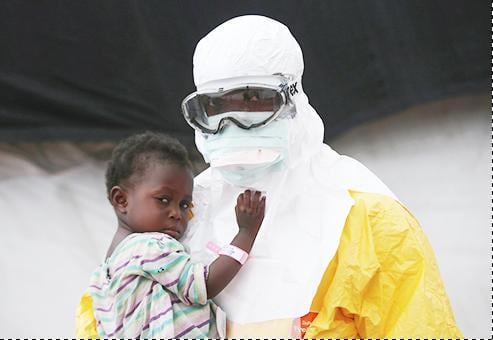
March 2014 marked the starting point of the largest outbreak of Ebola virus disease in history. Although the disease seems to be on a decrease, we are not there yet and new outbreaks will surely emerge. New efforts to combat the outbreak are necessary. This is why we developed this online course about Ebola, targeted at health professionals across the world. In this course you will cover the fundamental knowledge any health professional should have with expected or confirmed cases or a general interest in the Ebola disease.

Class Deals by MOOC List - Click here and see Coursera's Active Discounts, Deals, and Promo Codes.

You will discuss the epidemiology of the disease, its pathophysiology and transmission, the clinical presentation including differential diagnosis and confirmation of disease. You will also discuss the general therapeutic approach to the care of Ebola suspected or confirmed patients and discuss the novel vaccine and drug developments.
As the Ebola crisis continues to rage through the affected areas, we need health professionals like yourself to be informed and involved. We look very much forward to welcoming you to the course coming March.
This course is developed in collaboration with colleagues at the University of Amsterdam, the University Medical Center Utrecht (Julius Center/Julius Global Health), Elevate Health, Médecins Sans Frontières and the Lion Heart Foundation.

Syllabus

WEEK 1
About the course
Here you will find general information about the course. The learning objectives, the structure, the format and the requirements of completion will be presented to you. The course credits and a short survey are part of this first learning unit as well.

WEEK 2
Epidemiology
This learning unit describes the epidemiology of Ebola virus disease, past outbreaks and the current West African Ebola outbreak.

WEEK 3
Transmission and natural reservoirs
This learning unit describes the probable transmission routes and reservoir(s) of Ebola viruses, which can cause a wide array of symptoms and are often fatal.

WEEK 4
Pathophysiology
This unit will focus on what happens when the virus enters and spreads throughout the body.

WEEK 5
Clinical presentation, differential diagnosis, diagnosis
In this learning unit, the focus lies on the clinical symptoms you may encounter when examining patients suspected of ebola virus disease (EVD). The modes of infection of Ebola, incubation time, symptoms, lab findings, differential diagnosis, clinical characteristics of the current epidemic, and complications and outcomes will be discussed.

WEEK 6
Therapeutic approaches
The primary objective of this learning unit is to provide you with sufficient knowledge on how to fight the Ebola epidemic from a clinical perspective: how is Ebola virus disease (EVD) treated and how can transmission of the virus be prevented? In addition, this unit gives an overview of the experimental therapeutic options and vaccines.

WEEK 7
Ebola in the field: The Médecins Sans Frontières experience
In this learning unit you will explore the reality in the field of the care for Ebola patients through the experiences of Médecins Sans Frontières (MSF). Since the start of the Ebola outbreak in West-Africa, MSF has provided care to Ebola patients in Ebola Management Centers (EMCs) across the affected countries Guinea, Liberia, Sierra Leone and the interventions in DRC (Democratic Republic of the Congo), Mali, Senegal and Nigeria.

WEEK 8
Ebola in the field: confronted with Ebola in an existing hospital of the Lion Heart Foundation in Sierra Leone
In this learning unit an example will be given of what consequences the Ebola outbreak has had in the practice. We present you the tough reality in a NGO hospital in Sierra Leone, hear from its staff and experience their work. While reading you can watch corresponding videos.

WEEK 9
Final assignment and survey

Go to Class
MOOC List is learner-supported. When you buy through links on our site, we may earn an affiliate commission.

Related Courses

Voice Disorders: What Patients and Professionals Need to Know (Coursera) Coursera
Icahn School of Medicine at Mount Sinai

Voice Disorders: What Patients and Professionals Need to Know (Coursera)

Knowledge regarding vocal production physiology and management options for voice disorders have experienced rapid growth over the past 40 years. This growth has resulted in a knowledge gap amongst patients and practitioners. Entirely new subspecialties of laryngology under otolaryngology and vocology under speech-language pathology have developed in response to this gap. This MOOC (Massive Open Online Course) is designed to educated patients, allied healthcare providers, vocal trainers/coaches, general medical practitioners and otolaryngologists.

Aug 3rd 2026
5-12 Weeks
Public Health in Humanitarian Crises 2 (Coursera) Coursera
Johns Hopkins University

Public Health in Humanitarian Crises 2 (Coursera)

This course, Public Health in Humanitarian Crises 2, addresses public health issues of people affected by disasters, both natural or conflict-related. It discusses the many changes that occur in people’s lives when they are uprooted by a disaster, including many important topics related to humanitarian crises, such as when there is an epidemic a public health emergency; what do we mean with the humanitarian development nexus; what are the basics of disaster epidemiology and surveillance; humanitarian principles; and other very relevant topics. We will explore what humanitarian interventions could look like if we want to mitigate the effects of disasters.

Aug 3rd 2026
5-12 Weeks
Genomics: Decoding the Universal Language of Life (Coursera) Coursera
University of Illinois at Urbana-Champaign

Genomics: Decoding the Universal Language of Life (Coursera)

What is a genome? A genome contains all of the information that a cell needs to develop, function, and reproduce itself, and all the information needed for those cells to come together to form a person, plant, or animal. Genomes contain an organism’s complete set of genes, and also the even tinier genetic structures that help regulate when and how those genes are used. The ability to regrow a torn ligament, the clues that might predict the onset of mental illness, the nutritional potential of crops, and even the history of life itself, are all encoded in genomes. By taking this course, you will discover how scientists are deciphering the language of genomes to learn how to develop sustainable food and fuel supplies, improve disease treatment and prevention, and protect our environment.

Aug 3rd 2026
5-12 Weeks
Understanding Clinical Research: Behind the Statistics (Coursera) Coursera
University of Cape Town

Understanding Clinical Research: Behind the Statistics (Coursera)

If you’ve ever skipped over`the results section of a medical paper because terms like “confidence interval” or “p-value” go over your head, then you’re in the right place. You may be a clinical practitioner reading research articles to keep up-to-date with developments in your field or a medical student wondering how to approach your own research. Greater confidence in understanding statistical analysis and the results can benefit both working professionals and those undertaking research themselves.

Aug 3rd 2026
5-12 Weeks
HI-FIVE: Health Informatics For Innovation, Value & Enrichment (Social/Peer Perspective) (Coursera) Coursera
Columbia University

HI-FIVE: Health Informatics For Innovation, Value & Enrichment (Social/Peer Perspective) (Coursera)

HI-FIVE (Health Informatics For Innovation, Value & Enrichment) Training is an approximately 10-hour online course designed by Columbia University in 2016, with sponsorship from the Office of the National Coordinator for Health Information Technology (ONC). The training is role-based and uses case scenarios. Our nation’s healthcare system is changing at a rapid pace. Transformative health care delivery programs depend heavily on health information technology to improve and coordinate care, maintain patient registries, support patient engagement, develop and sustain data infrastructure necessary for multi-payer value-based payment, and enable analytical capacities to inform decision making and streamline reporting.

Aug 3rd 2026
4 Weeks
Curanderismo: Traditional Healing Using Plants (Coursera) Coursera
University of New Mexico

Curanderismo: Traditional Healing Using Plants (Coursera)

As one of four courses on Curanderismo, the art of Hispanic/Latino traditional medicine, this course focuses specifically on the use of plants in traditional healing. As an educational and cultural platform, this course will share the history, influences, and contributions of traditional medicine. Trained traditional healers will share their knowledge of the healing properties of plants commonly found in the Southwestern United States and Mexico through practical applications that can still be used today.

Aug 10th 2026
5-12 Weeks
Living with Dementia: Impact on Individuals, Caregivers, Communities and Societies (Coursera) Coursera
Johns Hopkins University

Living with Dementia: Impact on Individuals, Caregivers, Communities and Societies (Coursera)

Health professionals and students, family caregivers, friends of and affected individuals, and others interested in learning about dementia and quality care will benefit from completing the course. Led by Drs. Nancy Hodgson and Laura Gitlin, participants will acquire foundational knowledge in the care of persons with Alzheimer’s Disease and other neurocognitive disorders.

Aug 3rd 2026
5-12 Weeks
An Introduction to Global Health (Coursera) Coursera
University of Copenhagen

An Introduction to Global Health (Coursera)

This course will provide you with an overview of the most important health challenges facing the world today. You will gain insight into how challenges have changed over time, we will discuss the likely determinants of such changes and examine future projections. Successful international strategies and programs promoting human health will be highlighted and global health governance structures will be mapped and the role of the key actors explored.

Aug 3rd 2026
5-12 Weeks
Health Concepts in Chinese Medicine (Coursera) Coursera
The Hong Kong University of Science and Technology - HKUST

Health Concepts in Chinese Medicine (Coursera)

Chinese Medicine and Modern Medicine are two distinct medical systems, yet they both aim at the prevention and treatment of human diseases. With this in mind, we should understand the practice of Chinese Medicine in the context of Modern Medicine. In this course, we explore the basic theories underlying the practice of Chinese Medicine, compare and contrast the use of Chinese Medicine and Modern Medicine in Preventive Health, and discuss how to restore a healthy condition and understand the pharmacological basis of different types of Chinese tonifying herbs.

Aug 3rd 2026
5-12 Weeks
HI-FIVE: Health Informatics For Innovation, Value & Enrichment (Clinical Perspective) (Coursera) Coursera
Columbia University

HI-FIVE: Health Informatics For Innovation, Value & Enrichment (Clinical Perspective) (Coursera)

HI-FIVE (Health Informatics For Innovation, Value & Enrichment) Training is a 12-hour online course designed by Columbia University in 2016, with sponsorship from the Office of the National Coordinator for Health Information Technology (ONC). The training is role-based and uses case scenarios. Also, it has additional, optional modules on other topics of interest or relevance. Although we suggest to complete the course within a month's timeframe, the course is self-paced and so you can start and finish the course at anytime during a month's time period. No additional hardware or software are required for this course.

Aug 3rd 2026
4 Weeks
Diagnosing Health Behaviors for Global Health Programs (Coursera) Coursera
Johns Hopkins University

Diagnosing Health Behaviors for Global Health Programs (Coursera)

Health behavior lies at the core of any successful public health intervention. While we will examine the behavior of individual in depth in this course, we also recognize by way of the Ecological Model that individual behavior is encouraged or constrained by the behavior of families, social groups, communities, organizations and policy makers. We recognize that behavior change is not a simplistic process but requires an understanding of dimensions like frequency, complexity and cultural congruity. Such behavioral analysis is strengthened through the use of a toolkit of theoretical models and practical frameworks.

Aug 3rd 2026
4 Weeks