Understanding the Brain: The Neurobiology of Everyday Life (Coursera)

Offered by University of Chicago,
Understanding the Brain: The Neurobiology of Everyday Life (Coursera)

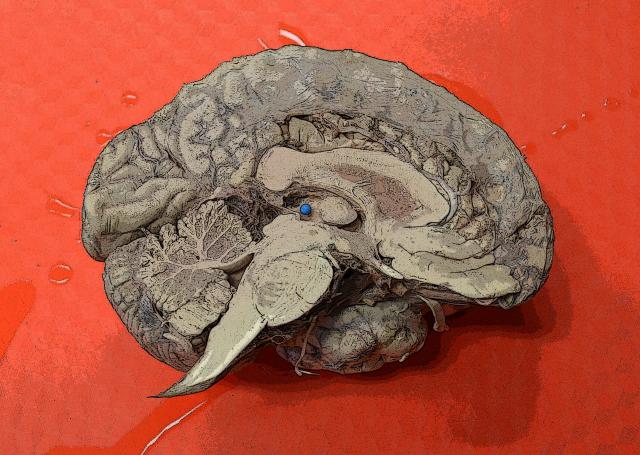
Learn how the nervous system produces behavior, how we use our brain every day, and how neuroscience can explain the common problems afflicting people today. We will study functional human neuroanatomy and neuronal communication, and then use this information to understand how we perceive the outside world, move our bodies voluntarily, stay alive, and play well with others.

Class Deals by MOOC List - Click here and see Coursera's Active Discounts, Deals, and Promo Codes.

Suggested Reading: Medical Neurobiology

Syllabus

WEEK 1
The Nervous System
Neurobiology is a rapidly growing area of scientific research, and is becoming increasingly prevalent in the news and popular culture. In this course, we will study of the nervous system from a biological perspective by exploring the fundamental concepts in neurobiology, including how we sense the world, how we act in the world, and common neurological disorders.

WEEK 2
Neural Communication + Embodied Emotion
Neurons are the cells of the nervous system responsible for communicating, relaying, and integrating information. Neurons "talk" to other neurons through a special type of language that involves electrical signaling within individual neurons, and the use of chemical compounds known as neurotransmitters to communicate between neurons. In this module, you will learn more about how a neuron functions at rest, how information is relayed within a neuron, and how neurons relay information to other neurons or target tissues. In the second half of this module, you will be learning about how the body and emotions work together to produce our everyday emotional experiences. We will look at the enteric nervous system and learn how to discern whether the sympathetic or parasympathetic system is impacting our current emotional state.

WEEK 3
Neuroanatomy
Neuroanatomy tells us how the nervous system is organized. Understanding the form of the brain is essential to understanding its function. By comparing the structure of the brain with a patient's symptoms, neurologists are able to identify the location of certain disorders. Studying how the human brain develops provides insight to why it is organized as it is. This module, you will learn about how the brain develops during gestation, some major pathways in the nervous system, and what can go wrong!

WEEK 4
Perception and Vision
Perception is how the brain interprets incoming stimuli. Not all stimuli that can be sensed are perceivable, and sometimes those that can be perceived play tricks on us. The systematic ways that stimuli are interpreted (or misinterpreted) show how well the brain can understand our surroundings, sometimes with limited information. This module we will explore perception and vision.This module contains a lot of material, so be sure to start early so that you have time to finish!

WEEK 5
Hearing
The sound of birds chirping in the morning, a babbling brook or crashing waves on the beach, or warm conversation with the ones you love. The experience of all these things requires the ability to hear. Arguably the most important sense for human communication, it is also the most commonly impaired of our senses. In this module, you will learn how the human ear is artfully designed to enhance our ability to hear the human voice. You will follow sound waves as they travel from the external world, to the eardrum, through the bones of the middle ear, and to the cochlea that transduces sound information into neural impulses.

WEEK 6
The Vestibular Sense & Gaze
The vestibular system and gaze control give us so much but are grossly under appreciated. They are so fundamental that we discount them, assuming that they will always be there. When the vestibular system fails us, its importance dominates our lives. Living with either a vestibular or an eye movement disorder is very disruptive to everyday life. In this module, you will learn how the inner ear is designed to detect and respond to head movements. You will learn about the circuit that connects the inner ear to the motoneurons that control the location of your eyes, allowing us to reflexively maintain our view of an object even as we move about in the world. Finally, we will talk about how you can modify this reflexive control of the eyes and how you can control where you are looking.

WEEK 7
Voluntary Movements
"Voluntary movements are how we interact with the world. The organization of the motor system has implications for how we move, and the types of movements we can make. This module we'll start to explore the organization of the motor system, from neurons to muscles. This module contains a lot of material, so be sure to start early so that you have time to finish!"

WEEK 8
Motor Modulation
You should now have an understanding of how muscles function to initiate movements. However, the brain requires more than just the cerebral cortex to determine what movements to perform and to make those movements smooth and guided. This module, we'll explore the cerebellum and the basal ganglia, fascinating structures that play a major role in movement. You'll also learn how these brain regions are involved in motor learning and disease.

WEEK 9
Homeostasis
Although our bodies are very robust and we can live in a range of environments, our brain requires very specific conditions to function properly. Homeostasis is the active process by which our nervous system regulates internal conditions, such as blood pressure and temperature. This module we will explore what homeostasis does, and how it functions in everyday life.

WEEK 10
Abstract Function
You've now learned an incredible amount about the way the brain functions to perceive and act upon the world we live in. You've gained an understanding of neurobiology on a cellular level, and how many diseases and disorders of the nervous system can affect our bodies and minds. In our final module, we will journey into the realms of emotion, attention, memory, and language. By the end of this module, you will have a greater understanding of the more abstract cognitive functions the brain.

Go to Class
MOOC List is learner-supported. When you buy through links on our site, we may earn an affiliate commission.

Related Courses

Take the Lead on Healthcare Quality Improvement (Coursera) Coursera
Case Western Reserve University

Take the Lead on Healthcare Quality Improvement (Coursera)

In this course you will learn about the importance of quality in healthcare and how you can contribute by implementing a quality improvement (QI) project to improve processes of care and patient outcomes. You will learn about powerful tools to add to your QI ‘toolbox’ during short lectures and reflective exercises. You will apply these tools to the implementation of a QI project in your own practice setting or an area of personal improvement. At the completion of the course, you will have a storyboard that captures your QI project success to share with others.

Jul 6th 2026
5-12 Weeks
Big Data, Genes, and Medicine (Coursera) Coursera
The State University of New York

Big Data, Genes, and Medicine (Coursera)

This course distills for you expert knowledge and skills mastered by professionals in Health Big Data Science and Bioinformatics. You will learn exciting facts about the human body biology and chemistry, genetics, and medicine that will be intertwined with the science of Big Data and skills to harness the avalanche of data openly available at your fingertips and which we are just starting to make sense of.

Jul 6th 2026
5-12 Weeks
Soul Beliefs: Causes and Consequences - Unit 3: How Does It All End? (Coursera) Coursera
Rutgers University

Soul Beliefs: Causes and Consequences - Unit 3: How Does It All End? (Coursera)

Throughout history, the vast majority of people around the globe have believed they have, however defined, a “soul.” While the question of whether the soul exists cannot be answered by science, what we can study are the causes and consequences of various beliefs about the soul and its prospects of surviving the death of the body. Why are soul and afterlife beliefs so common in human history? Are there adaptive advantages to assuming souls exist?

Jul 6th 2026
5-12 Weeks
Children Acquiring Literacy Naturally (Coursera) Coursera
University of California, Santa Cruz

Children Acquiring Literacy Naturally (Coursera)

In this short course you will explore the possibility that children might acquire written language in a way that is similar to how they acquire spoken language—without instruction. You will encounter various aspects of behavioral science and technology that are relevant to this proposition. You will have the opportunity to learn the the perceptual, cognitive, and neurological capacities of children during their first years of life. You will advance your understanding of children and how they learn language. You will also be more attuned to current advances in the technology of human machine interactions, and what these phenomena imply for learning to read at an early age.

Jul 6th 2026
3 Weeks
Living with Dementia: Impact on Individuals, Caregivers, Communities and Societies (Coursera) Coursera
Johns Hopkins University

Living with Dementia: Impact on Individuals, Caregivers, Communities and Societies (Coursera)

Health professionals and students, family caregivers, friends of and affected individuals, and others interested in learning about dementia and quality care will benefit from completing the course. Led by Drs. Nancy Hodgson and Laura Gitlin, participants will acquire foundational knowledge in the care of persons with Alzheimer’s Disease and other neurocognitive disorders.

Jul 6th 2026
5-12 Weeks
Soul Beliefs: Causes and Consequences - Unit 2: Belief Systems (Coursera) Coursera
Rutgers University

Soul Beliefs: Causes and Consequences - Unit 2: Belief Systems (Coursera)

Throughout history, the vast majority of people around the globe have believed they have, however defined, a “soul.” While the question of whether the soul exists cannot be answered by science, what we can study are the causes and consequences of various beliefs about the soul and its prospects of surviving the death of the body. Why are soul and afterlife beliefs so common in human history? Are there adaptive advantages to assuming souls exist?

Jul 6th 2026
5-12 Weeks
Understanding Plants - Part II: Fundamentals of Plant Biology (Coursera) Coursera
Tel Aviv University

Understanding Plants - Part II: Fundamentals of Plant Biology (Coursera)

This class is aimed at people interested in understanding the basic science of plant biology. In this four lecture series, we'll first learn about the structure-function of plants and of plant cells. Then we'll try to understand how plants grow and develop, making such complex structures as flowers. Once we know how plants grow and develop, we'll then delve into understanding photosynthesis - how plants take carbon dioxide from the air and water from soil, and turn this into oxygen for us to breathe and sugars for us to eat. In the last lecture we'll learn about the fascinating, important and controversial science behind genetic engineering in agriculture.

Jul 6th 2026
4 Weeks
Major Depression in the Population: A Public Health Approach (Coursera) Coursera
Johns Hopkins University

Major Depression in the Population: A Public Health Approach (Coursera)

Public Mental Health is the application of the principles of medicine and social science to prevent the occurrence of mental and behavioral disorders and to promote mental health of the population. This course illustrates the principles of public health applied to depressive disorder, including principles of epidemiology, transcultural psychiatry, health services research, and prevention. It is predicted that by 2020 depressive disorder will be the most important cause of disease burden in the entire world! Every human being suffers from feeling depressed at some point or other, but only about one fifth of the population will experience an episode of depressive disorder over the course of their lives.

Jul 6th 2026
5-12 Weeks
HI-FIVE: Health Informatics For Innovation, Value & Enrichment (Administrative/IT Perspective) (Coursera) Coursera
Columbia University

HI-FIVE: Health Informatics For Innovation, Value & Enrichment (Administrative/IT Perspective) (Coursera)

HI-FIVE (Health Informatics For Innovation, Value & Enrichment) Training is an approximately 10-hour online course designed by Columbia University in 2016, with sponsorship from the Office of the National Coordinator for Health Information Technology (ONC). The training is role-based and uses case scenarios. No additional hardware or software are required for this course. Our nation’s healthcare system is changing at a rapid pace.

Jul 6th 2026
4 Weeks
Leading Healthcare Quality and Safety (Coursera) Coursera
George Washington University

Leading Healthcare Quality and Safety (Coursera)

Ensuring patient safety and healthcare quality is critical and should be a key focus of everyone in healthcare practice. This course provides healthcare practitioners and others with an introduction to the knowledge and skills needed to lead patient safety and quality improvement initiatives at the micro and macro levels. Participants will explore the foundations of health care quality and the science underlying patient safety and quality improvement, design and select effective health care measures, analyze patient safety problems and processes using tools such as human factors analysis, apply systematic approaches including the Plan-Do-Study-Act (PDSA) model to address quality improvement challenges, and learn strategies to lead a culture of change

Jul 6th 2026
5-12 Weeks
HI-FIVE: Health Informatics For Innovation, Value & Enrichment (Clinical Perspective) (Coursera) Coursera
Columbia University

HI-FIVE: Health Informatics For Innovation, Value & Enrichment (Clinical Perspective) (Coursera)

HI-FIVE (Health Informatics For Innovation, Value & Enrichment) Training is a 12-hour online course designed by Columbia University in 2016, with sponsorship from the Office of the National Coordinator for Health Information Technology (ONC). The training is role-based and uses case scenarios. Also, it has additional, optional modules on other topics of interest or relevance. Although we suggest to complete the course within a month's timeframe, the course is self-paced and so you can start and finish the course at anytime during a month's time period. No additional hardware or software are required for this course.

Jul 6th 2026
4 Weeks
Exploring Light: Hands-on Activities and Strategies for Teachers (Coursera) Coursera
Exploratorium

Exploring Light: Hands-on Activities and Strategies for Teachers (Coursera)

This is an Exploratorium teacher professional development course taught by Teacher Institute staff, open to any science teacher (particularly middle or high school level) and science enthusiast. This is a hands-on workshop that explores topics and strategies teachers can use to help their students become active investigators of light.

Jul 12th 2026
4 Weeks