Major Depression in the Population: A Public Health Approach (Coursera)

Major Depression in the Population: A Public Health Approach (Coursera)

Public Mental Health is the application of the principles of medicine and social science to prevent the occurrence of mental and behavioral disorders and to promote mental health of the population. This course illustrates the principles of public health applied to depressive disorder, including principles of epidemiology, transcultural psychiatry, health services research, and prevention. It is predicted that by 2020 depressive disorder will be the most important cause of disease burden in the entire world! Every human being suffers from feeling depressed at some point or other, but only about one fifth of the population will experience an episode of depressive disorder over the course of their lives.

Class Deals by MOOC List - Click here and see Coursera's Active Discounts, Deals, and Promo Codes.

This course illuminates the public health approach to disease, and the particular complexities of applying this approach to mental disorders, using depression as the exemplar.

Syllabus

WEEK 1
Overview
Welcome to Major Depression in the Population: A Public Health Approach. Let's take a few moments to introduce the course before we dive into our first lessons.
What is Major Depression and Why Is It Important? The Burden of Depressive Disorder in the Population
This week, we will be focusing on the definition of major depression and the methods that we use for measuring its effect on populations.

WEEK 2
Depression in Low- and Middle-Income Countries: A Closer Look at Maternal Depression
This week we will be covering depression from a global public health perspective.

WEEK 3
Basic Concepts of Epidemiology as Applied to Depression
This week we take advantage of what we know about major depressive disorder to examine major epidemiologic research designs, including the case control design, the cohort design, and the study of diseases in time and space.

WEEK 4
The Search for Etiologic Clues
This week the focus is on possible causes for depressive disorder, including inheritance, stress, social life, work life, and the evolution of modern living.
The Search for Etiologic Clues: Lesson Choices
Choice 1: You are the coordinator of an international nutrition program in refugee camps, including a refugee camp in Tanzania. Most of the refugees in this camp have fled violence from the Democratic Republic of the Congo, and the size of the camp is increasing because of the intensification of armed violence there. The nutrition organization that you have been working for has been implementing programs to promote breastfeeding, and appropriate infant and young child feeding practices. You have been told that program staff are facing difficulties, and you decide to visit the site to see for yourself what is going on. In your meeting with some of the community health workers who are implementing the program, you hear of women living in very challenging circumstances. A group of women seems to be very tired and have lost the energy to engage with daily routines. You suspect that mental health may play a role, and decide to ask further questions and write a report about this to your organization’s headquarters. | Choice 2: A young entrepreneur from Oklahoma named Rodney Johnson created a household cleaning product made from byproducts of the corn industry. This product, called Solvit, is very good at cleaning up grease and dirt, and was more effective than many other well-known products such as Mr. Clean, Fantastik, and Lysol. Mr. Johnson started marketing the product in 1992 at stores in his native Oklahoma, and also on the World Wide Web. Twenty years later this product is the most widely used cleaning agent in North America, although it still has not been introduced in several states. In 2012 Consumer Reports magazine determined that the product contained solvents that might cause depressive disorder. It asked the Consumer Products Safety Commission to ban the product. The Institute of Medicine was asked for its advice. The IOM learned that you had taken this course and has asked you to consult on epidemiologic evidence and methods that might support the claim that Solvit produces depressive disorder.

WEEK 5
Unmet Need for Care, Barriers, and Programs to Improve Access
In this module, we discuss unmet need for treatment and treatment-seeking and present a public health view of depression treatment.

WEEK 6
Final Assignment

Suggested Readings: Public Mental Health

Go to Class
MOOC List is learner-supported. When you buy through links on our site, we may earn an affiliate commission.

Related Courses

Medical Neuroscience (Coursera) Coursera
Duke University

Medical Neuroscience (Coursera)

Medical Neuroscience explores the functional organization and neurophysiology of the human central nervous system, while providing a neurobiological framework for understanding human behavior. In this course, you will discover the organization of the neural systems in the brain and spinal cord that mediate sensation, motivate bodily action, and integrate sensorimotor signals with memory, emotion and related faculties of cognition. The overall goal of this course is to provide the foundation for understanding the impairments of sensation, action and cognition that accompany injury, disease or dysfunction in the central nervous system. The course will build upon knowledge acquired through prior studies of cell and molecular biology, general physiology and human anatomy, as we focus primarily on the central nervous system.

Jun 22nd 2026
13-24 Weeks
Sit Less, Get Active (Coursera) Coursera
University of Edinburgh

Sit Less, Get Active (Coursera)

Physical inactivity and sedentariness are “silent killers”. Do you feel like you spend too much time sitting? Do you feel like you would like to be more active? Are you unsure about how to incorporate physical activity into your daily life? We are here to help. Join us on a journey to learn about how to sit less and become more active. Use this FREE course to learn how to monitor your own activity and set physical activity goals.

Jun 28th 2026
3 Weeks
Stories of Infection (Coursera) Coursera
Stanford University

Stories of Infection (Coursera)

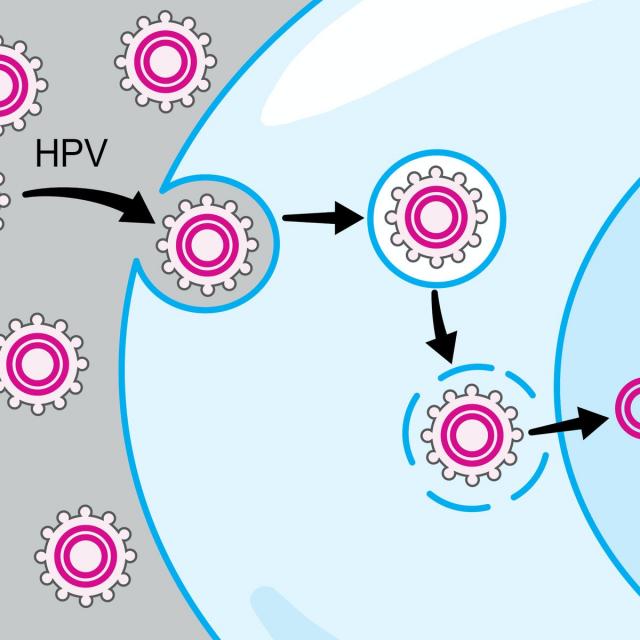
This course introduces learners to a variety of infectious diseases using a patient-centered, story-based approach. Through illustrated, short videos, learners will follow the course of each patient’s illness, from initial presentation to resolution. Integrating the relevant microbiology, pathophysiology and immunology, this course aims to engage and entice the learner towards future studies in microbiology, immunology and infectious diseases.

Jun 22nd 2026
5-12 Weeks
A Life of Happiness and Fulfillment (Coursera) Coursera
Indian School of Business - ISB

A Life of Happiness and Fulfillment (Coursera)

What are the determinants of a happy and fulfilling life? This is surely one of life’s biggest questions, and a question that has interested many of our ancestors. Buddha famously gave up his kingdom in search of happiness. Several Greek philosophers (from Aristotle to Epicurus and Plato to Socrates) had their own views on what it takes to be happy. And of course, we all have our own theories about happiness too.

Jun 22nd 2026
5-12 Weeks
Diabetes - a Global Challenge (Coursera) Coursera
University of Copenhagen

Diabetes - a Global Challenge (Coursera)

Diabetes and obesity are growing health problems in rich and poor countries alike. With this course you will get updated on cutting-edge diabetes and obesity research including biological, genetic and clinical aspects as well as prevention and epidemiology of diabetes and obesity. All lectures are provided by high-profile scientists from one the world's leading universities in diabetes research.

Jun 22nd 2026
5-12 Weeks
Chemicals and Health (Coursera) Coursera
Johns Hopkins University

Chemicals and Health (Coursera)

This course covers chemicals in our environment and in our bodies and how they impact our health. It addresses policies and practices related to chemicals, particularly related to how they get into our bodies (exposures), what they do when they get there (toxicology), how we measure them (biomonitoring) and their impact on our health. Most examples are drawn from the US.

Jun 22nd 2026
5-12 Weeks
The Social Context of Mental Health and Illness (Coursera) Coursera
University of Toronto

The Social Context of Mental Health and Illness (Coursera)

Learn how social factors promote mental health, influence the onset and course of mental illness, and affect how mental illnesses are diagnosed and treated. This course explores how our understanding of mental health and illness has been influenced by social attitudes and social developments in North America and around the world. The course begins by situating our contemporary mental health practices in historical context, then looks at different aspects of mental health, mental illness and mental health services and their connections to what’s going on in our social environment.

Jun 22nd 2026
5-12 Weeks
The Brain and Space (Coursera) Coursera
Duke University

The Brain and Space (Coursera)

This course is about how the brain creates our sense of spatial location from a variety of sensory and motor sources, and how this spatial sense in turn shapes our cognitive abilities. Knowing where things are is effortless. But “under the hood,” your brain must figure out even the simplest of details about the world around you and your position in it.

Jun 22nd 2026
5-12 Weeks
Epidemics (Coursera) Coursera
University of Hong Kong

Epidemics (Coursera)

“If history is our guide, we can assume that the battle between the intellect and will of the human species and the extraordinary adaptability of microbes will be never-ending.” Despite all the remarkable technological breakthroughs that we have made over the past few decades, the threat from infectious diseases has significantly accelerated. In this course, we will learn why this is the case by looking at the fundamental scientific principles underlying epidemics and the public health actions behind their prevention and control in the 21st century.

Jun 22nd 2026
5-12 Weeks
Confronting Gender Based Violence: Global Lessons for Healthcare Workers (Coursera) Coursera
Johns Hopkins University

Confronting Gender Based Violence: Global Lessons for Healthcare Workers (Coursera)

This course introduces participants from the healthcare sector to gender based violence (GBV), including global epidemiology of GBV; health outcomes; seminal research; and clinical best practices for GBV prevention, support, and management. A core curriculum is supplemented by lectures that contextualize the content with specific examples and programs from around the world.

Jun 22nd 2026
4 Weeks