Doping : Sports, Organizations and Sciences (Coursera)

Doping : Sports, Organizations and Sciences (Coursera)

The objective of this course is to encourage a critical understanding of doping. To achieve this goal, this course will rely on a multidisciplinary approach that allow you to see how different disciplines get into a single object, in different perspectives and in often complementary ways. This approach will also allow us to appreciate the complexity of a subject like doping. Doping in sports is a complex practice whose definition and identification is the result of socially and historically constructed norms. This course offers to shed light on the processes that led to the use and prohibition of doping substances.

Class Deals by MOOC List - Click here and see Coursera's Active Discounts, Deals, and Promo Codes.

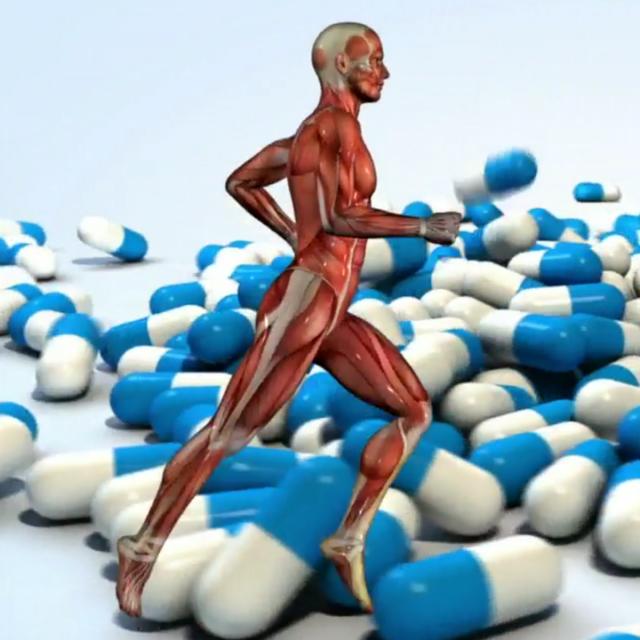
Performance enhancement or physical transformation are two aspects of doping which are seen as problematic, yet even as we speak companies are making fortunes selling body improvement and other forms of “human enhancement” to us. These apparent contradictions will be analysed to show that beyond sanitary questions, doping raises many social, scientific and legal issues.

In efforts to control doping, governments and sports authorities have put into place institutions responsible for defining what falls into the category of doping, but also what prevention, repressions and research methods to put into effect. This course will also explore biological control measures such as the biological passport, key legal dimensions, organisations that produce performance, as well as the sociological dimensions of doping.
Besides the Professors of University of Lausanne, the best experts of doping are involved in this course: experts from an Anti-doping Laboratory (LAD- Lausanne-Switzerland), from the CAS (Court of Arbitration for Sport), from the UEFA (soccer), and from the WADA (World Anti-Doping Agency).
At the end of the course the participants will be able to:

  1. Identify the “cultural” dimension of doping, that is as a historical practice linked to the transformation of social norms,
  2. Go from a binary way of thinking - for or against doping - to an understanding of the complexity of this phenomenon which is biological, psychological and sociological, all at the same time,
  3. Recognize the institutions, the actors and the practices of the fight against doping,
  4. Explain how the social and organisational context influences individuals decisions and how this influence can be reduced by effective prevention measures,
  5. Identify how the fight against doping is led and how testing is carried out.

Syllabus

WEEK 1
Module 1- What is doping ?
The first module explores the identification and the definition of doping. It offers a critical approach inspired by social science methods, so as to understand doping as a social norm that shapes performance producing. We will take a look at definitions of doping throughout history as well as the legal definition that is used today, the one put into place by the World Anti Doping Agency (WADA).

WEEK 2
Why do athletes give in to doping?
By going beyond a binary vision that opposes those who cheat and those who don’t, Module 2 will help you understand what might lead ordinary individuals into substance-use. The analysis of the process that lead to doping will be approached through the social and psycho-social factors behind doping, as well as the role of culture and of sports organisations will be raised. This module includes an interview with Denis Hauw, sports psychology expert and Associate Professor at the Institute of Sport Studies at the University of Lausanne.

WEEK 3
Organizations and doping: prevention and repression
Module 3 will help you understand the role of sports organisations in the fight against doping through two examples: the Union of European Football Associations (UEFA) and the Union Cycliste Internationale (UCI). This module will also explore the role of organisations in charge of fighting against doping, by presenting two major actors: the World Anti-Doping Agency (WADA) and the Court of Arbitration for Sport (CAS) whose activities are also linked to doping. These organisations will be presented through four interviews with: Frédéric Donzé, the director of the European branch of the WADA ; Marc Vouillamoz, Head of UEFA's antidoping unit ; Matthieu Reeb, the Secretary general of the CAS; Olivier Aubel, Senior Lecturer at the Institute of Sport Studies the the University of Lausanne, who will present the new measures put into place by the UCI to prevent doping in cycling.

WEEK 4
Bioanalytical and forensic approaches to doping
Module four presents bioanalytical and forensic substance detection and analysis methods. It is made up of 4 interviews carried out with doping experts from the Swiss Laboratory for Doping Analysis (LAD) in Lausanne (Switzerland), that will explain: - how bioanalyses are carried out (Norbert Baume, head scientist at the LAD); - how the biological passport works (Neil Robinson, head scientist at the LAD); - forensic approaches to doping (François Marclay, research scientist at the LAD); - atypical analysis results and the evolution of the future of the fight against doping (Martial Saugy, director of the LAD).
Go to Class
MOOC List is learner-supported. When you buy through links on our site, we may earn an affiliate commission.

Related Courses

Introduction to Dental Medicine (Coursera) Coursera
University of Pennsylvania

Introduction to Dental Medicine (Coursera)

The mouth is the window into human health. This course provides an overview of dental medicine to engage, educate, excite and assist you in improving the oral health of your patients and members of your community. We will review topics in dental medicine including scope of the field, what to expect in function, and some of the many ways that dysfunction may present for different patients.

Aug 10th 2026
5-12 Weeks
Mind Control: Managing Your Mental Health During COVID-19 (Coursera) Coursera
University of Toronto

Mind Control: Managing Your Mental Health During COVID-19 (Coursera)

Never in the history of humanity have so many people been feeling intense anxiety related to COVID-19 and the world it will leave in its wake. The intent of this course is to give you a deeper understanding of the anxiety reaction as it relates to various aspects of our current life, ranging from our consumption of news to the way we talk to our children about this. I will also give you clear strategies for managing and, in fact, turning off the anxiety response at least for short periods.

Aug 10th 2026
4 Weeks
Foundations of Healthcare Systems Engineering (Coursera) Coursera
Johns Hopkins University

Foundations of Healthcare Systems Engineering (Coursera)

Through dynamic video lectures and practical application questions, you will learn about the Foundations of Healthcare Systems Engineering. In this course you will learn about the current lack of synchronized, efficient, and integrated healthcare systems, which are some of the drivers for improvements to healthcare delivery.

Aug 10th 2026
4 Weeks
Psychological First Aid (Coursera) Coursera
Johns Hopkins University

Psychological First Aid (Coursera)

Learn to provide psychological first aid to people in an emergency by employing the RAPID model: Reflective listening, Assessment of needs, Prioritization, Intervention, and Disposition. Utilizing the RAPID model (Reflective listening, Assessment of needs, Prioritization, Intervention, and Disposition), this specialized course provides perspectives on injuries and trauma that are beyond those physical in nature. The RAPID model is readily applicable to public health settings, the workplace, the military, faith-based organizations, mass disaster venues, and even the demands of more commonplace critical events, e.g., dealing with the psychological aftermath of accidents, robberies, suicide, homicide, or community violence.

Aug 10th 2026
5-12 Weeks
Global Health Policy (Coursera) Coursera
The University of Tokyo

Global Health Policy (Coursera)

In this course, learners will become familiar with principles and theories of global health problems, and major challenges and controversies in improving global population health as well as practical applications of quantitative methods to analyze and interpret issues and challenges for policy. Topics will include health and foreign policy, health governance, acute disease surveillance, non-communicable diseases, burden of disease, universal health coverage, health systems strengthening, health financing, and human resources for health and ageing.

Aug 10th 2026
4 Weeks
Sustainable Food Production Through Livestock Health Management (Coursera) Coursera
University of Illinois at Urbana-Champaign

Sustainable Food Production Through Livestock Health Management (Coursera)

Learn about the impact of infectious disease on sustainable animal-based food production by understanding the science of growth, immunity, and infection and by learning the problem-solving skills needed to advance animal health and food production through optimal management practices. In this course we will explore the effect of infectious disease on sustainable animal-based food production. The content and learning outcomes of this new course will be designed to be relevant across different food production sectors (i.e., beef, dairy, poultry, and pigs).

Aug 10th 2026
5-12 Weeks
Air Pollution – a Global Threat to our Health (Coursera) Coursera
University of Copenhagen

Air Pollution – a Global Threat to our Health (Coursera)

We all have to breathe to live. But the air we breathe is polluted both outdoors and indoors. Each year, this pollution costs 7 million lives across the globe – and a lot of suffering. 1 in 8 deaths is due to air pollution. This course will provide you with an introduction to the most recent research in the field of health effects of air pollution as well as a broader understanding of sources and spread of air pollution and what we should do about it.

Aug 10th 2026
3 Weeks
Whole genome sequencing of bacterial genomes - tools and applications (Coursera) Coursera
Technical University of Denmark - DTU

Whole genome sequencing of bacterial genomes - tools and applications (Coursera)

This course will cover the topic of Whole genome sequencing (WGS) of bacterial genomes which is becoming more and more relevant for the medical sector. WGS technology and applications are high on international political agenda, as the classical methods are being replaced by WGS technology and therefore bioinformatic tools are extremely important for allowing the people working in this sector to be able to analyze the data and obtain results that can be interpreted and used for different purposes.

Aug 10th 2026
5-12 Weeks
Curanderismo: Traditional Healing Using Plants (Coursera) Coursera
University of New Mexico

Curanderismo: Traditional Healing Using Plants (Coursera)

As one of four courses on Curanderismo, the art of Hispanic/Latino traditional medicine, this course focuses specifically on the use of plants in traditional healing. As an educational and cultural platform, this course will share the history, influences, and contributions of traditional medicine. Trained traditional healers will share their knowledge of the healing properties of plants commonly found in the Southwestern United States and Mexico through practical applications that can still be used today.

Aug 10th 2026
5-12 Weeks
Acute and Chronic Rhinosinusitis: A Comprehensive Review (Coursera) Coursera
Icahn School of Medicine at Mount Sinai

Acute and Chronic Rhinosinusitis: A Comprehensive Review (Coursera)

This course is designed to inform primary care physicians and general otolaryngologists about the differences between acute and chronic rhinosinusitis and how to distinguish and treat them. It is also applicable to individuals who wish to broaden their knowledge and vernacular about this disease process, especially those who may suffer from this condition.

Aug 10th 2026
5-12 Weeks
Introduction to Hearing Loss (Coursera) Coursera
Icahn School of Medicine at Mount Sinai

Introduction to Hearing Loss (Coursera)

Welcome to Introduction to Hearing Loss. Disorders of the ear range from simple, easily treated entities (such as wax or cerumen impaction) to the highly complex (such as permanent hearing loss). Many of these disorders manifest with similar symptoms and may be difficult to differentiate without a basic understanding of the anatomy of the ear and auditory pathway.

Aug 10th 2026
4 Weeks