Leading Healthcare Quality and Safety (Coursera)

Leading Healthcare Quality and Safety (Coursera)

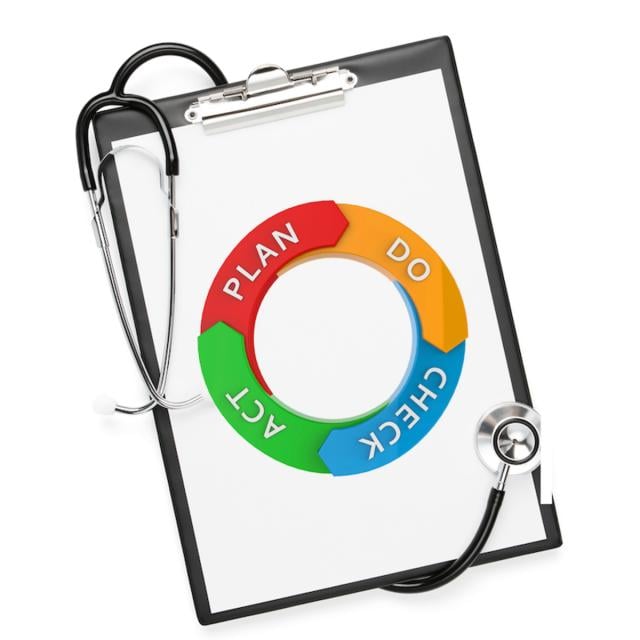
Ensuring patient safety and healthcare quality is critical and should be a key focus of everyone in healthcare practice. This course provides healthcare practitioners and others with an introduction to the knowledge and skills needed to lead patient safety and quality improvement initiatives at the micro and macro levels. Participants will explore the foundations of health care quality and the science underlying patient safety and quality improvement, design and select effective health care measures, analyze patient safety problems and processes using tools such as human factors analysis, apply systematic approaches including the Plan-Do-Study-Act (PDSA) model to address quality improvement challenges, and learn strategies to lead a culture of change

Class Deals by MOOC List - Click here and see Coursera's Active Discounts, Deals, and Promo Codes.

The course takes a world view of patient safety and quality, linking participants to research and resources from the World Health Organization (WHO), the US Agency for Healthcare Research and Quality (AHRQ), the Joint Commission and other international organizations. Course highlights include personal stories, lessons learned from other industries and interviews with the President of the National Committee for Quality Assurance (NCQA) and other leaders in quality movement.

Syllabus

WEEK 1
Establishing a Framework for Quality & Safety
Welcome to Module 1! During this module, you'll learn about the current state of healthcare quality and safety in the US and globally, and the essential characteristics and expected outcomes of safe, high-quality healthcare. We'll also discuss the core elements of quality improvement, and the data needed to assess the safety and quality of care. Finally, we'll examine lessons learned from other industries & disciplines that can be applied to healthcare improvement efforts. We're looking forward to getting started!

WEEK 2
Safety as a First Principle of Quality
Welcome to Module 2! This week, we examine the criticality of patient safety to healthcare and the sciences underlying patient safety. You'll learn a model for systems engineering and a process for anticipating and addressing medical errors. You'll also learn about the importance of a just culture approach to medical error prevention.

WEEK 3
Measures & Measurement
Welcome to Module 3! This week we delve into measures and measurement. You'll learn to apply the basic Donebedian framework for measuring quality in healthcare in terms of structure, process and outcomes. We'll discuss the key attributes of useful (good) healthcare measures and the core concepts of validity and reliability. You'll also learn the most critical elements to consider in choosing and applying a measure or measures to measurement in a given health care setting or situation, and the key characteristics of a measurement process that must be present to provide information that is a valid and useful reflection of quality of care.

WEEK 4
Quality and Safety Improvement Science
Welcome to Module 4! This week you'll learn how to identify quality improvement opportunities and apply the PDSA cycle to address them. We'll also discuss the importance and benefits of team-based approaches to quality improvement, and the value of Health Information Technologies (HIT) and other innovations in improving health care quality.

WEEK 5
Leadership for Quality & Safety
Welcome to Module 5! This week we explore the importance of leadership in supporting and advancing quality and safety at all levels of the healthcare organization. We'll discuss strategies that contribute to a quality culture in health care, and examine different models of organizational change that you can apply as you lead your own quality and safety initiatives.

Go to Class
MOOC List is learner-supported. When you buy through links on our site, we may earn an affiliate commission.

Related Courses

An Introduction to Global Health (Coursera) Coursera
University of Copenhagen

An Introduction to Global Health (Coursera)

This course will provide you with an overview of the most important health challenges facing the world today. You will gain insight into how challenges have changed over time, we will discuss the likely determinants of such changes and examine future projections. Successful international strategies and programs promoting human health will be highlighted and global health governance structures will be mapped and the role of the key actors explored.

Jun 8th 2026
5-12 Weeks
Engaging in Enterprise Growth and Innovation (Coursera) Coursera
Northeastern University

Engaging in Enterprise Growth and Innovation (Coursera)

You will explore the challenges and processes for harnessing technological innovation for new-business development, with special focus on digital healthcare transformation. You will gain an understanding of enterprise growth and innovation topics through readings, cases, and exercises, including learning how firms from different industries gain competitive advantage through distinctive products and services. The vast expertise of faculty combined with topic perspectives from the Mayo Clinic make this an engaging and unique course.

Jun 10th 2026
4 Weeks
Design and Interpretation of Clinical Trials (Coursera) Coursera
Johns Hopkins University

Design and Interpretation of Clinical Trials (Coursera)

Clinical trials are experiments designed to evaluate new interventions to prevent or treat disease in humans. The interventions evaluated can be drugs, devices (e.g., hearing aid), surgeries, behavioral interventions (e.g., smoking cessation program), community health programs (e.g. cancer screening programs) or health delivery systems (e.g., special care units for hospital admissions). We consider clinical trials experiments because the investigators rather the patients or their doctors select the treatment the patients receive.

Jun 8th 2026
5-12 Weeks
Public Involvement in Research (Coursera) Coursera
Imperial College London

Public Involvement in Research (Coursera)

This course focuses on participatory approaches in research, known as 'public involvement' in the UK. You'll specifically, consider why citizens and patients would be involved in research and explore participatory approaches across and within the research cycle in more detail, diving into questions such as: What kinds of participation can be undertaken at each of the 7 stages of the cycle? How can you utilise participation in research? What examples of using participatory approaches exist in research?

Jun 10th 2026
4 Weeks
Framework for Data Collection and Analysis (Coursera) Coursera
University of Maryland, College Park

Framework for Data Collection and Analysis (Coursera)

This course will provide you with an overview over existing data products and a good understanding of the data collection landscape. With the help of various examples you will learn how to identify which data sources likely matches your research question, how to turn your research question into measurable pieces, and how to think about an analysis plan.

Jun 8th 2026
4 Weeks
Positive Psychology Specialization Project: Design Your Life for Well-hebeing (Coursera) Coursera
University of Pennsylvania

Positive Psychology Specialization Project: Design Your Life for Well-hebeing (Coursera)

You are encouraged to take the first four courses of the Foundations of Positive Psychology Specialization before starting this course and completing the Specialization Project. This course, taught by Dr. Martin E.P. Seligman brings all the key concepts from the first four courses to practice as you develop and test a new positive intervention for an audience of your choice.

Jun 8th 2026
4 Weeks
Introduction to the Biology of Cancer (Coursera) Coursera
Johns Hopkins University

Introduction to the Biology of Cancer (Coursera)

Over 500,000 people in the United States and over 8 million people worldwide are dying every year from cancer. As people live longer, the incidence of cancer is rising worldwide and the disease is expected to strike over 20 million people annually by 2030. This open course is designed for people who would like to develop an understanding of cancer and how it is prevented, diagnosed, and treated.

Jun 8th 2026
5-12 Weeks
HI-FIVE: Health Informatics For Innovation, Value & Enrichment (Clinical Perspective) (Coursera) Coursera
Columbia University

HI-FIVE: Health Informatics For Innovation, Value & Enrichment (Clinical Perspective) (Coursera)

HI-FIVE (Health Informatics For Innovation, Value & Enrichment) Training is a 12-hour online course designed by Columbia University in 2016, with sponsorship from the Office of the National Coordinator for Health Information Technology (ONC). The training is role-based and uses case scenarios. Also, it has additional, optional modules on other topics of interest or relevance. Although we suggest to complete the course within a month's timeframe, the course is self-paced and so you can start and finish the course at anytime during a month's time period. No additional hardware or software are required for this course.

Jun 8th 2026
4 Weeks
Health Across the Gender Spectrum (Coursera) Coursera
Stanford University

Health Across the Gender Spectrum (Coursera)

This course offers an intimate, story-based introduction to the experiences of six transgender children and their families. Through illustrated stories and short teaching videos, learners will gain a better understanding of gender identity and the gender spectrum. Stanford physicians, K-12 educators, and transgender faculty members offer practical tips for parents, teachers, healthcare providers and anyone who wants to help create a more gender-expansive environment - one in which all people can live authentically. As a global community of unique individuals, we can begin to build a world that is ready to nurture and love each and every child.

Jun 8th 2026
3 Weeks
Social and Economic Networks: Models and Analysis (Coursera) Coursera
Stanford University

Social and Economic Networks: Models and Analysis (Coursera)

Learn how to model social and economic networks and their impact on human behavior. How do networks form, why do they exhibit certain patterns, and how does their structure impact diffusion, learning, and other behaviors? We will bring together models and techniques from economics, sociology, math, physics, statistics and computer science to answer these questions.

Jun 8th 2026
5-12 Weeks