Antimicrobial resistance - theory and methods (Coursera)

Antimicrobial resistance - theory and methods (Coursera)

The course will cover the topics related to antimicrobial resistance with basic definitions and overview on antimicrobials their use and the emergence and spread of resistance. The course will guide you through the concepts and the importance of resistance spread and dissemination and how that happens. It will show you how bacteria become resistant and which mechanisms they might use for this. And as part of the course you will also receive some training in methods for antimicrobial susceptibility testing (AST) and detection of specific resistance in the microbiological laboratories with the basic methods available and with focus on the obtention of good quality results which can be interpreted and used for different purposes.

Class Deals by MOOC List - Click here and see Coursera's Active Discounts, Deals, and Promo Codes.

Additionally, it will show you how to use genomic analysis tools to analyze whole genome sequencing data to detect resistance genes (and or other genes of interest) in a simple and easy way using online tools freely available.
After this course you should be able to:

  1. Describe the most important families of antimicrobials and mode of action
  2. Understand the basic concepts of antimicrobial resistance from several perspectives (clinical, research and microbiological)
  3. Enumerate and describe how bacteria can become resistant and the mechanisms that may be involved in that process
  4. Describe how antimicrobial resistance emerges and spreads around the world including concepts of antimicrobial resistance transfer, selection and dissemination
  5. Enumerate the methods used for antimicrobial susceptibility testing (AST)
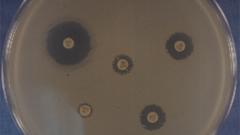
  6. Compare dilution and diffusion methods and know the basic techniques of agar disk diffusion, broth dilution and agar dilution methods
  7. Have detailed theoretical knowledge on how to perform the main methods in a laboratory
  8. Know the basic concepts about analysis and interpretation of results of AST, including different breakpoints, cut-off setting and their applications.
  9. Understand the importance and related concepts related to quality management and quality assurance method standardization, applied to AST
  10. Relate the information obtained in this course with real cases of resistant bacteria spreading in patients, the community, animals or the environment
  11. Relate the phenotypical results with results from genotyping using molecular techniques for detection of resistance mechanisms
  12. Understand the concept and be able to apply genomic analysis tools used to detect resistance genes and other relevant genes from Whole Genome Sequencing (WGS) data (with demonstration of selected online tools)

Syllabus

WEEK 1
Welcome to the course
This module is basically a welcome to the course were you can find information on the Course structure, the contents you will be learning in the next modules, the grading, and introduction to the instructors and to the teaching material.
Module A- Antimicrobial and antimicrobial action
Antimicrobials and antimicrobial action ( includes two lectures and one quiz). Here you will learn a lot about antibiotics/ antimicrobials and you will know more about:what they are, where do they come from, what are the major groups and how can we classify them, how do they have an effect, how do they act on the bacterial cells

WEEK 2
Module B - Antimicrobials and resistance
This module containd information about antimicrobials and the development of resistance in bacteria including causes for resistance and their mechanisms, as well as an insight in how resistance disseminates and how it can be selected.

WEEK 3
Module C- Antimicrobial susceptibility testing
This module deals with antimicrobial susceptibility testing in the laboratory: its importance and use, descriptions of the methods and their applications and detailed descriptions of the procedures applied for the main methods.

WEEK 4
Module D- Interpretation
This module gives practical insight on how to interpret antimicrobial susceptibility results.
Module E- Quality assurance
This module is dedicated to Quality management and Quality assurance (QA/ Quality control (QC) procedures and use of QC strains to assure the qulaity of results of antimicrobial susceptibility testing: importance, elements and principles.

WEEK 5
Module F- Alternatives to AST- Genome analysis tools
As alternative to the phenotypical methods, the researcher might decide to use genotypically based methods to identify genes of interest. in the lectures of this module we present the Resfinder tool which may be used to find resistance mechanisms ( genes and in the future versions also specific point mutations)from Whole genome sequences of bacteria of interest. The second Lecture is a demonstration of the My DB Finder which can be used to identify genes of interest defined by the user from Whole genome sequence data.
Module G- specific resistances
Go to Class
MOOC List is learner-supported. When you buy through links on our site, we may earn an affiliate commission.

Related Courses

Pensamiento Científico (Coursera) Coursera
Universidad Nacional Autónoma de México

Pensamiento Científico (Coursera)

¿El pensamiento científico es sólo para científicos? Su utilidad va mucho más allá, ayudando a las personas a tomar mejores decisiones todos los días. El objetivo de este curso es fomentar en pensamiento científico en los alumnos para ayudarles a tomar mejores decisiones profesionales, personales y sociales.

Jun 8th 2026
5-12 Weeks
Soul Beliefs: Causes and Consequences - Unit 3: How Does It All End? (Coursera) Coursera
Rutgers University

Soul Beliefs: Causes and Consequences - Unit 3: How Does It All End? (Coursera)

Throughout history, the vast majority of people around the globe have believed they have, however defined, a “soul.” While the question of whether the soul exists cannot be answered by science, what we can study are the causes and consequences of various beliefs about the soul and its prospects of surviving the death of the body. Why are soul and afterlife beliefs so common in human history? Are there adaptive advantages to assuming souls exist?

Jun 8th 2026
5-12 Weeks
Bioinformatic Methods II (Coursera) Coursera
University of Toronto

Bioinformatic Methods II (Coursera)

Large-scale biology projects such as the sequencing of the human genome and gene expression surveys using RNA-seq, microarrays and other technologies have created a wealth of data for biologists. However, the challenge facing scientists is analyzing and even accessing these data to extract useful information pertaining to the system being studied. This course focuses on employing existing bioinformatic resources – mainly web-based programs and databases – to access the wealth of data to answer questions relevant to the average biologist, and is highly hands-on.

Jun 8th 2026
5-12 Weeks
Soul Beliefs: Causes and Consequences - Unit 2: Belief Systems (Coursera) Coursera
Rutgers University

Soul Beliefs: Causes and Consequences - Unit 2: Belief Systems (Coursera)

Throughout history, the vast majority of people around the globe have believed they have, however defined, a “soul.” While the question of whether the soul exists cannot be answered by science, what we can study are the causes and consequences of various beliefs about the soul and its prospects of surviving the death of the body. Why are soul and afterlife beliefs so common in human history? Are there adaptive advantages to assuming souls exist?

Jun 8th 2026
5-12 Weeks
The New Nordic Diet - from Gastronomy to Health (Coursera) Coursera
University of Copenhagen

The New Nordic Diet - from Gastronomy to Health (Coursera)

The New Nordic Diet is a new food culture developed in 2009-13 with key emphasis on gastronomy, health, and environment. Major research in its effect on acceptability, behaviour and learning skills, and disease prevention have been conducted by the OPUS centre at the University of Copenhagen and the people behind the award-winning restaurant Noma in Copenhagen. This course will give the participants the opportunity to experience a healthy and palatable new food and eating concept diet “The New Nordic Diet” and an understanding of how food and diets can affect mental and physical health and ensure the foundation for a healthier life style for future generations with a regional based diet and food culture.

Jun 8th 2026
5-12 Weeks
Leading Healthcare Quality and Safety (Coursera) Coursera
George Washington University

Leading Healthcare Quality and Safety (Coursera)

Ensuring patient safety and healthcare quality is critical and should be a key focus of everyone in healthcare practice. This course provides healthcare practitioners and others with an introduction to the knowledge and skills needed to lead patient safety and quality improvement initiatives at the micro and macro levels. Participants will explore the foundations of health care quality and the science underlying patient safety and quality improvement, design and select effective health care measures, analyze patient safety problems and processes using tools such as human factors analysis, apply systematic approaches including the Plan-Do-Study-Act (PDSA) model to address quality improvement challenges, and learn strategies to lead a culture of change

Jun 8th 2026
5-12 Weeks
Introduction to Genetics and Evolution (Coursera) Coursera
Duke University

Introduction to Genetics and Evolution (Coursera)

Introduction to Genetics and Evolution is a college-level class being offered simultaneously to new students at Duke University. The course gives interested people a very basic overview of some principles behind these very fundamental areas of biology. We often hear about new "genome sequences," commercial kits that can tell you about your ancestry (including pre-human) from your DNA or disease predispositions, debates about the truth of evolution, why animals behave the way they do, and how people found "genetic evidence for natural selection." This course provides the basic biology you need to understand all of these issues better, tries to clarify some misconceptions, and tries to prepare students for future, more advanced coursework in Biology (and especially evolutionary genetics). No prior coursework is assumed.

Jun 8th 2026
5-12 Weeks
Doping : Sports, Organizations and Sciences (Coursera) Coursera
University of Lausanne

Doping : Sports, Organizations and Sciences (Coursera)

The objective of this course is to encourage a critical understanding of doping. To achieve this goal, this course will rely on a multidisciplinary approach that allow you to see how different disciplines get into a single object, in different perspectives and in often complementary ways. This approach will also allow us to appreciate the complexity of a subject like doping. Doping in sports is a complex practice whose definition and identification is the result of socially and historically constructed norms. This course offers to shed light on the processes that led to the use and prohibition of doping substances.

Jun 8th 2026
4 Weeks
Water Supply and Sanitation Policy in Developing Countries Part 1: Understanding Complex Problems (Coursera) Coursera
University of Manchester

Water Supply and Sanitation Policy in Developing Countries Part 1: Understanding Complex Problems (Coursera)

Our course explores what can be done to solve the complex problem that half a billion people worldwide do not have improved water supplies and two billion do not have improved sanitation. We look forward to you joining us. We want to help you develop the skills you need to address this major global challenge of the 21st century.

Jun 8th 2026
5-12 Weeks
Major Depression in the Population: A Public Health Approach (Coursera) Coursera
Johns Hopkins University

Major Depression in the Population: A Public Health Approach (Coursera)

Public Mental Health is the application of the principles of medicine and social science to prevent the occurrence of mental and behavioral disorders and to promote mental health of the population. This course illustrates the principles of public health applied to depressive disorder, including principles of epidemiology, transcultural psychiatry, health services research, and prevention. It is predicted that by 2020 depressive disorder will be the most important cause of disease burden in the entire world! Every human being suffers from feeling depressed at some point or other, but only about one fifth of the population will experience an episode of depressive disorder over the course of their lives.

Jun 8th 2026
5-12 Weeks
HI-FIVE: Health Informatics For Innovation, Value & Enrichment (Social/Peer Perspective) (Coursera) Coursera
Columbia University

HI-FIVE: Health Informatics For Innovation, Value & Enrichment (Social/Peer Perspective) (Coursera)

HI-FIVE (Health Informatics For Innovation, Value & Enrichment) Training is an approximately 10-hour online course designed by Columbia University in 2016, with sponsorship from the Office of the National Coordinator for Health Information Technology (ONC). The training is role-based and uses case scenarios. Our nation’s healthcare system is changing at a rapid pace. Transformative health care delivery programs depend heavily on health information technology to improve and coordinate care, maintain patient registries, support patient engagement, develop and sustain data infrastructure necessary for multi-payer value-based payment, and enable analytical capacities to inform decision making and streamline reporting.

Jun 8th 2026
4 Weeks
An Introduction to Global Health (Coursera) Coursera
University of Copenhagen

An Introduction to Global Health (Coursera)

This course will provide you with an overview of the most important health challenges facing the world today. You will gain insight into how challenges have changed over time, we will discuss the likely determinants of such changes and examine future projections. Successful international strategies and programs promoting human health will be highlighted and global health governance structures will be mapped and the role of the key actors explored.

Jun 8th 2026
5-12 Weeks