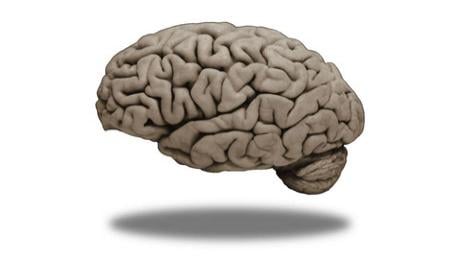
Medical Neuroscience explores the functional organization and neurophysiology of the human central nervous system, while providing a neurobiological framework for understanding human behavior. In this course, you will discover the organization of the neural systems in the brain and spinal cord that mediate sensation, motivate bodily action, and integrate sensorimotor signals with memory, emotion and related faculties of cognition. The overall goal of this course is to provide the foundation for understanding the impairments of sensation, action and cognition that accompany injury, disease or dysfunction in the central nervous system. The course will build upon knowledge acquired through prior studies of cell and molecular biology, general physiology and human anatomy, as we focus primarily on the central nervous system.
Class Deals by MOOC List - Click here and see Coursera's Active Discounts, Deals, and Promo Codes.
This online course is designed to include all of the core concepts in neurophysiology and clinical neuroanatomy that would be presented in most first-year neuroscience courses in schools of medicine. However, there are some topics (e.g., biological psychiatry) and several learning experiences (e.g., hands-on brain dissection) that we provide in the corresponding course offered in the Duke University School of Medicine on campus that we are not attempting to reproduce in Medical Neuroscience online. Nevertheless, our aim is to faithfully present in scope and rigor a medical school caliber course experience.
This course comprises six units of content organized into 12 weeks, with an additional week for a comprehensive final exam:
- Unit 1 Neuroanatomy (weeks 1-2). This unit covers the surface anatomy of the human brain, its internal structure, and the overall organization of sensory and motor systems in the brainstem and spinal cord.
- Unit 2 Neural signaling (weeks 3-4). This unit addresses the fundamental mechanisms of neuronal excitability, signal generation and propagation, synaptic transmission, post synaptic mechanisms of signal integration, and neural plasticity.
- Unit 3 Sensory systems (weeks 5-7). Here, you will learn the overall organization and function of the sensory systems that contribute to our sense of self relative to the world around us: somatic sensory systems, proprioception, vision, audition, and balance senses.
- Unit 4 Motor systems (weeks 8-9). In this unit, we will examine the organization and function of the brain and spinal mechanisms that govern bodily movement.
- Unit 5 Brain Development (week 10). Next, we turn our attention to the neurobiological mechanisms for building the nervous system in embryonic development and in early postnatal life; we will also consider how the brain changes across the lifespan.
- Unit 6 Cognition (weeks 11-12). The course concludes with a survey of the association systems of the cerebral hemispheres, with an emphasis on cortical networks that integrate perception, memory and emotion in organizing behavior and planning for the future; we will also consider brain systems for maintaining homeostasis and regulating brain state.
Suggested Readings:
- Neuroscience, Fifth Edition
- Sylvius 4: An Interactive Atlas and Visual Glossary of Human Neuroanatomy
Syllabus
WEEK 1
Getting Started in Medical Neuroscience
Let's get started in Medical Neuroscience! Each module in Medical Neuroscience will begin with a brief description like this that provides you with an overview of the module. In this first module, you will get to know something about Prof. White and his career in neuroscience; you will understand the scope of Medical Neuroscience, its learning resources, your responsibilities for maximizing your benefit in this course, and you will learn Prof. White's tips on how best to study and learn. At the end of this module, please take the ungraded preliminary quiz, "Are you ready for Medical Neuroscience", to self-assess your background knowledge. Your score on this quiz will not count toward your overall score in this course. However, you should be able to pass this quiz (score 70% or better) if you are ready for the academic challenge of this course. Students who are likely to achieve their goals in Medical Neuroscience should be able to successfully answer nearly all of the quiz questions on their first attempt and feel comfortable with assessment questions at this level of knowledge.
Neuroanatomy: Introducing the Human Brain
Your introduction to Medical Neuroscience continues as you experience in this module a brief introduction to the human brain, its component cells, and some basic anatomical conventions for finding your way around the human central nervous system.
WEEK 2
Neuroanatomy: Surface Anatomy of the Human CNS
We now begin in earnest our lessons on neuroanatomy with the surface of the human brain, including a brief run through the cranial nerves and the blood supply to the CNS. In this module, you will learn the basic subdivisions of the vertebrate nervous system; however, your focus should be on the cerebral cortex. Along the way, you will be challenged to "build a digital brain" that should help you generate and improve your mental “model” of the cerebral hemispheres of the human brain. Another great way to refine your mental model is through sketching and crafting, so please do the learning objectives that are designed to help you make visible (and tangible) your understanding of the cerebral hemispheres.
Neuroanatomy: Internal Anatomy of the Human CNS
WEEK 3
Neural Signaling: Electrical Excitability and Signal Propagation
We now turn our attention from the tangible (human neuroanatomy) to the physiological as we explore the means by which neurons generate, propagate and communicate electrical signals. After exploring those structures in the human brain that are visible to the unaided eye, we must now sharpen our focus and zoom-in, as it were, to the unitary level of organization and function in the central nervous system: to the level of individual neurons and their component parts that are crucial for neural signaling.
WEEK 4
Neural Signaling: Synaptic Transmission and Synaptic Plasticity
Let’s continue our studies of neural signaling by learning about what happens at synaptic junctions, where the terminal ending of one neuron meets a complementary process of another excitable cell.
WEEK 5
Sensory Systems: General Principles and Somatic Sensation
We have reached a significant juncture in Medical Neuroscience as we turn our attention to the organization and function of the sensory systems. We will begin our studies with the somatic sensory systems, which includes subsystems for mechanical sensation and pain/temperature sensation. But before we get there, it is worth considering first some organizing principles that will set the stage for studies of somatic sensation and all the other sensory systems of the body.
WEEK 6
Sensory Systems: The Visual System
This module will provide lessons that are designed to help you understand the basic mechanisms by which light is transduced into electrical signals that are then used to construct visual perceptions in the brain. Your studies of the visual system will benefit you at this point in the course, but also in later studies when we use the visual system as a model for understanding general principles of developmental plasticity. Lastly, it is worth noting how much of the forebrain contains elements of the visual pathways. Thus, injuries and disease in widespread regions of the brain may have a clinically important impact on visual function. All the more reason to learn these lessons well as you progress in Medical Neuroscience.
WEEK 7
Sensory Systems: Audition, Vestibular Sensation and the Chemical Senses
Our survey of the sensory systems continues as we now turn our attention to the auditory system, the vestibular system, and the chemical sensory systems. As you study this content, notice the similarities and the differences that pertain to the general mechanisms of sensory transduction and the broad organization of the central pathways in each of these sensory systems. In particular, note the similarity in transduction mechanisms for audition and vestibular sensation; and note the “logic” of sensory coding in the chemical sensory systems.
WEEK 8
Movement and Motor Control: Lower and Upper Motor Neurons
We come now to another pivot in Medical Neuroscience where our focus shifts from sensation to action. Or to borrow a phrase made famous by C.S. Sherrington more than a century ago (the title of his classic text), we will now consider the “integrative action of the nervous system”. We will do so in this module by learning the basic mechanisms by which neural circuits in the brain and spinal cord motivate bodily movement.
Movement and Motor Control: Understanding the Paradigm of Eye Movements
At this juncture in our exploration of motor control, let’s focus on one of the best studied paradigms for understanding the neural control of movement: the eye movement system.
WEEK 9
Movement and Motor Control: Modulation of Movement
Next, we will consider two major brain systems that modulate the output of upper motor neuronal circuits: the basal ganglia and the cerebellum. Take note: the output of these systems is NOT directed at lower motor circuits directly; rather, their output engages the motor thalamus and brainstem upper motor neuronal circuits. Thus, the actions of the basal ganglia and cerebellum are to modulate, rather than command, the activities of upper motor neurons. As you study the lessons in this module, appreciate how the basal ganglia and cerebellum function in a somewhat complementary fashion to modulate the initiation and coordination of movement, respectively.
Movement and Motor Control: Visceral Motor Control
We conclude our survey of movement and motor control by considering the visceral motor system, perhaps better known as the autonomic nervous system. As you study this lesson, consider how the disparate physiology of the viscera has impact not only on the internal state of the body, but also on implicit processing in the forebrain. We will return to this matter when we consider the neurobiology of emotions near the conclusion of Medical Neuroscience
WEEK 10
The Changing Brain: The Brain Across the Lifespan
This module represents another turning point in Medical Neuroscience. Now that we have surveyed human neuroanatomy and our sensory and motor systems, we are ready to take a step back and consider how this magnificent central nervous system came to be the way that it is. We will also learn how the brain re-wires itself across the lifespan as genetic specification, experience-dependent plasticity and self-organization continue to interact, re-shaping the structure and function of neural circuits throughout the central nervous system.
WEEK 11
Complex Brain Functions: Associational Cortex
It may surprise you to know that in all of our studies of the neural systems for sensation and action, we have yet to properly account for the organization and function of roughly 75% of the entire cerebral mantle. Thus, only 25% of the cerebral cortex is accounted for by the modal sensory and motor cortical areas. The majority of the human cerebral cortex is multi-modal cortex that associates signals derived from one or more modal systems. We now turn our attention to this “associational cortex” as we consider more complex aspects of brain function.
WEEK 12
Complex Brain Functions: Sleep, Emotion and Addiction
In this concluding module of Medical Neuroscience, we will consider the neurobiology of sleep and the neurobiology of emotion, including addiction. Both topics involve explorations of complex, widely distributed systems in the forebrain and brainstem that modulate states of body and brain.
WEEK 13
Comprehensive Final Exam
This module contains materials that will help you prepare for the final challenge in Medical Neuroscience: our clinical case-based, Comprehensive Final Exam.
Closing Remarks
Please allow me a few more moments of your time to express my thanks for all your efforts to make it through Medical Neuroscience, and to wish you well on all your future endeavors!