Principles of fMRI 1 (Coursera)

Principles of fMRI 1 (Coursera)

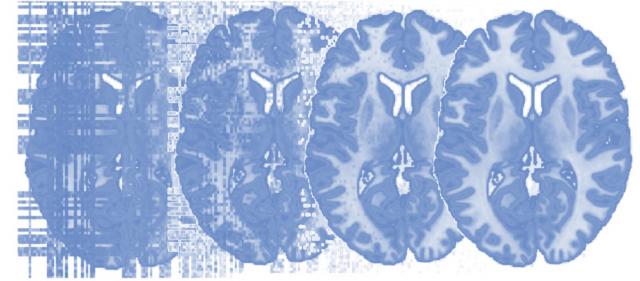
Functional Magnetic Resonance Imaging (fMRI) is the most widely used technique for investigating the living, functioning human brain as people perform tasks and experience mental states. It is a convergence point for multidisciplinary work from many disciplines. Psychologists, statisticians, physicists, computer scientists, neuroscientists, medical researchers, behavioral scientists, engineers, public health researchers, biologists, and others are coming together to advance our understanding of the human mind and brain. This course covers the design, acquisition, and analysis of Functional Magnetic Resonance Imaging (fMRI) data, including psychological inference, MR Physics, K Space, experimental design, pre-processing of fMRI data, as well as Generalized Linear Models (GLM’s).

Class Deals by MOOC List - Click here and see Coursera's Active Discounts, Deals, and Promo Codes.

Course 2 of 4 in the Neuroscience and Neuroimaging Specialization.

Syllabus

WEEK 1: This week we will introduce fMRI, and talk about data acquisition and reconstruction.
WEEK 2: This week we will discuss the fMRI signal, experimental design and pre-processing.
WEEK 3: This week we will discuss the General Linear Model (GLM).
WEEK 4: The description goes here
Go to Class
MOOC List is learner-supported. When you buy through links on our site, we may earn an affiliate commission.

Related Courses

Basic Statistics (Coursera) Coursera
University of Amsterdam

Basic Statistics (Coursera)

Understanding statistics is essential to understand research in the social and behavioral sciences. In this course you will learn the basics of statistics; not just how to calculate them, but also how to evaluate them. This course will also prepare you for the next course in the specialization - the course Inferential Statistics. In the first part of the course we will discuss methods of descriptive statistics. You will learn what cases and variables are and how you can compute measures of central tendency (mean, median and mode) and dispersion (standard deviation and variance). Next, we discuss how to assess relationships between variables, and we introduce the concepts correlation and regression.

Jul 6th 2026
5-12 Weeks
Data Manipulation at Scale: Systems and Algorithms (Coursera) Coursera
University of Washington

Data Manipulation at Scale: Systems and Algorithms (Coursera)

Data analysis has replaced data acquisition as the bottleneck to evidence-based decision making --- we are drowning in it. Extracting knowledge from large, heterogeneous, and noisy datasets requires not only powerful computing resources, but the programming abstractions to use them effectively. The abstractions that emerged in the last decade blend ideas from parallel databases, distributed systems, and programming languages to create a new class of scalable data analytics platforms that form the foundation for data science at realistic scales.

Jul 6th 2026
4 Weeks
Statistical Inference (Coursera) Coursera
Johns Hopkins University

Statistical Inference (Coursera)

Statistical inference is the process of drawing conclusions about populations or scientific truths from data. There are many modes of performing inference including statistical modeling, data oriented strategies and explicit use of designs and randomization in analyses. Furthermore, there are broad theories (frequentists, Bayesian, likelihood, design based, …) and numerous complexities (missing data, observed and unobserved confounding, biases) for performing inference.

Jul 6th 2026
4 Weeks
Framework for Data Collection and Analysis (Coursera) Coursera
University of Maryland, College Park

Framework for Data Collection and Analysis (Coursera)

This course will provide you with an overview over existing data products and a good understanding of the data collection landscape. With the help of various examples you will learn how to identify which data sources likely matches your research question, how to turn your research question into measurable pieces, and how to think about an analysis plan.

Jul 6th 2026
4 Weeks
Business Intelligence Concepts, Tools, and Applications (Coursera) Coursera
University of Colorado System

Business Intelligence Concepts, Tools, and Applications (Coursera)

This is the fourth course in the Data Warehouse for Business Intelligence specialization. Ideally, the courses should be taken in sequence. In this course, you will gain the knowledge and skills for using data warehouses for business intelligence purposes and for working as a business intelligence developer. You’ll have the opportunity to work with large data sets in a data warehouse environment and will learn the use of MicroStrategy's Online Analytical Processing (OLAP) and Visualization capabilities to create visualizations and dashboards.

Jul 6th 2026
5-12 Weeks
Practical Predictive Analytics: Models and Methods (Coursera) Coursera
University of Washington

Practical Predictive Analytics: Models and Methods (Coursera)

Statistical experiment design and analytics are at the heart of data science. In this course you will design statistical experiments and analyze the results using modern methods. You will also explore the common pitfalls in interpreting statistical arguments, especially those associated with big data. Collectively, this course will help you internalize a core set of practical and effective machine learning methods and concepts, and apply them to solve some real world problems.

Jul 6th 2026
4 Weeks
Introduction to Probability and Data with R (Coursera) Coursera
Duke University

Introduction to Probability and Data with R (Coursera)

This course introduces you to sampling and exploring data, as well as basic probability theory and Bayes' rule. You will examine various types of sampling methods, and discuss how such methods can impact the scope of inference. A variety of exploratory data analysis techniques will be covered, including numeric summary statistics and basic data visualization.

Jul 6th 2026
5-12 Weeks
Cloud Computing Applications, Part 2: Big Data and Applications in the Cloud (Coursera) Coursera
University of Illinois at Urbana-Champaign

Cloud Computing Applications, Part 2: Big Data and Applications in the Cloud (Coursera)

Welcome to the Cloud Computing Applications course, the second part of a two-course series designed to give you a comprehensive view on the world of Cloud Computing and Big Data! In this second course we continue Cloud Computing Applications by exploring how the Cloud opens up data analytics of huge volumes of data that are static or streamed at high velocity and represent an enormous variety of information. Cloud applications and data analytics represent a disruptive change in the ways that society is informed by, and uses information.

Jul 6th 2026
4 Weeks
Pattern Discovery in Data Mining (Coursera) Coursera
University of Illinois at Urbana-Champaign

Pattern Discovery in Data Mining (Coursera)

Learn the general concepts of data mining along with basic methodologies and applications. Then dive into one subfield in data mining: pattern discovery. Learn in-depth concepts, methods, and applications of pattern discovery in data mining. We will also introduce methods for data-driven phrase mining and some interesting applications of pattern discovery. This course provides you the opportunity to learn skills and content to practice and engage in scalable pattern discovery methods on massive transactional data, discuss pattern evaluation measures, and study methods for mining diverse kinds of patterns, sequential patterns, and sub-graph patterns.

Jul 6th 2026
4 Weeks
Linear Regression and Modeling (Coursera) Coursera
Duke University

Linear Regression and Modeling (Coursera)

This course introduces simple and multiple linear regression models. These models allow you to assess the relationship between variables in a data set and a continuous response variable. Is there a relationship between the physical attractiveness of a professor and their student evaluation scores? Can we predict the test score for a child based on certain characteristics of his or her mother? In this course, you will learn the fundamental theory behind linear regression and, through data examples, learn to fit, examine, and utilize regression models to examine relationships between multiple variables, using the free statistical software R and RStudio.

Jul 6th 2026
4 Weeks
Introduction to Data Science in Python (Coursera) Coursera
University of Michigan

Introduction to Data Science in Python (Coursera)

This course will introduce the learner to the basics of the python programming environment, including fundamental python programming techniques such as lambdas, reading and manipulating csv files, and the numpy library. The course will introduce data manipulation and cleaning techniques using the popular python pandas data science library and introduce the abstraction of the Series and DataFrame as the central data structures for data analysis, along with tutorials on how to use functions such as groupby, merge, and pivot tables effectively. By the end of this course, students will be able to take tabular data, clean it, manipulate it, and run basic inferential statistical analyses.

Jul 6th 2026
4 Weeks
Foundations of strategic business analytics (Coursera) Coursera
ESSEC Business School

Foundations of strategic business analytics (Coursera)

Who is this course for? This course is designed for students, business analysts, and data scientists who want to apply statistical knowledge and techniques to business contexts. For example, it may be suited to experienced statisticians, analysts, engineers who want to move more into a business role. You will find this course exciting and rewarding if you already have a background in statistics, can use R or another programming language and are familiar with databases and data analysis techniques such as regression, classification, and clustering.

Jul 6th 2026
4 Weeks