Principles of fMRI 2 (Coursera)

Principles of fMRI 2 (Coursera)

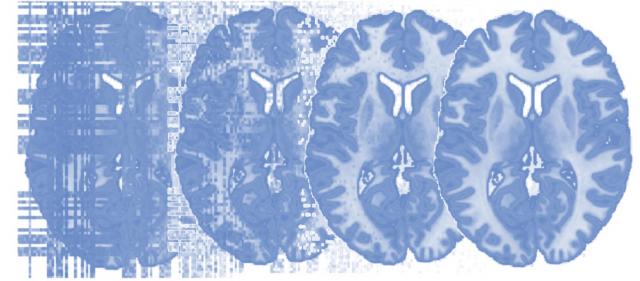
Functional Magnetic Resonance Imaging (fMRI) is the most widely used technique for investigating the living, functioning human brain as people perform tasks and experience mental states. It is a convergence point for multidisciplinary work from many disciplines. Psychologists, statisticians, physicists, computer scientists, neuroscientists, medical researchers, behavioral scientists, engineers, public health researchers, biologists, and others are coming together to advance our understanding of the human mind and brain. This course covers the analysis of Functional Magnetic Resonance Imaging (fMRI) data.

Class Deals by MOOC List - Click here and see Coursera's Active Discounts, Deals, and Promo Codes.

It is a continuation of the course "Principles of fMRI, Part 1"

Course 3 of 4 in the Neuroscience and Neuroimaging Specialization

Syllabus

WEEK 1: This week we will discuss psychological and behavioral inference, as well as advanced experimental design.
WEEK 2: This week we will continue with advanced experimental design, and also discuss advanced GLM modeling.
WEEK 3: This week we will focus on brain connectivity.
WEEK 4: This week we will focus on multi-voxel pattern analysis.


Go to Class
MOOC List is learner-supported. When you buy through links on our site, we may earn an affiliate commission.

Related Courses

Mathematical Biostatistics Boot Camp 1 (Coursera) Coursera
Johns Hopkins University

Mathematical Biostatistics Boot Camp 1 (Coursera)

This class presents the fundamental probability and statistical concepts used in elementary data analysis. It will be taught at an introductory level for students with junior or senior college-level mathematical training including a working knowledge of calculus. A small amount of linear algebra and programming are useful for the class, but not required.

Aug 17th 2026
4 Weeks
Matrix Methods (Coursera) Coursera
University of Minnesota

Matrix Methods (Coursera)

Mathematical Matrix Methods lie at the root of most methods of machine learning and data analysis of tabular data. Learn the basics of Matrix Methods, including matrix-matrix multiplication, solving linear equations, orthogonality, and best least squares approximation. Discover the Singular Value Decomposition that plays a fundamental role in dimensionality reduction, Principal Component Analysis, and noise reduction.

Aug 17th 2026
5-12 Weeks
Infonomics II: Business Information Management and Measurement (Coursera) Coursera
University of Illinois at Urbana-Champaign

Infonomics II: Business Information Management and Measurement (Coursera)

Even decades into the Information Age, accounting practices yet fail to recognize the financial value of information. Moreover, traditional asset management practices fail to recognize information as an asset to be managed with earnest discipline. This has led to a business culture of complacence, and the inability for most organizations to fully leverage available information assets. This second course in the two-part Infonomics series explores how and why to adapt well-honed asset management principles and practices to information, and how to apply accepted and new valuation models to gauge information’s potential and realized economic benefits.

Aug 17th 2026
4 Weeks
Fundamentos de Excel para Negocios (Coursera) Coursera
Universidad Austral

Fundamentos de Excel para Negocios (Coursera)

Cuando finalices este curso habrás logrado un gran número de habilidades como introducir información, ordenarla, manipularla, realizar cálculos de diversa índole (matemáticos, trigonométricos, estadísticos, financieros, ingenieriles, probabilísticos), extraer conclusiones, trabajar con fechas y horas, construir gráficos, imprimir reportes y muchas más.

Aug 17th 2026
5-12 Weeks
Philosophy, Science and Religion: Philosophy and Religion (Coursera) Coursera
University of Edinburgh

Philosophy, Science and Religion: Philosophy and Religion (Coursera)

Philosophy, Science and Religion mark three of the most fundamental modes of thinking about the world and our place in it. Are these modes incompatible? Put another way: is the intellectually responsible thing to do to ‘pick sides’ and identify with one of these approaches at the exclusion of others? Or, are they complementary or mutually supportive? As is typical of questions of such magnitude, the devil is in the details. For example, it is important to work out what is really distinctive about each of these ways of inquiring about the world. In order to gain some clarity here, we’ll be investigating what some of the current leading thinkers in philosophy, science and religion are actually doing.

Aug 17th 2026
5-12 Weeks
Data-Driven Decisions with Power BI (Coursera) Coursera
Knowledge Accelerators

Data-Driven Decisions with Power BI (Coursera)

New Power BI users will begin the course by gaining a conceptual understanding of the Power BI desktop application and the Power BI service. Learners will explore the Power BI interface while learning how to manage pages and understand the basics of visualizations. Learners will engage in numerous hands-on experiences to discover how to import, connect, clean, transform, and model their own data in the Power BI desktop application.

Aug 17th 2026
5-12 Weeks
Pre-MBA Statistics (Coursera) Coursera
Indian Institute of Management Ahmedabad (IIMA)

Pre-MBA Statistics (Coursera)

Welcome to the Pre-MBA Statistics course! By the end of this course, you will be able to describe how statistics can be used to summarize, analyze, and interpret data. This course introduces you to some aspects of descriptive and inferential statistics. You will learn to distinguish between various data types and describe the operations that you can execute with each type of data and the right tools to use.

Aug 17th 2026
5-12 Weeks
Advanced Reproducibility in Cancer Informatics (Coursera) Coursera
Johns Hopkins University

Advanced Reproducibility in Cancer Informatics (Coursera)

This course introduces tools that help enhance reproducibility and replicability in the context of cancer informatics. It uses hands-on exercises to demonstrate in practical terms how to get acquainted with these tools but is by no means meant to be a comprehensive dive into these tools. The course introduces tools and their concepts such as git and GitHub, code review, Docker, and GitHub actions.

Aug 17th 2026
5-12 Weeks
Medical Neuroscience (Coursera) Coursera
Duke University

Medical Neuroscience (Coursera)

Medical Neuroscience explores the functional organization and neurophysiology of the human central nervous system, while providing a neurobiological framework for understanding human behavior. In this course, you will discover the organization of the neural systems in the brain and spinal cord that mediate sensation, motivate bodily action, and integrate sensorimotor signals with memory, emotion and related faculties of cognition. The overall goal of this course is to provide the foundation for understanding the impairments of sensation, action and cognition that accompany injury, disease or dysfunction in the central nervous system. The course will build upon knowledge acquired through prior studies of cell and molecular biology, general physiology and human anatomy, as we focus primarily on the central nervous system.

Aug 17th 2026
13-24 Weeks
Big Data Analysis with Scala and Spark (Coursera) Coursera
École Polytechnique Fédérale de Lausanne

Big Data Analysis with Scala and Spark (Coursera)

Manipulating big data distributed over a cluster using functional concepts is rampant in industry, and is arguably one of the first widespread industrial uses of functional ideas. This is evidenced by the popularity of MapReduce and Hadoop, and most recently Apache Spark, a fast, in-memory distributed collections framework written in Scala. In this course, we'll see how the data parallel paradigm can be extended to the distributed case, using Spark throughout.

Aug 17th 2026
4 Weeks