Gestión del análisis de datos (Coursera)

Gestión del análisis de datos (Coursera)

This one-week course describes the process of analyzing data and how to manage that process. We describe the iterative nature of data analysis and the role of stating a sharp question, exploratory data analysis, inference, formal statistical modeling, interpretation, and communication. In addition, we will describe how to direct analytic activities within a team and to drive the data analysis process towards coherent and useful results.

Class Deals by MOOC List - Click here and see Coursera's Active Discounts, Deals, and Promo Codes.

This is a focused course designed to rapidly get you up to speed on the process of data analysis and how it can be managed. Our goal was to make this as convenient as possible for you without sacrificing any essential content. We've left the technical information aside so that you can focus on managing your team and moving it forward.
After completing this course you will know how to….

  1. Describe the basic data analysis iteration
  2. Identify different types of questions and translate them to specific datasets
  3. Describe different types of data pulls
  4. Explore datasets to determine if data are appropriate for a given question
  5. Direct model building efforts in common data analyses
  6. Interpret the results from common data analyses
  7. Integrate statistical findings to form coherent data analysis presentations

What You Will Learn

  • Differentiate between various types of data pulls
  • Describe the basic data analysis iteration
  • Explore datasets to determine if data is appropriate for a project
  • Use statistical findings to create convincing data analysis presentations

Syllabus

WEEK 1
Gestión del análisis de datos
¡Te damos la bienvenida a Gestión del análisis de datos! Este curso consiste en un módulo diseñado para realizarse en una semana. El curso funciona mejor si avanzas con el material en el orden en el que se presenta. Cada clase cuenta con videos y material de lectura que aportan información adicional a la clase. Me entusiasma tenerte en la clase y espero recibir tus contribuciones para la comunidad de estudiantes. Si tienes preguntas sobre el contenido del curso, publícalas en el foro para obtener ayuda de otras personas de la comunidad del curso. Si tienes problemas técnicos con la plataforma de Coursera, visita el Centro de ayuda para estudiantes. ¡Buena suerte en el inicio del curso y espero que lo disfrutes!

Go to Class
MOOC List is learner-supported. When you buy through links on our site, we may earn an affiliate commission.

Related Courses

Matlab and Simulink Basics (Coursera) Coursera
Starweaver

Matlab and Simulink Basics (Coursera)

Matlab and Simulink Basics is a meticulously crafted course offering a comprehensive introduction to Matlab's programming environment and Simulink's modeling capabilities. This course is tailored for individuals keen on bolstering their skills in these indispensable tools for engineering, science, and research domains. From laying down foundational concepts to delving into practical applications, participants will embark on a journey that hones their abilities to manipulate data, design models, and interpret results with Matlab and Simulink.

Oct 12th 2026
4 Weeks
Mathematical Biostatistics Boot Camp 1 (Coursera) Coursera
Johns Hopkins University

Mathematical Biostatistics Boot Camp 1 (Coursera)

This class presents the fundamental probability and statistical concepts used in elementary data analysis. It will be taught at an introductory level for students with junior or senior college-level mathematical training including a working knowledge of calculus. A small amount of linear algebra and programming are useful for the class, but not required.

Oct 12th 2026
4 Weeks
Infonomics II: Business Information Management and Measurement (Coursera) Coursera
University of Illinois at Urbana-Champaign

Infonomics II: Business Information Management and Measurement (Coursera)

Even decades into the Information Age, accounting practices yet fail to recognize the financial value of information. Moreover, traditional asset management practices fail to recognize information as an asset to be managed with earnest discipline. This has led to a business culture of complacence, and the inability for most organizations to fully leverage available information assets. This second course in the two-part Infonomics series explores how and why to adapt well-honed asset management principles and practices to information, and how to apply accepted and new valuation models to gauge information’s potential and realized economic benefits.

Oct 12th 2026
4 Weeks
Principles of fMRI 1 (Coursera) Coursera
Johns Hopkins University

Principles of fMRI 1 (Coursera)

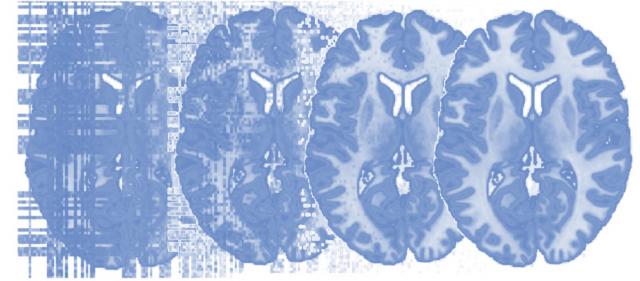
Functional Magnetic Resonance Imaging (fMRI) is the most widely used technique for investigating the living, functioning human brain as people perform tasks and experience mental states. It is a convergence point for multidisciplinary work from many disciplines. Psychologists, statisticians, physicists, computer scientists, neuroscientists, medical researchers, behavioral scientists, engineers, public health researchers, biologists, and others are coming together to advance our understanding of the human mind and brain. This course covers the design, acquisition, and analysis of Functional Magnetic Resonance Imaging (fMRI) data, including psychological inference, MR Physics, K Space, experimental design, pre-processing of fMRI data, as well as Generalized Linear Models (GLM’s).

Oct 12th 2026
4 Weeks
Earth Economics (Coursera) Coursera
Erasmus University Rotterdam

Earth Economics (Coursera)

After this course you will be an Earth Economist that can provide evidence-based advise on the best global policy. As an Earth Economist you will better understand the behavior and advice of economists, have become a better economist yourself and know where to find Earth's data and how to analyze these world observations. Our planet is too important: we need you to get engaged!

Oct 12th 2026
5-12 Weeks
Structural Equation Model and its Applications | 结构方程模型及其应用 (普通话) (Coursera) Coursera
The Chinese University of Hong Kong

Structural Equation Model and its Applications | 结构方程模型及其应用 (普通话) (Coursera)

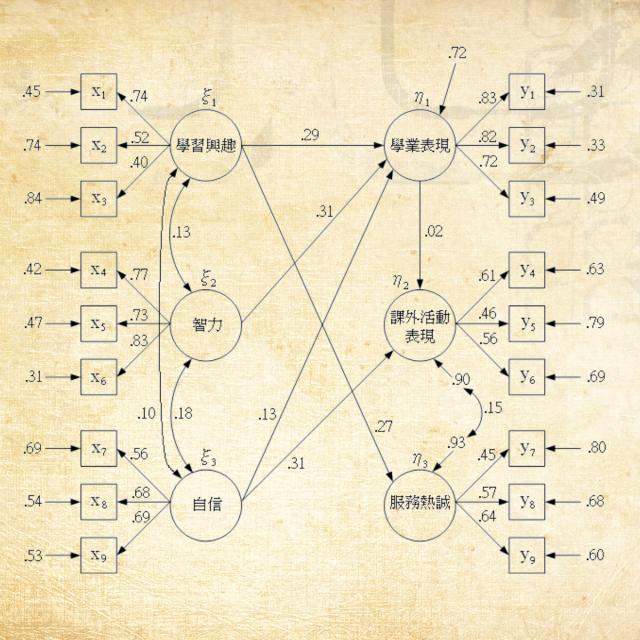
在社会学、心理学、教育学、经济学、管理学、市场学等研究领域的数据分析中,结构方程建模是当前最前沿的统计方法中应用最广、研究最多的一个。它包含了方差分析、回归分析、路径分析和因子分析,弥补了传统回归分析和因子分析的不足,可以分析多因多果的联系、潜变量的关系,

Oct 12th 2026
5-12 Weeks