Assessing Health Program Delivery (Coursera)

Assessing Health Program Delivery (Coursera)

This course provides in-depth knowledge about implementation strength, quality of care, and service utilization, which are essential components of health program delivery. This course is primarily aimed at implementers, managers, funders, and evaluators of health programs in low- and middle-income settings (LMISs) targeting women and children, and undergraduate and graduate students in health-related fields.

Class Deals by MOOC List - Click here and see Coursera's Active Discounts, Deals, and Promo Codes.

Those who complete this course successfully will be able to:

  1. Explain why assessing health program delivery is an essential part of any large-scale program evaluation in LMISs.
  2. Design an assessment of delivery for a health program in a LMIS, including proposed documentation of the program, indicators, measurement methods and tools, relevant contextual factors, and a plan for data analysis.
  3. Interpret assessment results in the context of a large-scale effectiveness evaluation, and explain how they can be used to improve program policies and implementation.
  4. Describe the RADAR tools for assessing implementation strength and the quality of care, and access guidelines for the use of the tools.

The development of this course was supported by a grant from Government Affairs Canada (GAC) for the Real Accountability, Data Analysis for Results (RADAR) project.

Syllabus

WEEK 1: Getting started in the course
WEEK 2: Deciding WHAT to assess
WEEK 3: Data Sources and Data Collection Methods
WEEK 4: Context matters
WEEK 5: Planning and implementing data collection, quality control, and data analysis
WEEK 6: Use it or lose it: Evaluations of program delivery as agents of change
WEEK 7: Introducing the RADAR tools for evaluating health program delivery
WEEK 8: Course summary

Go to Class
MOOC List is learner-supported. When you buy through links on our site, we may earn an affiliate commission.

Related Courses

Data Processing Using Python (Coursera) Coursera
Nanjing University

Data Processing Using Python (Coursera)

This course is mainly for non-computer majors. It starts with the basic syntax of Python, to how to acquire data in Python locally and from network, to how to present data, then to how to conduct basic and advanced statistic analysis and visualization of data, and finally to how to design a simple GUI to present and process data, advancing level by level.

Oct 19th 2026
5-12 Weeks
Case Studies in Personalized Medicine (Coursera) Coursera
Vanderbilt University

Case Studies in Personalized Medicine (Coursera)

Learn how advances in biomedicine hold the potential to revolutionize drug development, drug treatments, and disease prevention: where are we now, and what does the future hold? This course will present short primers in genetics and mechanisms underlying variability in drug responses. A series of case studies will be used to illustrate principles of how genetics are being brought to bear on refining diagnoses and on personalizing treatment in rare and common diseases. The ethical and operational issues around how to implement large scale genomic sequencing in clinical practice will be addressed.

Oct 12th 2026
5-12 Weeks
Childbirth: A Global Perspective (Coursera) Coursera
Emory University

Childbirth: A Global Perspective (Coursera)

This course will review challenges for maternal and newborn health in the developing world, where a great many women and babies are suffering from complications during pregnancy, childbirth, and the days following birth. Themes covered include the epidemiology of maternal and newborn mortality and morbidity, relevant issues for the global health workforce, community-based interventions to improve maternal and newborn health and survival, and sociocultural dynamics surrounding birth.

Oct 19th 2026
5-12 Weeks
Epidemiology: The Basic Science of Public Health (Coursera) Coursera
University of North Carolina

Epidemiology: The Basic Science of Public Health (Coursera)

Often called “the cornerstone” of public health, epidemiology is the study of the distribution and determinants of diseases, health conditions, or events among populations and the application of that study to control health problems. By applying the concepts learned in this course to current public health problems and issues, students will understand the practice of epidemiology as it relates to real life and makes for a better appreciation of public health programs and policies. This course explores public health issues like cardiovascular and infectious diseases – both locally and globally – through the lens of epidemiology.

Oct 12th 2026
5-12 Weeks
The Social Context of Mental Health and Illness (Coursera) Coursera
University of Toronto

The Social Context of Mental Health and Illness (Coursera)

Learn how social factors promote mental health, influence the onset and course of mental illness, and affect how mental illnesses are diagnosed and treated. This course explores how our understanding of mental health and illness has been influenced by social attitudes and social developments in North America and around the world. The course begins by situating our contemporary mental health practices in historical context, then looks at different aspects of mental health, mental illness and mental health services and their connections to what’s going on in our social environment.

Oct 12th 2026
5-12 Weeks
Career 911: Your Future Job in Medicine and Healthcare (Coursera) Coursera
Northwestern University

Career 911: Your Future Job in Medicine and Healthcare (Coursera)

This course aims to help high school students, recent graduates, and those considering career transitions explore health care career options and learn strategies for entry into the health care workforce and health related fields. There are lots of amazing job opportunities in medicine and healthcare! Join us, as we share the strategies and secrets for getting those jobs.

Oct 12th 2026
5-12 Weeks
Structural Equation Model and its Applications | 结构方程模型及其应用 (普通话) (Coursera) Coursera
The Chinese University of Hong Kong

Structural Equation Model and its Applications | 结构方程模型及其应用 (普通话) (Coursera)

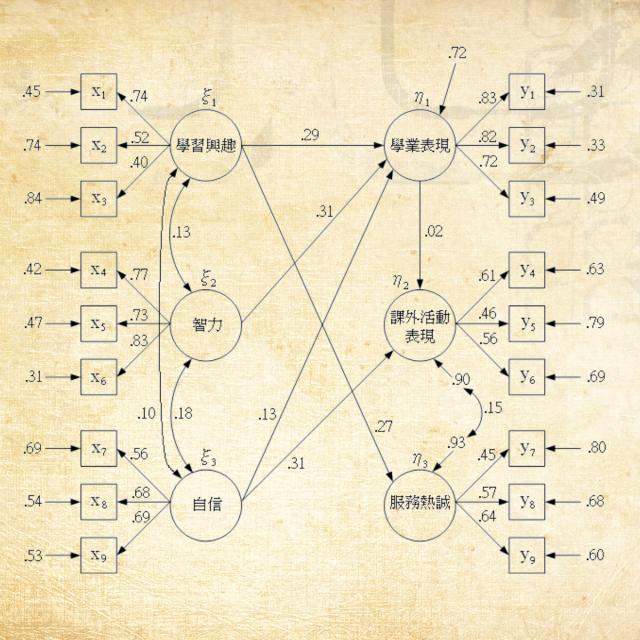
在社会学、心理学、教育学、经济学、管理学、市场学等研究领域的数据分析中,结构方程建模是当前最前沿的统计方法中应用最广、研究最多的一个。它包含了方差分析、回归分析、路径分析和因子分析,弥补了传统回归分析和因子分析的不足,可以分析多因多果的联系、潜变量的关系,

Oct 12th 2026
5-12 Weeks
Dopage : Sports, Organisations et Sciences (Coursera) Coursera
University of Lausanne

Dopage : Sports, Organisations et Sciences (Coursera)

L'objectif du cours est de permettre une compréhension distanciée du dopage. C’est pour atteindre cet objectif que le cours s’appuie sur une approche pluridisciplinaire qui constitue une opportunité d'observer comment diverses disciplines abordent un même objet, selon différents angles et de manière complémentaire. Il s'agit également de donner des repères permettant d'appréhender le dopage dans sa complexité.

Oct 12th 2026
4 Weeks