Soul Beliefs: Causes and Consequences - Unit 3: How Does It All End? (Coursera)

Offered by Rutgers University,
Soul Beliefs: Causes and Consequences - Unit 3: How Does It All End? (Coursera)

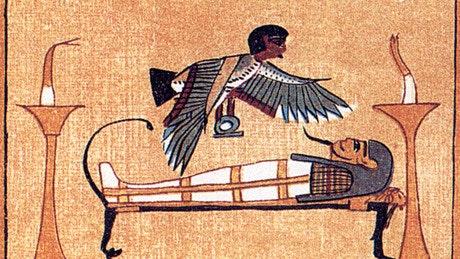
Throughout history, the vast majority of people around the globe have believed they have, however defined, a “soul.” While the question of whether the soul exists cannot be answered by science, what we can study are the causes and consequences of various beliefs about the soul and its prospects of surviving the death of the body. Why are soul and afterlife beliefs so common in human history? Are there adaptive advantages to assuming souls exist?

Class Deals by MOOC List - Click here and see Coursera's Active Discounts, Deals, and Promo Codes.

Are there brain structures that have been shaped by environmental pressures that provide the foundation of body/mind dualism that is such a prominent feature of many religions? How do these beliefs shape the worldviews of different cultures and our collective lives? What is the role of competing afterlife beliefs in religion, science, politics, and war? This course explores several facets of this relatively unexplored but profoundly important aspect of human thought and behavior.
The course consists mainly of 70 to 80 minute lectures, typically broken up into 3 segments, recorded from a course offered by Rutgers University School of Arts and Sciences. These videos include slides and some embedded video clips. Most lectures are accompanied by slides used during the lecture, also including recommended reading assignment which may provide additional opportunities to reflect on your studies.
Due to the lengthiness of this class and natural progression, the online course has been separated into 3 units, this is Unit 3.

Syllabus

WEEK 1: Introduction to Unit 3
WEEK 2: Evolutionary Psychology
WEEK 3: The Evolution of the Human Brain
WEEK 4: The Human Spark
WEEK 5: The Scopes Trial: Human Origins and the Public Classroom
WEEK 6: The Dover Board of Education: Intelligent Design and the Public Classroom
WEEK 7: Where Do We Go From Here? - General Course Pages


Go to Class
MOOC List is learner-supported. When you buy through links on our site, we may earn an affiliate commission.

Related Courses

Pricing Strategy (Coursera) Coursera
IE Business School

Pricing Strategy (Coursera)

Pricing is one of the most important but least understood marketing decisions. Learn and practice concepts, techniques, and get to grips with the latest thinking on assessing and formulating pricing strategies. Analyze how firms attempt to capture value, as well as profits, in the revenues they earn. After this course, you will be able to contribute to the process of formulating pricing strategies for your own products and services, or those of your firm.

Jun 8th 2026
4 Weeks
Doping : Sports, Organizations and Sciences (Coursera) Coursera
University of Lausanne

Doping : Sports, Organizations and Sciences (Coursera)

The objective of this course is to encourage a critical understanding of doping. To achieve this goal, this course will rely on a multidisciplinary approach that allow you to see how different disciplines get into a single object, in different perspectives and in often complementary ways. This approach will also allow us to appreciate the complexity of a subject like doping. Doping in sports is a complex practice whose definition and identification is the result of socially and historically constructed norms. This course offers to shed light on the processes that led to the use and prohibition of doping substances.

Jun 8th 2026
4 Weeks
Positive Psychology: Applications and Interventions (Coursera) Coursera
University of Pennsylvania

Positive Psychology: Applications and Interventions (Coursera)

Positive interventions are one of the building blocks for the application of positive psychology in our day-to-day lives. In this course taught by Dr. James Pawelski, we explore positive interventions through theory, research and practice. We provide learners the basic tools for using and measuring positive psychology in professional or personal contexts. Suggested prerequisite: Positive Psychology: Martin E. P. Seligman’s Visionary Science.

Jun 8th 2026
4 Weeks
Leading Healthcare Quality and Safety (Coursera) Coursera
George Washington University

Leading Healthcare Quality and Safety (Coursera)

Ensuring patient safety and healthcare quality is critical and should be a key focus of everyone in healthcare practice. This course provides healthcare practitioners and others with an introduction to the knowledge and skills needed to lead patient safety and quality improvement initiatives at the micro and macro levels. Participants will explore the foundations of health care quality and the science underlying patient safety and quality improvement, design and select effective health care measures, analyze patient safety problems and processes using tools such as human factors analysis, apply systematic approaches including the Plan-Do-Study-Act (PDSA) model to address quality improvement challenges, and learn strategies to lead a culture of change

Jun 8th 2026
5-12 Weeks
Overcoming Dyslexia (Coursera) Coursera
Yale University

Overcoming Dyslexia (Coursera)

Dyslexia is everywhere, touching so many children and adults, and while science has made extraordinary progress in understanding and clarifying the condition, this incredible powerful knowledge rarely reaches those who most need to know and would greatly benefit from it. Our goal is to change all this with the Coursera you are about to view, produced by Dr. Sally Shaywitz, the Audrey G. Ratner Professor in Learning Development, both the leading scientist studying dyslexia and the most devoted advocate for helping those who are dyslexic.

Jun 13th 2026
5-12 Weeks
Take the Lead on Healthcare Quality Improvement (Coursera) Coursera
Case Western Reserve University

Take the Lead on Healthcare Quality Improvement (Coursera)

In this course you will learn about the importance of quality in healthcare and how you can contribute by implementing a quality improvement (QI) project to improve processes of care and patient outcomes. You will learn about powerful tools to add to your QI ‘toolbox’ during short lectures and reflective exercises. You will apply these tools to the implementation of a QI project in your own practice setting or an area of personal improvement. At the completion of the course, you will have a storyboard that captures your QI project success to share with others.

Jun 8th 2026
5-12 Weeks
Public Involvement in Research (Coursera) Coursera
Imperial College London

Public Involvement in Research (Coursera)

This course focuses on participatory approaches in research, known as 'public involvement' in the UK. You'll specifically, consider why citizens and patients would be involved in research and explore participatory approaches across and within the research cycle in more detail, diving into questions such as: What kinds of participation can be undertaken at each of the 7 stages of the cycle? How can you utilise participation in research? What examples of using participatory approaches exist in research?

Jun 10th 2026
4 Weeks
Introduction to Psychology (Coursera) Coursera
University of Toronto

Introduction to Psychology (Coursera)

This course highlights the most interesting experiments within the field of psychology, discussing the implications of those studies for our understanding of the human mind and human behavior. We will explore the brain and some of the cognitive abilities it supports like memory, learning, attention, perception and consciousness. We will examine human development - both in terms of growing up and growing old - and will discuss the manner in which the behavior of others affect our own thoughts and behavior.

Jun 8th 2026
5-12 Weeks
Children Acquiring Literacy Naturally (Coursera) Coursera
University of California, Santa Cruz

Children Acquiring Literacy Naturally (Coursera)

In this short course you will explore the possibility that children might acquire written language in a way that is similar to how they acquire spoken language—without instruction. You will encounter various aspects of behavioral science and technology that are relevant to this proposition. You will have the opportunity to learn the the perceptual, cognitive, and neurological capacities of children during their first years of life. You will advance your understanding of children and how they learn language. You will also be more attuned to current advances in the technology of human machine interactions, and what these phenomena imply for learning to read at an early age.

Jun 8th 2026
3 Weeks
Introduction to Reproduction (Coursera) Coursera
Northwestern University

Introduction to Reproduction (Coursera)

Do you have questions about sex hormones or menstrual cycles? This is a crash-course in human reproductive health through fact and biology-based information on a variety of topics. "Sex 101" will cover reproductive anatomy, key biological changes during puberty, sexual biology and contraceptive methods, reproductive disorders, and a special introduction to the exciting field of Oncofertility. Specific lecture titles are as follows: 1) Reproductive Anatomy & Hormones, 2) Menstrual Cycle, Oocyte Maturation, & Sperm Activation, 3) Sexual Biology, Fertilization, & Contraception, and 4) Reproductive Health & Disorders.

Jun 8th 2026
4 Weeks