Regulated Competition in Healthcare Systems: Theory & Practice (Coursera)

Regulated Competition in Healthcare Systems: Theory & Practice (Coursera)

In this MOOC you will learn about the theory and practice of 'regulated competition' (also known as 'managed competition') in healthcare systems. Many countries have implemented or consider implementation of regulated competition in healthcare. Examples include Australia, Belgium, Chile, Colombia, Germany, Ireland, Israel, The Netherlands, Switzerland and the United States.

Class Deals by MOOC List - Click here and see Coursera's Active Discounts, Deals, and Promo Codes.

After completing this MOOC, you will be able to explain how regulated competition (in theory) promotes affordability, accessibility and efficiency of healthcare. Moreover, you will be able to explain why (in practice) successful implementation of regulated competition is very complex and often requires difficult trade-offs between policy objectives. We think this MOOC is highly valuable to any student, researcher or professional interested in healthcare system reform and design. Specific topics in this MOOC include a typology of healthcare systems, the economics of healthcare markets, theory and preconditions of regulated competition, risk adjustment and risk selection in health insurance, competition policy and provider payment.

Syllabus

WEEK 1
Introduction and overview
In this module you will be introduced to the teachers involved in this MOOC and you will get an overview of the topics covered by this MOOC. Moreover, you will be asked to briefly introduce yourself. Have fun!

WEEK 2
Why government intervention is necessary & waves of health care reform
In this module you will learn why government intervention in health care is necessary and how governments have intervened in the past century. You will learn that in high income countries three waves of government intervention in health care can be distinguished. Enjoy!

WEEK 3
Market & government failure in healthcare
In this module you will learn that, particularly in health care, markets and governments are both far from perfect. The key challenge for market-based health system reform is therefore: how to navigate between market failure and government failure? As a start, you will learn some important lessons that should be taken into account when considering the introduction or strengthening of competition for healthcare provision. Enjoy!

WEEK 4
Theory of regulated competition in healthcare systems
In this module you will learn about the model of regulated competition in healthcare systems. More specifically, you will learn what this model looks like and how it can help to simultaneously achieve affordability and efficiency. Have fun!

WEEK 5
Preconditions for achieving efficiency & affordability in competitive health care markets
This module will introduce you to ten specific preconditions for achieving efficiency and affordability in competitive healthcare markets. For each precondition, you will learn what the consequences could be if this precondition is not fulfilled. In addition, you will learn to use the preconditions to evaluate the progress of the implementation of regulated competition. Good luck and have fun!

WEEK 6
Ongoing reforms: premium regulation, risk equalization & risk sharing in health insurance markets
Social health insurance markets typically include premium regulation to promote affordability of health insurance for people with expensive medical conditions. A side-effect of premium regulation is that it confronts consumers and insurers with incentives for risk selection. In this module you will learn about typical forms of risk selection and their welfare effects. Moreover, you will learn about tools for the regulator to mitigate selection problems. Have fun!

WEEK 7
Ongoing reforms: competition regulation in health care
In this module the focus is on effective competition regulation as an important precondition for achieving efficiency in competitive healthcare markets. You will first learn about the basic principles of this type of regulation, after which you will learn about three key issues regarding competition regulation in healthcare. These issues are: (1) hospital merger control; (2) insurer monopsony power; and (3) the potential trade-off between integration, coordination and the use minimum volume standards on the one hand and competition on the other. Good luck and have fun!

WEEK 8
Ongoing reforms: provider payment in healthcare systems
In other videos about the preconditions for regulated competition, you’ve learned that in addition to consumers and insurers, providers of care should also be stimulated to spend resources wisely. Clearly, the extent to which this is the case depends on the way in which providers are paid for their services. This module therefore focuses on provider payment systems, and specifically on the design thereof. The core of the module consists of 7 videos divided over 3 lessons: (1) What drives provider payment reform? (2) Provider payment incentives & reform: what does the theory say? And (3) Value-based payment methods: types, design and effects. In contrast to the first lesson, lessons 2 and 3 start with a short introduction which you should read before you begin. Have fun!

WEEK 9
Key takeaways & farewell
Congratulations, you are about to complete this MOOC! By now, you should be able to explain the model of regulated competition in healthcare including its background, principles and preconditions for success.
In this final module we summarize the primary takeaways from this MOOC and say goodbye.


Go to Class
MOOC List is learner-supported. When you buy through links on our site, we may earn an affiliate commission.

Related Courses

HPV-Associated Oral and Throat Cancer: What You Need to Know (Coursera) Coursera
Icahn School of Medicine at Mount Sinai

HPV-Associated Oral and Throat Cancer: What You Need to Know (Coursera)

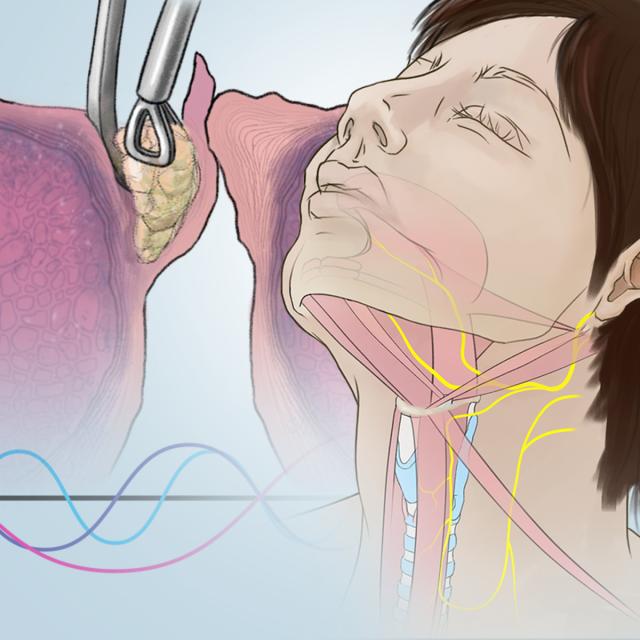
This course, offered by the Department of Otolaryngology – Head and Neck Surgery at the Icahn School of Medicine at Mount Sinai, is designed to inform primary care physicians and otolaryngologists (general and head and neck surgeons), as well as medical students, residents, nurses, physician assistants, medical assistants, about HPV-associated oral and throat cancers. It is also applicable to individuals who wish to broaden their knowledge and vernacular about this disease process, especially those who may have been diagnosed with HPV and/or HPV-associated oropharyngeal cancers.

Aug 17th 2026
5-12 Weeks
Case Studies in Personalized Medicine (Coursera) Coursera
Vanderbilt University

Case Studies in Personalized Medicine (Coursera)

Learn how advances in biomedicine hold the potential to revolutionize drug development, drug treatments, and disease prevention: where are we now, and what does the future hold? This course will present short primers in genetics and mechanisms underlying variability in drug responses. A series of case studies will be used to illustrate principles of how genetics are being brought to bear on refining diagnoses and on personalizing treatment in rare and common diseases. The ethical and operational issues around how to implement large scale genomic sequencing in clinical practice will be addressed.

Aug 17th 2026
5-12 Weeks
Business Models for Innovative Care for Older People (Coursera) Coursera
University of Copenhagen,Copenhagen Business School

Business Models for Innovative Care for Older People (Coursera)

This course will introduce you to healthcare innovation within the field of healthy living and active aging. By following two specific cases on diabetes and rehabilitation, this interdisciplinary course will provide you with key theories, tools and concepts for analyzing and developing viable innovative solutions for aging populations. The lectures will cover demographic, biological, economic, social and cultural aspects of active aging and healthy living, along with lectures on current innovation theories and methods.

Aug 17th 2026
5-12 Weeks
Feeding the World (Coursera) Coursera
University of Pennsylvania

Feeding the World (Coursera)

This course will explore the concepts driving current food production science (population growth, urbanization, emerging affluence, resource constraints, and underlying biological limits) with the main focus on livestock production. Each of the major food animal species (dairy, swine, beef, and poultry) will be covered in terms of their universal life cycles, constraints to production and emerging societal issues.

Aug 17th 2026
5-12 Weeks
Preventing Chronic Pain: A Human Systems Approach (Coursera) Coursera
University of Minnesota

Preventing Chronic Pain: A Human Systems Approach (Coursera)

Chronic pain is at epidemic levels and has become the highest-cost condition in health care. This course uses both creative and experiential learning to better understand chronic pain conditions and how they can be prevented through self-management in our cognitive, behavioral, physical, emotional, spiritual, social, and environmental realms.

Aug 17th 2026
5-12 Weeks
Disease Screening in Public Health (Coursera) Coursera
University of Geneva

Disease Screening in Public Health (Coursera)

Current and future public health is characterized by the increase of chronic and degenerative diseases, corresponding to the worldwide ageing of the population. The increasing prevalence of these conditions together with the long incubation period of the chronic diseases and the restless technological innovations, offer new opportunities to develop strategies for early diagnosis.

Aug 17th 2026
5-12 Weeks
Clinical Kidney, Pancreas and Islet Transplantation (Coursera) Coursera
Leiden University,Leiden University Medical Center

Clinical Kidney, Pancreas and Islet Transplantation (Coursera)

Kidney transplantation is a major advance of modern medicine which provides high-quality of life for patients with end-stage renal disease. What used to be an experimental, risky, and very limited treatment option more than 50 years ago is now routinely performed in many countries worldwide. The number of renal transplants is expected to rise sharply in the next decade since the proportion of patients with end stage renal disease is increasing.

Aug 17th 2026
4 Weeks
Everyday Chinese Medicine (Coursera) Coursera
The Chinese University of Hong Kong

Everyday Chinese Medicine (Coursera)

This course aims to serve as an education platform on Chinese medicine (CM) for the general public. Our primary goal is to empower healthcare choices by promoting awareness and practical application on CM diagnostic and therapeutic approaches, as well as regulation on CM services and herbal products using international examples.

Aug 17th 2026
5-12 Weeks
Dopage : Sports, Organisations et Sciences (Coursera) Coursera
University of Lausanne

Dopage : Sports, Organisations et Sciences (Coursera)

L'objectif du cours est de permettre une compréhension distanciée du dopage. C’est pour atteindre cet objectif que le cours s’appuie sur une approche pluridisciplinaire qui constitue une opportunité d'observer comment diverses disciplines abordent un même objet, selon différents angles et de manière complémentaire. Il s'agit également de donner des repères permettant d'appréhender le dopage dans sa complexité.

Aug 17th 2026
4 Weeks
How Music Can Change Your Life (Coursera) Coursera
University of Melbourne

How Music Can Change Your Life (Coursera)

Did you ever wonder how music works? This course provides free video, audio and journal resources that explain six basic principles about how music can influence individual and community health and wellbeing. From biology and neuroscience, to psychotherapy and politics, the ways we engage with music can make all the difference. Music has always played an integral role in the lives of individuals and communities all around the globe.

Aug 17th 2026
5-12 Weeks