Health Care IT: Challenges and Opportunities (Coursera)

Health Care IT: Challenges and Opportunities (Coursera)

A strong argument can be made that the health care field is one of the most information-intensive sectors in the U.S. economy and avoidance of the rapid advances in information technology is no longer an option. Consequently, the study of health care information technology and systems has become central to health care delivery effectiveness. This course covers the modern application of information technology that is critical to supporting the vision and operational knowledge of the health care leaders in managing the health care organization.

Class Deals by MOOC List - Click here and see Coursera's Active Discounts, Deals, and Promo Codes.

Heath care decision-makers have to meet head-on the dynamic challenges of health care delivery quality, cost, access, and regulatory control. Additionally, this course integrates the Healthcare Information System as integral to the Quality Assurance Tracking Programs including measurement of systems inputs, processes, and outputs with special emphasis on systems outcomes research and organizational accountability to its various stakeholders, not the least of which are government regulators.

Syllabus

WEEK 1
Where are we today and how did we get here? The legal and regulatory framework of Health IT

WEEK 2
A Patient’s Perspective to Health IT

WEEK 3
A Patient’s guide to the Doctors’ Secret World of technology

WEEK 4
A Focus on Digital Medicine

WEEK 5
The rise of the electronic medical record - Beyond EHRs
Go to Class
MOOC List is learner-supported. When you buy through links on our site, we may earn an affiliate commission.

Related Courses

Psychological First Aid (Coursera) Coursera
Johns Hopkins University

Psychological First Aid (Coursera)

Learn to provide psychological first aid to people in an emergency by employing the RAPID model: Reflective listening, Assessment of needs, Prioritization, Intervention, and Disposition. Utilizing the RAPID model (Reflective listening, Assessment of needs, Prioritization, Intervention, and Disposition), this specialized course provides perspectives on injuries and trauma that are beyond those physical in nature. The RAPID model is readily applicable to public health settings, the workplace, the military, faith-based organizations, mass disaster venues, and even the demands of more commonplace critical events, e.g., dealing with the psychological aftermath of accidents, robberies, suicide, homicide, or community violence.

Oct 5th 2026
5-12 Weeks
The Oral Cavity: Portal to Health and Disease (Coursera) Coursera
University of Pennsylvania

The Oral Cavity: Portal to Health and Disease (Coursera)

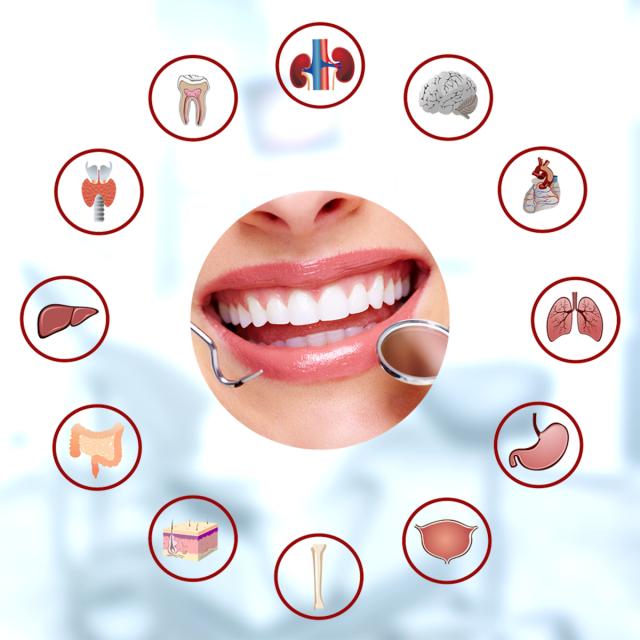
This course will focus on the interprofessional realtionship of dentistry and medicine. For each session, the medical specialist will present a broad overview of specific disease entity which will be followed by a dental educator discussing the relevant oral manifestations and implications. The final module of each session will be devoted to the interaction between the dental and other health care professionals.

Oct 5th 2026
5-12 Weeks
Foundational Skills for Communicating About Health (Coursera) Coursera
University of Michigan

Foundational Skills for Communicating About Health (Coursera)

Effective communication is a core skill that nearly every health professional will need and use during their careers. Yet, few health professionals receive even basic training in how to design communications to be clear and successful. As “foundational skills,” the content in this course can be applied to both oral and written communication, within and beyond health.

Oct 5th 2026
5-12 Weeks
Whole genome sequencing of bacterial genomes - tools and applications (Coursera) Coursera
Technical University of Denmark - DTU

Whole genome sequencing of bacterial genomes - tools and applications (Coursera)

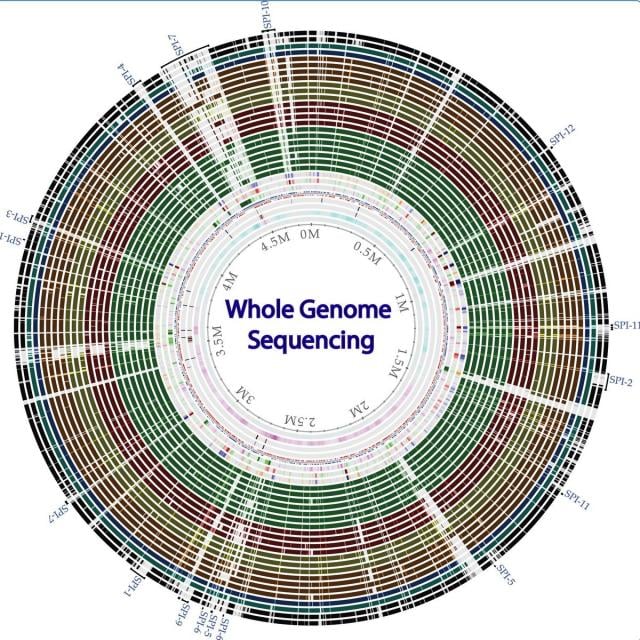
This course will cover the topic of Whole genome sequencing (WGS) of bacterial genomes which is becoming more and more relevant for the medical sector. WGS technology and applications are high on international political agenda, as the classical methods are being replaced by WGS technology and therefore bioinformatic tools are extremely important for allowing the people working in this sector to be able to analyze the data and obtain results that can be interpreted and used for different purposes.

Oct 5th 2026
5-12 Weeks
Urbanisation and Health - Promoting Sustainable Solutions (Coursera) Coursera
University of Copenhagen

Urbanisation and Health - Promoting Sustainable Solutions (Coursera)

More than half of world’s population lives in cities while only 5% did so in the 18th century. The rapid urbanisation has resulted in for example inadequate infrastructure, physical inactivity, gentrification, air pollution, and growing numbers of slum dwellers. All factors challenging health and wellbeing of the people living in the cities. In addition, when addressing climate change it has become of paramount importance to look at mitigation and adaptation investments tailored to the urban context.

Oct 5th 2026
5-12 Weeks
Communicating During Global Emergencies (Coursera) Coursera
Emory University

Communicating During Global Emergencies (Coursera)

In collaboration with the Rollins School of Public Health and the CDC's Division of Global Health Protection, Emergency Response, and Recovery Branch, this course introduces basic concepts and principles of communicating during a global crisis or emergency. It explores why communication during an emergency is different and the importance of adapting emergency messages to the needs of affected populations.

Oct 5th 2026
3 Weeks
Cybersecurity in Healthcare (Hospitals & Care Centres) (Coursera) Coursera
Erasmus University Rotterdam

Cybersecurity in Healthcare (Hospitals & Care Centres) (Coursera)

The Cybersecurity in Healthcare MOOC was developed as part the SecureHospitals.eu project. This project has received funding from the European Union’s Horizon 2020 Coordination Research and Innovation Action under Grant Agreement No. 826497. The course "Cybersecurity in Healthcare" has been developed to raise awareness and understanding the role of cybersecurity in healthcare (e.g., hospitals, care centres, clinics, other medical or social care institutions and service organisations) and the challenges that surround it.

Oct 5th 2026
5-12 Weeks
Violence Against Healthcare (Coursera) Coursera
University of Geneva

Violence Against Healthcare (Coursera)

At the global level, there are many countries marked by violence affecting health care. The 'Health care in danger' project aims to establish practical measures and recommendations that can be implemented on the ground by policy-makers, humanitarian organizations and health professionals. In view of the multiplicity of actors and latitudes concerned, it is essential to be able to make available the tools needed to make informed decisions, guide behaviour in high-risk areas and provide everyone the means to create and optimize the dialogue between humanitarian professionals and health on the one hand and relevant authorities or other armed actors.

Oct 5th 2026
5-12 Weeks
Community Awareness Course: Sexuality and Disability (Coursera) Coursera
University of Minnesota

Community Awareness Course: Sexuality and Disability (Coursera)

This community awareness course from the University of Minnesota Program on Human Sexuality will provide you with a solid introduction to human sexuality for those living with disabilities. Often there are assumptions that the disabled or differently abled people are not sexual, do not have sexual needs, or cannot be involved sexually. In this professionally produced one-hour course, you'll learn about the basics of disabilities and human sexuality.

Oct 5th 2026
5-12 Weeks
La Solución del Conflicto Ético (Coursera) Coursera
Universidad Nacional Autónoma de México

La Solución del Conflicto Ético (Coursera)

En este curso los participantes lograrán identificar y tomar decisiones sobre casos clínicos con conflictos éticos en el área de la salud por medio de la aplicación del razonamiento ético desde una perspectiva universal y considerando los aspectos médicos y éticos, el marco jurídico y la decisión ética.

Oct 5th 2026
5-12 Weeks
Lymphoedema: Monitoring & Intervention After Breast Cancer (Coursera) Coursera
Macquarie University

Lymphoedema: Monitoring & Intervention After Breast Cancer (Coursera)

Lymphoedema following breast cancer treatment is a poorly understood and under-researched condition which can significantly impact physical and psychological function, reduce quality of life and result in substantial cost burdens to both patients and the healthcare system. In these interactive modules we will cover an introduction to lymphoedema, lymphatic physiology and anatomy, assessment and treatment, as well as utilise case studies to understand the prospective surveillance and early intervention model of care in breast cancer rehabilitation.

Oct 5th 2026
4 Weeks
Making the Case for Robotic Process Automation (Coursera) Coursera
Association of International Certified Professional Accountants - AICPA

Making the Case for Robotic Process Automation (Coursera)

Robotic Process Automation (RPA) is reshaping the accounting and finance profession. 40% of transactional accounting work is expected to be automated by 2020 and predicted to touch 230 million knowledge workers, 9% of the global workforce, according to McKinsey Research. Driven by the need to stay competitive, decrease costs and increase efficiency, RPA is quickly making a significant impact on the profession. Companies no longer think about "if" but "when" to implement RPA.

Oct 5th 2026
2 Weeks