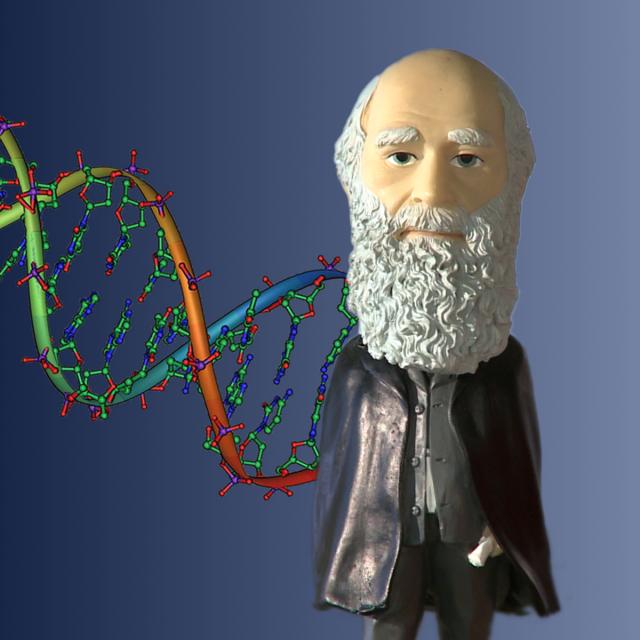
Introduction to Genetics and Evolution (Coursera)

Offered by Duke University,
Introduction to Genetics and Evolution (Coursera)

Introduction to Genetics and Evolution is a college-level class being offered simultaneously to new students at Duke University. The course gives interested people a very basic overview of some principles behind these very fundamental areas of biology. We often hear about new "genome sequences," commercial kits that can tell you about your ancestry (including pre-human) from your DNA or disease predispositions, debates about the truth of evolution, why animals behave the way they do, and how people found "genetic evidence for natural selection." This course provides the basic biology you need to understand all of these issues better, tries to clarify some misconceptions, and tries to prepare students for future, more advanced coursework in Biology (and especially evolutionary genetics). No prior coursework is assumed.

Class Deals by MOOC List - Click here and see Coursera's Active Discounts, Deals, and Promo Codes.

Syllabus

WEEK 1
Welcome to Genetics and Evolution
General introduction to this MOOC, including coverage and expectations.
Evidence for Evolution
This module discusses the definition of the word "evolution" in a biological context, evidence for the truth of evolution and common ancestry of species, and public thoughts and misconceptions about biological evolution. This module is optional and will not be included in the course assessments. There are not class discussion forums for this section, as we feel such discussion can happen on other, non-course-related, sites on this topic (of which there are a great many on the internet).

WEEK 2
Genetics I
An introduction to basic transmission genetics and inheritance. This module reflects what is often covered in high school biology courses in the USA.

WEEK 3
Genetics II
This module delves somewhat more deeply into genetics and specifically the concept of "recombination." It begins to discuss how recombination is leveraged in classic genetic works as well as mapping simple genetic traits using crosses or data from natural populations.

WEEK 4
Genetics III
This module delves even more deeply into the complexities of the genetics underlying traits,the origin of genetic variation, and how "complex" traits (ones controlled by multiple genes) are studied genetically.

WEEK 5
Heritability and Population Growth
This module begins the transition to evolutionary genetics by looking at the relative contributions of genetics and environment to traits, and also introduces how population growth is studied.

WEEK 6
Population Genetics I
Rather than looking at individuals, this module discusses how multiple individuals from natural populations can be studied genetically to begin to understand the evolutionary forces acting upon the populations.

WEEK 7
Population Genetics II
This module extends the previous one to specifically examine the effects of natural selection and genetic drift on genetic variation in natural populations.

WEEK 8
Molecular Evolution
This advanced module explains why sexual reproduction (involving recombination) is evolutionarily advantageous, and discusses how the analysis of DNA sequences can be used to understand the evolutionary forces acting on populations or species, either in general or at specific genes.

WEEK 9
Adaptive Behaviors and Sexual Selection
This module changes gears a bit to look at the exciting field of animal behavior-- specifically, how particular behaviors are or may be adaptive, and why individuals choose particular others as mates.

WEEK 10
Speciation and Phylogenetics
This module gets into the nitty gritty of what causes the formation of new species, and how evolutionary relationships between species are inferred.

WEEK 11
Applied Evolution
This final module talks about applications and misapplications of many of the concepts discussed in the course to human health, understanding, and well-being. This module is optional and not included in the assessments.

Go to Class
MOOC List is learner-supported. When you buy through links on our site, we may earn an affiliate commission.

Related Courses

Genomics: Decoding the Universal Language of Life (Coursera) Coursera
University of Illinois at Urbana-Champaign

Genomics: Decoding the Universal Language of Life (Coursera)

What is a genome? A genome contains all of the information that a cell needs to develop, function, and reproduce itself, and all the information needed for those cells to come together to form a person, plant, or animal. Genomes contain an organism’s complete set of genes, and also the even tinier genetic structures that help regulate when and how those genes are used. The ability to regrow a torn ligament, the clues that might predict the onset of mental illness, the nutritional potential of crops, and even the history of life itself, are all encoded in genomes. By taking this course, you will discover how scientists are deciphering the language of genomes to learn how to develop sustainable food and fuel supplies, improve disease treatment and prevention, and protect our environment.

Sep 28th 2026
5-12 Weeks
Engineering Life: Synbio, Bioethics & Public Policy (Coursera) Coursera
Johns Hopkins University

Engineering Life: Synbio, Bioethics & Public Policy (Coursera)

Synbio is a diverse field with diverse applications, and the different contexts (e.g., gain-of-function research, biofuels) raise different ethical and governance challenges. The objective of this course is to increase learners’ awareness and understanding of ethical and policy/governance issues that arise in the design, conduct and application of synthetic biology. The course will begin with a short history of recombinant DNA technology and how governance of that science developed and evolved, and progress through a series of areas of application of synbio.

Oct 5th 2026
5-12 Weeks
Big History - From the Big Bang until Today (Coursera) Coursera
University of Amsterdam

Big History - From the Big Bang until Today (Coursera)

Welcome to this Big History course! In this course, renowned scientists and scholars from the University of Amsterdam and beyond will take you on a journey from the Big Bang until today while addressing key questions in their fields. After completing this journey you will have developed a better understanding of how you and everything around you became the way they are today.

Sep 28th 2026
4 Weeks
Bioinformatic Methods II (Coursera) Coursera
University of Toronto

Bioinformatic Methods II (Coursera)

Large-scale biology projects such as the sequencing of the human genome and gene expression surveys using RNA-seq, microarrays and other technologies have created a wealth of data for biologists. However, the challenge facing scientists is analyzing and even accessing these data to extract useful information pertaining to the system being studied. This course focuses on employing existing bioinformatic resources – mainly web-based programs and databases – to access the wealth of data to answer questions relevant to the average biologist, and is highly hands-on.

Sep 28th 2026
5-12 Weeks
Pensamiento Científico (Coursera) Coursera
Universidad Nacional Autónoma de México

Pensamiento Científico (Coursera)

¿El pensamiento científico es sólo para científicos? Su utilidad va mucho más allá, ayudando a las personas a tomar mejores decisiones todos los días. El objetivo de este curso es fomentar en pensamiento científico en los alumnos para ayudarles a tomar mejores decisiones profesionales, personales y sociales.

Sep 28th 2026
5-12 Weeks
Understanding Plants - Part II: Fundamentals of Plant Biology (Coursera) Coursera
Tel Aviv University

Understanding Plants - Part II: Fundamentals of Plant Biology (Coursera)

This class is aimed at people interested in understanding the basic science of plant biology. In this four lecture series, we'll first learn about the structure-function of plants and of plant cells. Then we'll try to understand how plants grow and develop, making such complex structures as flowers. Once we know how plants grow and develop, we'll then delve into understanding photosynthesis - how plants take carbon dioxide from the air and water from soil, and turn this into oxygen for us to breathe and sugars for us to eat. In the last lecture we'll learn about the fascinating, important and controversial science behind genetic engineering in agriculture.

Sep 28th 2026
4 Weeks
Basics of Extracellular Vesicles (Coursera) Coursera
University of California, Irvine

Basics of Extracellular Vesicles (Coursera)

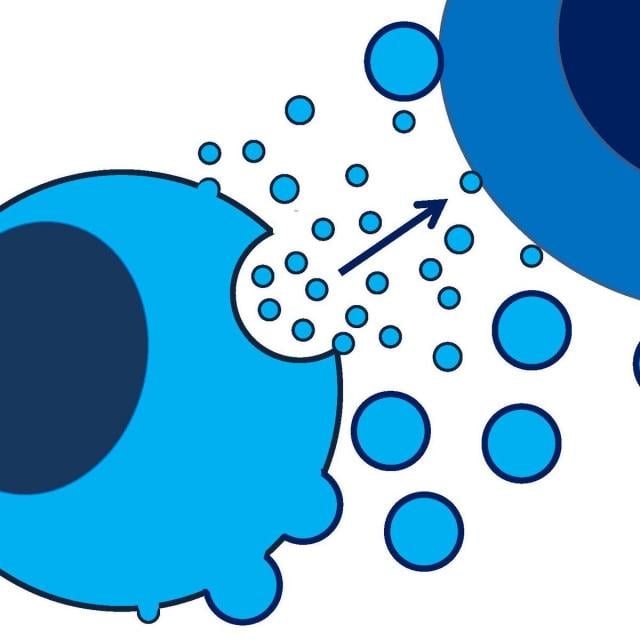
This course aims to provide the basic knowledge about extracellular vesicles (EV) a generic term including exosomes, microvesicles, microparticles, ectosomes, oncosomes, prostasomes, and many others. It covers areas such as EV history, nomenclature, biogenesis, EV cargo as well as the release and uptake mechanisms, collection and processing prior to isolation, different isolation methods, characterization and quantification techniques.

Sep 28th 2026
5-12 Weeks
Philosophy of Science (Coursera) Coursera
University of Pennsylvania

Philosophy of Science (Coursera)

For the last four centuries, scientists have aimed to provide us with an understanding of the world around us. By all appearances, science has made substantial progress during this time. But is this progress real or illusory? And if it is real, how has this progress been made? This four-week course will consider these important questions.

Oct 5th 2026
4 Weeks
Teaching Science at University (Coursera) Coursera
University of Zurich

Teaching Science at University (Coursera)

This course will prepare you for teaching science in higher education. In this MOOC you will learn to make your knowledge as an excellent researcher accessible to your students. We will show you how to communicate science to novices as well as advanced students in science.

Oct 12th 2026
5-12 Weeks
Network Analysis in Systems Biology (Coursera) Coursera
Icahn School of Medicine at Mount Sinai

Network Analysis in Systems Biology (Coursera)

An introduction to data integration and statistical methods used in contemporary Systems Biology, Bioinformatics and Systems Pharmacology research. The course covers methods to process raw data from genome-wide mRNA expression studies (microarrays and RNA-seq) including data normalization, differential expression, clustering, enrichment analysis and network construction. The course contains practical tutorials for using tools and setting up pipelines, but it also covers the mathematics behind the methods applied within the tools.

Sep 28th 2026
5-12 Weeks