Deep Time: Discovering an Ancient Earth (Coursera)

Deep Time: Discovering an Ancient Earth (Coursera)

Ever since our ancestors ventured onto the African savanna, human beings have searched, explored, and wondered about the world. Nowadays, and certainly for most, science is the vehicle that takes us along a path towards understanding nature. It can bring us from sub-atomic realms to the most distant galaxies. Largely through the discipline of geology, science allows us to push back the mists of time and peer into a past measured in billions of years, and aptly referred to as “Deep Time.” Climb on board!

Class Deals by MOOC List - Click here and see Coursera's Active Discounts, Deals, and Promo Codes.

This is a journey of discovery—we'll learn about the origins of science and geology itself, to our planet’s oceans, atmosphere, and crust. The focus then turns to how geologists have probed the rise and fall of the Rocky Mountains, and we conclude by considering not only the power of science but also acknowledging its inherent price and responsibility.
Certificate earners demonstrate proficiency through a few short assessments and discussion prompts and are prepared to teach or apply the material.

What You Will Learn

  • Communicate and teach the underpinnings of geology and deep time.
  • Evaluate the evidence supporting the age of the earth, and review the geologic story of the Rocky Mountains.
  • Apply geological data, models, and investigations.

Syllabus

WEEK 1
Science and Geology in Search of Deep Time
We might well be the first species to ask, and even begin to answer, some big questions about the world around us: Who are we? Where are we? and When are we? Geology joins some heavy hitters, like evolutionary biology and cosmology, when it comes to providing major insights, particularly into the latter question.This first module begins with a look at science in general, how it works and where it came from. We then address the historical beginnings of a “science of the earth” (geology) and how, from its very inception, it pointed towards an earth of immense age, the business of Deep Time. The module wraps up with an introduction to the assessment of rock and mineral age determination using both qualitative and isotopic methods.

WEEK 2
Origins: Stars to Planets, Continents, Oceans, and Atmospheres
The power of science is no better exemplified than through its ability to peer into the most remote depths of Deep Time. In this second module we take a cursory “highlight trip” through a host of very ancient and key origins, from the universe itself to stars and planets, and then to Earth’s first oceans, atmosphere, crust, and life. We take a literal deep dive into the underpinnings of the North American continent, the so-called Precambrian basement. Using rock and mineral analysis, radiometric dating, seismology, and the treasure trove of deep-earth materials brought to the surface by kimberlitic “diamond-pipe” eruptions, geologists have put together an understanding of how North America, and continents in general, grow through time.

WEEK 3
Seas and Ancient Mountains of North America
We tackle the story of North America, as it emerges from the Precambrian into the Phanerozoic Eon (i.e., Paleozoic, Mesozoic, Cenozoic Eras). The story is read from the book of rock layers, and as such we review some of the language of geology—rocks and the rock-cycle. We VISIT (via both lecture and virtual-video-field trip) the puzzling yet pervasive Great Unconformity, an enormous gap in the rock record that sits directly below the first strata with shell fossils. We consider the marine waters that washed onto and off the land, as climate and tectonics drove changes in sea-level. Lastly, as the Pangea Super-Continent coalesced in the Late Paleozoic, we see the rise of the Ancestral Rocky Mountains. Note: This module contains the first two of three Video Field Trip Outings to Flagstaff Mountain, near Boulder, Colorado.

WEEK 4
The Rise of the Modern Rocky Mountains
Moving into the final phase of Earth history in the Rocky Mountains, the Mesozoic and Cenozoic Eras, the geological record provides greater resolution and reveals, with rather exceptional detail, the location and timing of mountain uplifts, ocean incursions, changing climate, and the fossil record. The modern Rocky Mountains turn out to be a consequence of uplift, erosion, and then renewed uplift with a final sculpting via glacial ice. We conclude by coming full circle, back to science itself— recognizing it as more than simply a tool for reconstructing nature and the past, but also carrying a charge of responsibility for assessing truth and evaluating claims within our own lives and the present world. Note: This module begins with the third and final Video Field Trip Outing to Flagstaff Mountain, near Boulder, Colorado.
Go to Class
MOOC List is learner-supported. When you buy through links on our site, we may earn an affiliate commission.

Related Courses

Oil & Gas Industry Operations and Markets (Coursera) Coursera
Duke University

Oil & Gas Industry Operations and Markets (Coursera)

The oil and gas industry has an enormous impact on all aspects of daily life. Individuals, corporations, and national governments make financial and policy decisions based on the cost, use, and availability of these two natural resources. This two-week course looks at the two most fundamental aspects of the oil and gas industry, its operations and markets, each of which is addressed as a separate module in the course.

Sep 30th 2026
2 Weeks
Intellectual Humility: Theory (Coursera) Coursera
University of Edinburgh

Intellectual Humility: Theory (Coursera)

Faced with difficult questions people often tend to dismiss and marginalize dissent. Political and moral disagreements can be incredibly polarizing, and sometimes even dangerous. And whether it’s Christian fundamentalism, Islamic extremism, or militant atheism, religious dialogue remains tinted by arrogance, dogma, and ignorance. The world needs more people who are sensitive to reasons both for and against their beliefs, and are willing to consider the possibility that their political, religious and moral beliefs might be mistaken. The world needs more intellectual humility.

Sep 28th 2026
3 Weeks
Bioinformatics: Introduction and Methods 生物信息学: 导论与方法 (Coursera) Coursera
Peking University

Bioinformatics: Introduction and Methods 生物信息学: 导论与方法 (Coursera)

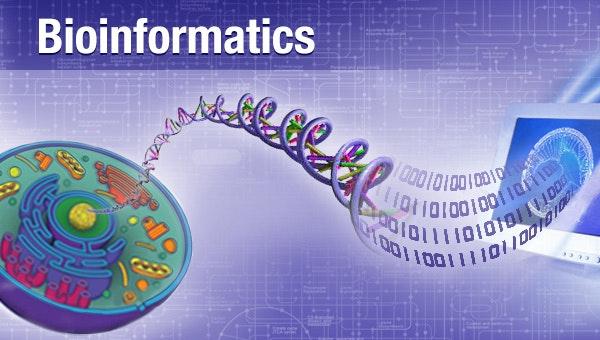
A big welcome to “Bioinformatics: Introduction and Methods” from Peking University! In this MOOC you will become familiar with the concepts and computational methods in the exciting interdisciplinary field of bioinformatics and their applications in biology, the knowledge and skills in bioinformatics you acquired will help you in your future study and research.

Oct 12th 2026
13-24 Weeks
Philosophy, Science and Religion: Religion and Science (Coursera) Coursera
University of Edinburgh

Philosophy, Science and Religion: Religion and Science (Coursera)

Philosophy, Science and Religion mark three of the most fundamental modes of thinking about the world and our place in it. Are these modes incompatible? Put another way: is the intellectually responsible thing to do to ‘pick sides’ and identify with one of these approaches at the exclusion of others? Or, are they complementary or mutually supportive? As is typical of questions of such magnitude, the devil is in the details. For example, it is important to work out what is really distinctive about each of these ways of inquiring about the world. In order to gain some clarity here, we’ll be investigating what some of the current leading thinkers in philosophy, science and religion are actually doing.

Oct 6th 2026
5-12 Weeks
The Brain and Space (Coursera) Coursera
Duke University

The Brain and Space (Coursera)

This course is about how the brain creates our sense of spatial location from a variety of sensory and motor sources, and how this spatial sense in turn shapes our cognitive abilities. Knowing where things are is effortless. But “under the hood,” your brain must figure out even the simplest of details about the world around you and your position in it.

Oct 12th 2026
5-12 Weeks
Introduction to Sustainability (Coursera) Coursera
University of Illinois at Urbana-Champaign

Introduction to Sustainability (Coursera)

This course introduces the academic approach of Sustainability and explores how today’s human societies can endure in the face of global change, ecosystem degradation and resource limitations. The course focuses on key knowledge areas of sustainability theory and practice, including population, ecosystems, global change, energy, agriculture, water, environmental economics and policy, ethics, and cultural history.

Sep 28th 2026
5-12 Weeks
Philosophy, Science and Religion: Science and Philosophy (Coursera) Coursera
University of Edinburgh

Philosophy, Science and Religion: Science and Philosophy (Coursera)

Philosophy, Science and Religion mark three of the most fundamental modes of thinking about the world and our place in it. Are these modes incompatible? Put another way: is the intellectually responsible thing to do to ‘pick sides’ and identify with one of these approaches at the exclusion of others? Or, are they complementary or mutually supportive? As is typical of questions of such magnitude, the devil is in the details. For example, it is important to work out what is really distinctive about each of these ways of inquiring about the world. In order to gain some clarity here, we’ll be investigating what some of the current leading thinkers in philosophy, science and religion are actually doing.

Oct 5th 2026
5-12 Weeks
Analyzing the Universe (Coursera) Coursera
Rutgers University

Analyzing the Universe (Coursera)

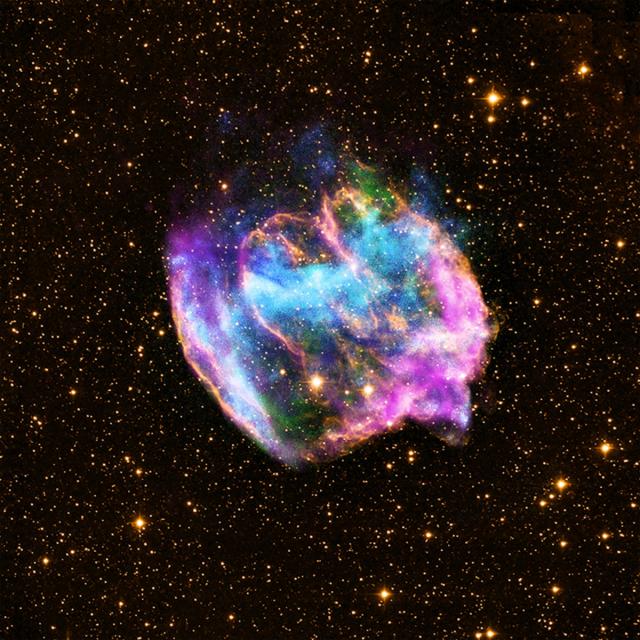
Using publicly available data from NASA of actual satellite observations of astronomical x-ray sources, we explore some of the mysteries of the cosmos, including neutron stars, black holes, quasars and supernovae. We will analyze energy spectra and time series data to understand how these incredible objects work. We utilize an imaging tool called DS9 to explore the amazing diversity of astronomical observations that have made x-ray astronomy one of the most active and exciting fields of scientific investigation in the past 50 years.

Sep 28th 2026
5-12 Weeks
Introduction to the Orbital Perspective (Coursera) Coursera
University of Florida,University of Arizona,Drexel University

Introduction to the Orbital Perspective (Coursera)

The goals of this course are to develop the student’s critical thinking skills, global awareness, and ability to work as an integral part of a team in an increasingly complex global job market. The course provides a foundation in such skills as team building, collaboration, and elevated empathy using real-world scenarios from some of world’s most effective collaborative projects including the Earthrise-2068 Project.

Oct 12th 2026
5-12 Weeks