Journey Conversations: Weaving Knowledge and Action (Coursera)

Offered by Yale University,
Journey Conversations: Weaving Knowledge and Action (Coursera)

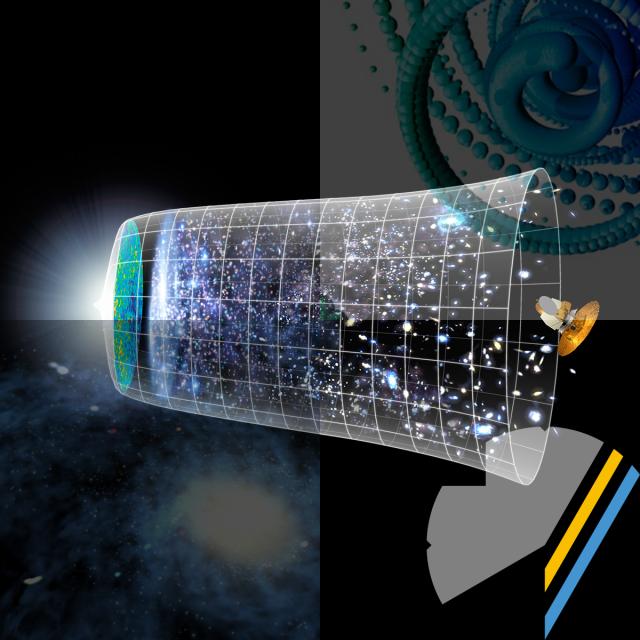
Journey of the Universe weaves together the discoveries of the evolutionary sciences together with humanities such as history, philosophy, art, and religion. This course draws on the Journey of the Universe Conversations, a series of 20 interviews with scientists and environmentalists. The first 10 interviews are with scientists and historians who deepen our understanding of the evolutionary process of universe, Earth, and humans.

Class Deals by MOOC List - Click here and see Coursera's Active Discounts, Deals, and Promo Codes.

The second 10 interviews are with environmentalists, teachers, and artists who explore the connections between the universe story and the practices for a flourishing Earth community.
Course 2 of 3 in the Journey of the Universe: A Story for Our Times Specialization.

Syllabus

WEEK 1
Welcome to Journey Conversations: Weaving Knowledge and Action!
Learn what this course is about, who's teaching it, and other ways you can explore this topic. Meet and greet your peers as well!
Introduction – Journey of the Universe Conversations
The universe’s evolutionary development forces it to leave eras and to start new eras, which is taking place in our own moment in time. We’re in one such moment. We are being pushed out of the industrial era into a new era of Earth’s history”.

WEEK 2
Beginning of the Universe: Galaxies, Stars, and the Solar System
A star is required for the production of carbon and oxygen and a galaxy is required for the production of stars. So the Milky Way galaxy as a whole is required for our hands. Understanding our cosmological nature is the first step into a new era.

WEEK 3
Emergence of Life, Learning, and Humans
We discuss the oxygen crisis two billion years ago and the endosymbiosis that dealt with it creatively. We too will deal with the enveloping crises of our time, first of all by tending to them, by taking responsibility for them.

WEEK 4
Becoming a Planetary Presence: Communities, Cities, and Economics
The story of the isolated neutron’s quick decay and the neutron+proton’s long term stability as an illustration of the synergistic effects that will take place in Eco-cities. In ways we can only guess at, these new mutually enhancing relationships will lead to a qualitatively new vitality.

WEEK 5
Embodied Knowing: Food, Energy, and Health
Understand the universe as self-organizing. Consider galaxies. It is the spiral structure of a galaxy that enables it to construct stars. Elliptical galaxies have lost this structure and have lost the capacity to construct stars. With planets it’s similar. The water, soil, and air enable it to bring forth life year after year. Soil in particular is a dynamic structure that required three billion years of life to construct. But it’s here now. So long as we maintain its health and integrity, it will bring forth food. But to lose that dynamic structure or to lose the dynamic structure of the oceans is to regress back billions of years.

WEEK 6
Emerging Earth Community: Teaching and the Creative Arts
Humans need to live for something greater than themselves if they are ever to achieve happiness and fulfillment. One way to achieve this goal is to teach children the full nature of our universe. Not just our technologies and our sciences and our arts and entertainments, but the story of the universe itself and what is taking place all around and through them.
Go to Class
MOOC List is learner-supported. When you buy through links on our site, we may earn an affiliate commission.

Related Courses

Journey of the Universe: The Unfolding of Life (Coursera) Coursera
Yale University

Journey of the Universe: The Unfolding of Life (Coursera)

Journey of the Universe weaves together the discoveries of the evolutionary sciences together with humanities such as history, philosophy, art, and religion. The course draws on the Emmy-award winning film, Journey of the Universe, and the book from Yale University Press. Journey explores cosmic evolution as a creative process based on connection, interdependence, and emergence. It examines a range of dynamic interactions in the unfolding of galaxies, Earth, life, and human communities. It investigates ways in which we understand evolutionary processes and the implications for humans and our ecological future.

Aug 17th 2026
5-12 Weeks
Analyzing the Universe (Coursera) Coursera
Rutgers University

Analyzing the Universe (Coursera)

Using publicly available data from NASA of actual satellite observations of astronomical x-ray sources, we explore some of the mysteries of the cosmos, including neutron stars, black holes, quasars and supernovae. We will analyze energy spectra and time series data to understand how these incredible objects work. We utilize an imaging tool called DS9 to explore the amazing diversity of astronomical observations that have made x-ray astronomy one of the most active and exciting fields of scientific investigation in the past 50 years.

Aug 3rd 2026
5-12 Weeks
Introduction to the Orbital Perspective (Coursera) Coursera
University of Florida,University of Arizona,Drexel University

Introduction to the Orbital Perspective (Coursera)

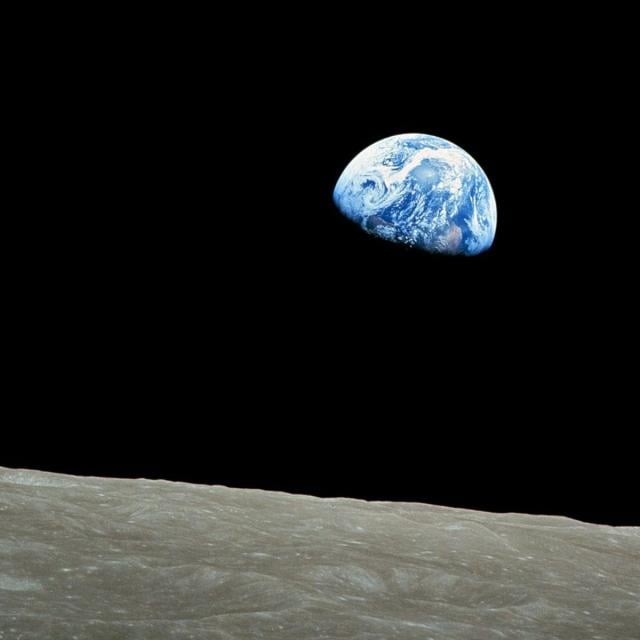
The goals of this course are to develop the student’s critical thinking skills, global awareness, and ability to work as an integral part of a team in an increasingly complex global job market. The course provides a foundation in such skills as team building, collaboration, and elevated empathy using real-world scenarios from some of world’s most effective collaborative projects including the Earthrise-2068 Project.

Aug 17th 2026
5-12 Weeks
Origens da Vida no Contexto Cósmico (Coursera) Coursera
Universidade de São Paulo, Brasil

Origens da Vida no Contexto Cósmico (Coursera)

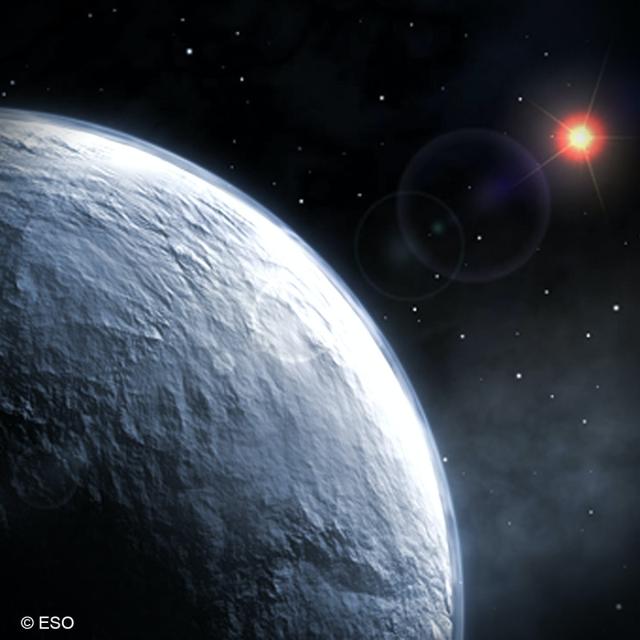
Origens da vida no contexto cósmico é um curso desenvolvido no Instituto de Astronomia, Geofísica e Ciências Atmosféricas da Universidade de São Paulo, com o objetivo de apresentar os mais recentes avanços científicos na compreensão deste intrigante assunto. É um curso com formato multidisciplinar que o levará a compreender melhor os aspectos envolvidos no surgimento de vida na Terra e no possível surgimento de vida em outros planetas.

Aug 3rd 2026
4 Weeks
Philosophy, Science and Religion: Religion and Science (Coursera) Coursera
University of Edinburgh

Philosophy, Science and Religion: Religion and Science (Coursera)

Philosophy, Science and Religion mark three of the most fundamental modes of thinking about the world and our place in it. Are these modes incompatible? Put another way: is the intellectually responsible thing to do to ‘pick sides’ and identify with one of these approaches at the exclusion of others? Or, are they complementary or mutually supportive? As is typical of questions of such magnitude, the devil is in the details. For example, it is important to work out what is really distinctive about each of these ways of inquiring about the world. In order to gain some clarity here, we’ll be investigating what some of the current leading thinkers in philosophy, science and religion are actually doing.

Aug 11th 2026
5-12 Weeks
Global Warming II: Create Your Own Models in Python (Coursera) Coursera
University of Chicago

Global Warming II: Create Your Own Models in Python (Coursera)

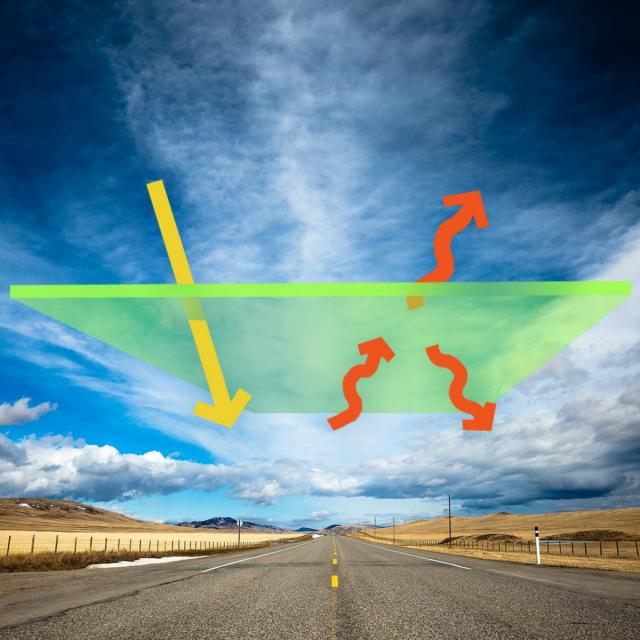
This class provides a series of Python programming exercises intended to explore the use of numerical modeling in the Earth system and climate sciences. The scientific background for these models is presented in a companion class, Global Warming I: The Science and Modeling of Climate Change. This class assumes that you are new to Python programming (and this is indeed a great way to learn Python!), but that you will be able to pick up an elementary knowledge of Python syntax from another class or from on-line tutorials.

Aug 10th 2026
5-12 Weeks
Introduction to Biology: Evolution (Coursera) Coursera
Rice University

Introduction to Biology: Evolution (Coursera)

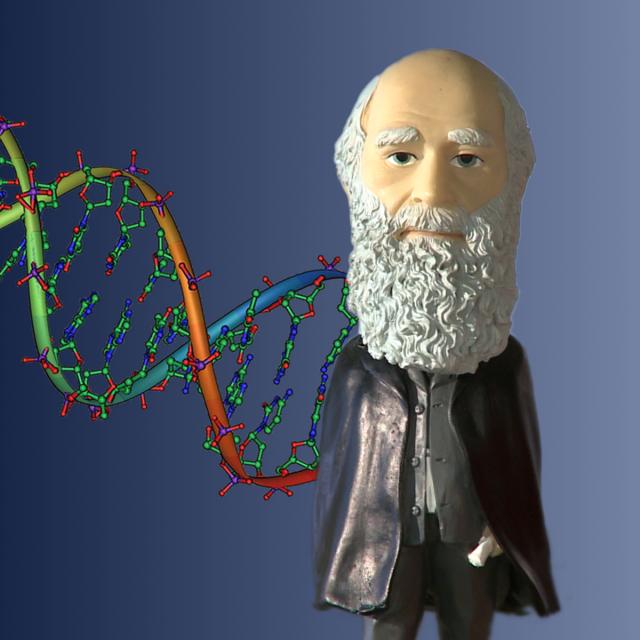
Evolution is one of the most interesting fields within biology, and one that’s central to a complete understanding of modern biology. We begin by tracing how Charles Darwin developed a theory of evolution by natural selection and the many ways that biologists have advanced the science of evolution since his lifetime. We then go on to learn about the many applications of evolutionary biology to our everyday lives.

Aug 3rd 2026
4 Weeks
From the Big Bang to Dark Energy (Coursera) Coursera
The University of Tokyo

From the Big Bang to Dark Energy (Coursera)

We have learned a lot recently about how the Universe evolved in 13.7 billion years since the Big Bang. More than 80% of matter in the Universe is mysterious Dark Matter, which made stars and galaxies to form. The newly discovered Higgs-boson became frozen into the Universe a trillionth of a second after the Big Bang and brought order to the Universe.

Aug 10th 2026
4 Weeks