Big History - From the Big Bang until Today (Coursera)

Big History - From the Big Bang until Today (Coursera)

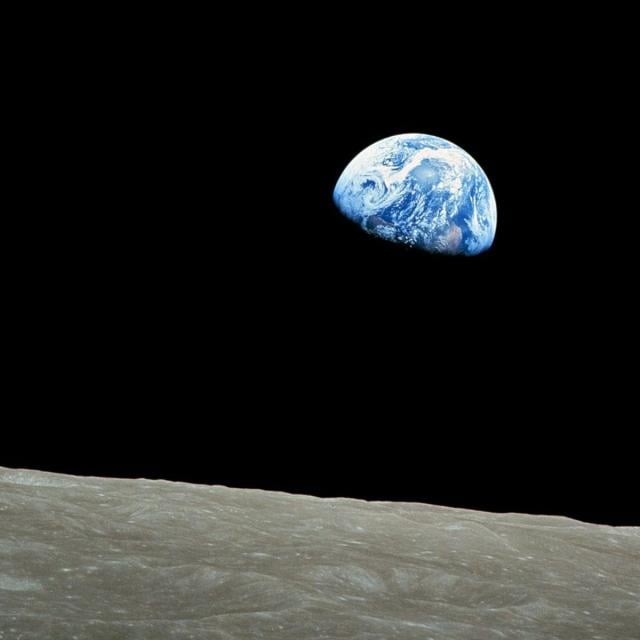
Welcome to this Big History course! In this course, renowned scientists and scholars from the University of Amsterdam and beyond will take you on a journey from the Big Bang until today while addressing key questions in their fields. After completing this journey you will have developed a better understanding of how you and everything around you became the way they are today.

Class Deals by MOOC List - Click here and see Coursera's Active Discounts, Deals, and Promo Codes.

You will also have gained an understanding of the underlying mechanisms that have helped shape the history of everything and how they wil help shape the future. Last but not least, you will have developed the skill to use this knowledge to put smaller subjects into a bigger perspective with the aid of the little big history approach, which can help you develop some new ideas on these smaller subjects.

Syllabus

WEEK 1: Introduction - Cosmic History
WEEK 2: The History of Earth and Life
WEEK 3: Human History
WEEK 4: Wrap up

Go to Class
MOOC List is learner-supported. When you buy through links on our site, we may earn an affiliate commission.

Related Courses

Geometrical and Physical Optics (Coursera) Coursera
Rice University

Geometrical and Physical Optics (Coursera)

This third course serves as an introduction to the physics of waves and light. Upon completion, learners will understand how mathematical laws and conservation principles describe wave propagation and light in the context of both geometrical and physical optics. Learners will gain experience in solving physics problems with tools such as graphical analysis, algebra, vector analysis, and calculus.

Jun 22nd 2026
4 Weeks
电磁学上——恒定电场 (Coursera) Coursera
Peking University

电磁学上——恒定电场 (Coursera)

电磁学是普通物理系列中最重要的基础课之一,是高等学校每一个理工科学生必修课程,本课程包括静电场、恒磁场、电磁感应、电磁介质、电路、麦克斯韦电磁场理论、电磁波等内容,首次系统地向学生介绍“场”的概念和处理“场”的方法,对学生今后学习和工作有深远的影响。本课程作为中国大学先修课(AP课程)向有志于学习物理及相关专业的学有余力的优秀中学生开放,培养学科兴趣,提高科学素养,打下扎实的物理基础。

Jun 15th 2026
5-12 Weeks
The Finite Element Method for Problems in Physics (Coursera) Coursera
University of Michigan

The Finite Element Method for Problems in Physics (Coursera)

This course is an introduction to the finite element method as applicable to a range of problems in physics and engineering sciences. The treatment is mathematical, but only for the purpose of clarifying the formulation. The emphasis is on coding up the formulations in a modern, open-source environment that can be expanded to other applications, subsequently.

Jun 15th 2026
13-24 Weeks
Astro 101: Black Holes (Coursera) Coursera
University of Alberta

Astro 101: Black Holes (Coursera)

What is a black hole? Do they really exist? How do they form? How are they related to stars? What would happen if you fell into one? How do you see a black hole if they emit no light? What’s the difference between a black hole and a really dark star? Could a particle accelerator create a black hole? Can a black hole also be a worm hole or a time machine? In Astro 101: Black Holes, you will explore the concepts behind black holes. Using the theme of black holes, you will learn the basic ideas of astronomy, relativity, and quantum physics.

Jun 22nd 2026
5-12 Weeks
Light and Materials (Coursera) Coursera
Rice University

Light and Materials (Coursera)

This second course serves as an introduction to the physics of waves and light. Upon completion, learners will understand how mathematical laws and conservation principles describe wave propagation and light in the context of both geometrical and physical optics. Learners will gain experience in solving physics problems with tools such as graphical analysis, algebra, vector analysis, and calculus.

Jun 22nd 2026
3 Weeks
Introduction to the Orbital Perspective (Coursera) Coursera
University of Florida,University of Arizona,Drexel University

Introduction to the Orbital Perspective (Coursera)

The goals of this course are to develop the student’s critical thinking skills, global awareness, and ability to work as an integral part of a team in an increasingly complex global job market. The course provides a foundation in such skills as team building, collaboration, and elevated empathy using real-world scenarios from some of world’s most effective collaborative projects including the Earthrise-2068 Project.

Jun 22nd 2026
5-12 Weeks
Journey of the Universe: The Unfolding of Life (Coursera) Coursera
Yale University

Journey of the Universe: The Unfolding of Life (Coursera)

Journey of the Universe weaves together the discoveries of the evolutionary sciences together with humanities such as history, philosophy, art, and religion. The course draws on the Emmy-award winning film, Journey of the Universe, and the book from Yale University Press. Journey explores cosmic evolution as a creative process based on connection, interdependence, and emergence. It examines a range of dynamic interactions in the unfolding of galaxies, Earth, life, and human communities. It investigates ways in which we understand evolutionary processes and the implications for humans and our ecological future.

Jun 22nd 2026
5-12 Weeks
Philosophy, Science and Religion: Religion and Science (Coursera) Coursera
University of Edinburgh

Philosophy, Science and Religion: Religion and Science (Coursera)

Philosophy, Science and Religion mark three of the most fundamental modes of thinking about the world and our place in it. Are these modes incompatible? Put another way: is the intellectually responsible thing to do to ‘pick sides’ and identify with one of these approaches at the exclusion of others? Or, are they complementary or mutually supportive? As is typical of questions of such magnitude, the devil is in the details. For example, it is important to work out what is really distinctive about each of these ways of inquiring about the world. In order to gain some clarity here, we’ll be investigating what some of the current leading thinkers in philosophy, science and religion are actually doing.

Jun 16th 2026
5-12 Weeks
Mechanics: Motion, Forces, Energy and Gravity, from Particles to Planets (Coursera) Coursera
UNSW Sydney - University of New South Wales

Mechanics: Motion, Forces, Energy and Gravity, from Particles to Planets (Coursera)

Most of the phenomena in the world around you are, at the fundamental level, based on physics, and much of physics is based on mechanics. Mechanics begins by quantifying motion, and then explaining it in terms of forces, energy and momentum. This allows us to analyse the operation of many familiar phenomena around us, but also the mechanics of planets, stars and galaxies.

Jun 22nd 2026
5-12 Weeks
Physics 101 - Rotational Motion and Gravitation (Coursera) Coursera
Rice University

Physics 101 - Rotational Motion and Gravitation (Coursera)

This course serves as an introduction to the physics of rotational motion and gravitation. Upon completion, learners will have an understanding of how mathematical laws and conservation principles describe the motions and interactions of objects all around us. They will gain experience in solving physics problems with tools such as graphical analysis, algebra, vector analysis, and calculus.

Jun 22nd 2026
4 Weeks