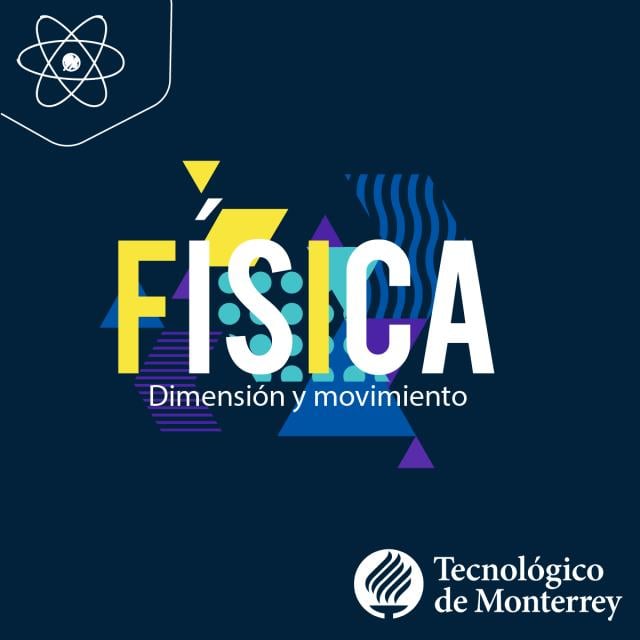
Física: Vectores, Trabajo y Energía (Coursera)

Física: Vectores, Trabajo y Energía (Coursera)

Este curso provee al estudiante con conceptos y herramientas matemáticas para modelar problemas en física, que al aplicar podrá enfrentar con éxito los cursos de física universitarios. Así pues, la filosofía de este curso consiste en cubrir temas conceptuales relativos a la Física y desarrollar tu capacidad de aprender y aplicarlos en tu vida profesional.

Class Deals by MOOC List - Click here and see Coursera's Active Discounts, Deals, and Promo Codes.

El curso se aborda en dos fases a través de las cuales el alumno:

  • Aprenderá a aplicar el cálculo diferencial e integral para interpretar y modelar la cinemática de una partícula en una dimensión,
  • Aprenderá el manejo de cantidades físicas vectoriales en forma gráfica y analítica en dos y tres dimensiones.

Syllabus

WEEK 1: Recursos de apoyo: Herramientas y conceptos básicos
WEEK 2: Introducción a vectores y vectores en el plano cartesiano
WEEK 3: Vectores en el espacio
WEEK 4: Producto punto y Producto cruz
WEEK 5: Trabajo y Energía cinética

Go to Class
MOOC List is learner-supported. When you buy through links on our site, we may earn an affiliate commission.

Related Courses

Sustainability of Social-Ecological Systems: the Nexus between Water, Energy and Food (Coursera) Coursera
Universitat Autònoma de Barcelona

Sustainability of Social-Ecological Systems: the Nexus between Water, Energy and Food (Coursera)

In this course you will become familiar with the ideas of the water-energy-food nexus and transdisciplinary thinking. You will learn to see your community or country as a complex social-ecological system and to describe its water, energy and food metabolism in the form of a pattern, as well as to map the categories of social actors.

Sep 14th 2026
5-12 Weeks
Energy management for real estate. Methods and digital tools (Coursera) Coursera
Politecnico di Milano

Energy management for real estate. Methods and digital tools (Coursera)

The figure of the Energy Manager (EM), introduced in the United States in the early 1970s, during the first oil crisis, brought to light the need to get more work out of less energy. In Italy, this figure was officially introduced by Law 308/82, but had its first strong impulse thanks to Law 10/91, aimed at implementing the National Energy Plan on the rational use of energy, energy saving and the development of renewable energy sources. More in detail, an Energy Manager is a person whose task is to manage what concerns energy within a company, a public body, or more generally a structure, verifying the energy consumption, optimising it, and promoting interventions aimed at energy efficiency and the use of renewable sources.

Sep 21st 2026
4 Weeks
Electric Utilities Fundamentals and Future (Coursera) Coursera
University of Colorado System

Electric Utilities Fundamentals and Future (Coursera)

The approach of this course is truly unique in how it approaches and engages learners. It looks at the electric utility industry, which has remained critical to our quality of life, health and comfort from the eyes of numerous industry experts through on-location interviews, compelling visuals, and animation. You will benefit from having the inside track because you see some behind-the-scenes information not covered in news stories, social media or even if we are in the business ourselves.

Sep 14th 2026
5-12 Weeks
Rigid Body Dynamics (Coursera) Coursera
Korea Advanced Institute of Science and Technology - KAIST

Rigid Body Dynamics (Coursera)

This course teaches dynamics, one of the basic mechanics subjects of Mechanical Engineering. Students would be able to organize their knowledge about force and motion, work-energy, impulse-momentum in view of Newton's 2nd law and its integration over time and displacement. The Engineering Dynamics consists of two parts: particle dynamics and rigid body dynamics. This is the second part of the dynamics: rigid body dynamics.

Sep 14th 2026
13-24 Weeks
Planet Earth ... and You! (Coursera) Coursera
University of Illinois at Urbana-Champaign

Planet Earth ... and You! (Coursera)

Earthquakes, volcanoes, mountain building, ice ages, landslides, floods, life evolution, plate motions—all of these phenomena have interacted over the vast expanses of deep time to sculpt the dynamic planet that we live on today. Planet Earth presents an overview of several aspects of our home, from a geological perspective. We begin with earthquakes—what they are, what causes them, what effects they have, and what we can do about them. We will emphasize that plate tectonics—the grand unifying theory of geology—explains how the map of our planet's surface has changed radically over geologic time, and why present-day geologic activity—including a variety of devastating natural disasters such as earthquakes—occur where they do. We consider volcanoes, types of eruptions, and typical rocks found there.

Sep 21st 2026
5-12 Weeks
Astro 101: Black Holes (Coursera) Coursera
University of Alberta

Astro 101: Black Holes (Coursera)

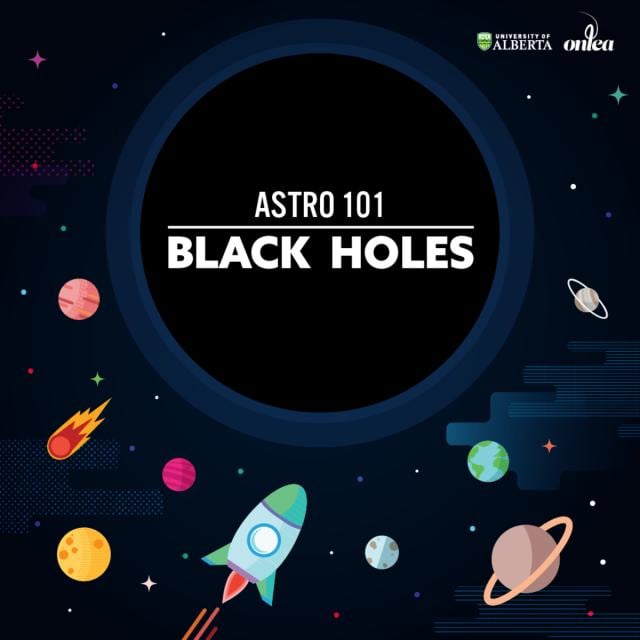
What is a black hole? Do they really exist? How do they form? How are they related to stars? What would happen if you fell into one? How do you see a black hole if they emit no light? What’s the difference between a black hole and a really dark star? Could a particle accelerator create a black hole? Can a black hole also be a worm hole or a time machine? In Astro 101: Black Holes, you will explore the concepts behind black holes. Using the theme of black holes, you will learn the basic ideas of astronomy, relativity, and quantum physics.

Sep 14th 2026
5-12 Weeks
Introduction to solar cells (Coursera) Coursera
Technical University of Denmark - DTU

Introduction to solar cells (Coursera)

How do solar cells work, why do we need, and how can we measure their efficiency? These are just some of the questions Introduction to solar cells tackles. Whether you are looking for general insight in this green technology or your ambition is to pursue a career in solar, “Introduction to Solar Cells” is an excellent starting point. The course is a tour through the fundamental disciplines including solar cell history, why we need solar energy, how solar cells produce power, and how they work. During the course we cover mono- and multi-crystalline solar cells, thin film solar cells, and new emerging technologies.

Sep 21st 2026
5-12 Weeks
Quantum Optics 1 : Single Photons (Coursera) Coursera
École Polytechnique

Quantum Optics 1 : Single Photons (Coursera)

This course gives you access to basic tools and concepts to understand research articles and books on modern quantum optics. You will learn about quantization of light, formalism to describe quantum states of light without any classical analogue, and observables allowing one to demonstrate typical quantum properties of these states. These tools will be applied to the emblematic case of a one-photon wave packet, which behaves both as a particle and a wave.

Sep 21st 2026
5-12 Weeks