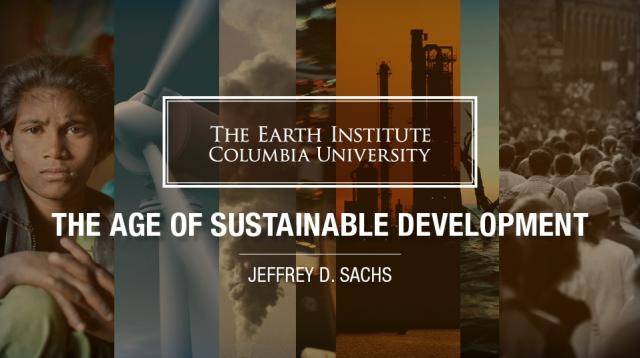
The Age of Sustainable Development (Coursera)

Offered by Columbia University,
The Age of Sustainable Development (Coursera)

The Age of Sustainable Development" gives students an understanding of the key challenges and pathways to sustainable development - that is, economic development that is also socially inclusive and environmentally sustainable.

Class Deals by MOOC List - Click here and see Coursera's Active Discounts, Deals, and Promo Codes.

Syllabus

WEEK 1
Course Materials
Information about the general course structure and reading list can be found here.
What is Sustainable Development?
Professor Sachs provides an overview of the challenges the world faces, and introduces the topic of sustainable development.

WEEK 2
Inequality Around the World
Professor Sachs delves into the reasons for and the measurements of inequality between and within countries.

WEEK 3
A Short History of Economic Development
Professor Sachs provides a history of economic development, starting with the Industrial Revolution and ending with the current state of modern economic growth.

WEEK 4
The History of Inequality
Professor Sachs analyzes the intersecting roles of various factors that contribute to some countries advancing while others do not.

WEEK 5
The MDGs and the End of Extreme Poverty
Professor Sachs outlines the pathways for achieving the end of extreme poverty.

WEEK 6
Growth within Planetary Boundaries
Professor Sachs details the various planetary boundaries and their implications for growth dynamics.

WEEK 7
Human Rights and Gender Equality
Professor Sachs delves into the ethics of wealth, poverty and inequality as well as the forces that widen inequalities.

WEEK 8
Education
Professor Sachs provides an overview of the state of modern education, and what needs to be achieved for sustainable development.

WEEK 9
Universal Health Coverage
Professor Sachs provides an overview of the challenges and pathways to achieving universal health coverage.

WEEK 10
Sustainable Food Supply and the End of Hunger
Professor Sachs provides an overview of food security, farm systems, and ecology and reviews what can be done to achieve a sustainable global food supply.

WEEK 11
Sustainable Cities
Professor Sachs looks into what makes a city sustainable, the patterns of urbanization, and pathways for urban resilience around the world.

WEEK 12
Curbing Climate Change
Professor Sachs provides an introduction to the science behind climate change, and describes the negotiations and policies that are necessary to mitigate and prevent the consequences.

WEEK 13
Saving Biodiversity
Professor Sachs reviews the various threats to the world's ecosystem and biodiversity.

WEEK 14
The SDGs
Professor Sachs recounts the history of the Sustainable Development Goals (SDGs), and describes what is necessary to achieve them.
Go to Class
MOOC List is learner-supported. When you buy through links on our site, we may earn an affiliate commission.

Related Courses

Paths to a Sustainable Future (Coursera) Coursera
ESSEC Business School

Paths to a Sustainable Future (Coursera)

This MOOC is an introduction to social and ecological transition. Ecological issues (climate change, loss in biodiversity, scarcity of resources, etc.) and their social consequences (growing inequalities, poverty, conflicts, forced migrations, etc.) call upon us to promote a paradigm shift, to redesign our production and consumption patterns, as well as our lifestyles. This is what transition is all about.

Aug 3rd 2026
4 Weeks
Marketing Verde (Coursera) Coursera
Universidad de los Andes

Marketing Verde (Coursera)

Al finalizar este curso serás capaz de diseñar y ejecutar campañas para productos, servicios o iniciativas relacionadas con algún tema ambiental, así como también de crear propuestas de valor para cualquier producto o servicio con criterios de sostenibilidad ambiental, es decir, generando el mayor valor para la marca y el menor impacto posible en el entorno.

Aug 3rd 2026
5-12 Weeks
Oceanography: a key to better understand our world (Coursera) Coursera
University of Barcelona,Barcelona Foundation for Ocean Sailing - FNOB

Oceanography: a key to better understand our world (Coursera)

The course for a round the world regatta leads the boats through the Mediterranean Sea and the Atlantic, Southern Indian and South Pacific Oceans. On their voyage, the skippers come across a large variety of oceanographic situations: strong currents, floating ice, wave formations of every kind and biological diversity. In this course the student will learn about the foundations of the science of oceanography. You'll learn about the classification and formation of the ocean floor, how current sea satellite analysis systems work, the chemistry of the oceans and the processes that led to its formation.

Aug 3rd 2026
5-12 Weeks
Supply Chain Management for E-commerce (Coursera) Coursera
Starweaver

Supply Chain Management for E-commerce (Coursera)

Immerse yourself in the dynamic realm of e-commerce supply chains with our course, "Supply Chain Management for E-commerce." Designed for emerging entrepreneurs, small business owners, and career switchers, this immersive journey equips learners with comprehensive insights. From foundational supply chain components to the strategic integration of technology and sustainability, participants will gain practical knowledge to navigate challenges and optimize operations in the e-commerce realm.

Aug 3rd 2026
1 Week
Greening the Economy: Sustainable Cities (Coursera) Coursera
Lund University

Greening the Economy: Sustainable Cities (Coursera)

How can we shape urban development towards sustainable and prosperous futures? This course will explore sustainable cities as engines for greening the economy. We place cities in the context of sustainable urban transformation and climate change. Sustainable urban transformation refers to structural transformation processes – multi-dimensional and radical change – that can effectively direct urban development towards ambitious sustainability and climate goals. We will connect the key trends of urbanization, decarbonisation and sustainability.

Aug 3rd 2026
5-12 Weeks
Comprendre l'écologie, pour une économie innovante (Coursera) Coursera
ESCP Europe

Comprendre l'écologie, pour une économie innovante (Coursera)

Conçu conjointement par le think-tank Ecolo-Ethik et ESCP Europe, ce MOOC se propose de vous aider à dépasser les idées reçues sur l’écologie, dans le souci d’une démarche ouverte et multiple. A ce titre, de grands experts reconnus interviendront pour illustrer, approfondir et enrichir les différentes thématiques.

Aug 3rd 2026
5-12 Weeks
An Introduction to the U.S. Food System: Perspectives from Public Health (Coursera) Coursera
Johns Hopkins University

An Introduction to the U.S. Food System: Perspectives from Public Health (Coursera)

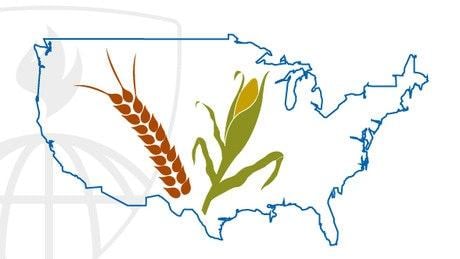
A food system encompasses the activities, people and resources involved in getting food from field to plate. Along the way, it intersects with aspects of public health, equity and the environment. In this course, we will provide a brief introduction to the U.S. food system and how food production practices and what we choose to eat impacts the world in which we live. Through several case studies, we will discuss some key historical and political factors that have helped shape the current food system and consider alternative approaches from farm to fork.

Aug 3rd 2026
5-12 Weeks
An Introduction to Global Health (Coursera) Coursera
University of Copenhagen

An Introduction to Global Health (Coursera)

This course will provide you with an overview of the most important health challenges facing the world today. You will gain insight into how challenges have changed over time, we will discuss the likely determinants of such changes and examine future projections. Successful international strategies and programs promoting human health will be highlighted and global health governance structures will be mapped and the role of the key actors explored.

Aug 3rd 2026
5-12 Weeks
Cities, Climate and Change: Pathways and Opportunities (Coursera) Coursera
Lund University

Cities, Climate and Change: Pathways and Opportunities (Coursera)

How can we develop transformative skills and capacities to achieve climate neutral and sustainable cities? This course explores how we can design, create and achieve climate neutral and sustainable cities. We embrace the “mission to the moon” approach for tackling greenhouse emissions from cities putting an emphasis on pathways and opportunities. We utilise insights and inspiration from Sweden, Europe and around the world.

Aug 3rd 2026
5-12 Weeks
Human Rights-based Approach to Dignity in Care (DIGNISPACE) (Coursera) Coursera
University of Edinburgh,University of Strathclyde

Human Rights-based Approach to Dignity in Care (DIGNISPACE) (Coursera)

Dignispace is an innovative and evidence informed digital resource underpinned by the PANEL principles - Participation, Accountability, Non Discrimination, Empowerment and Legality] principles of the Scottish Human Rights Framework [Scottish Human Rights Commission, 2017]. Dignispace was co-produced with students through interdisciplinary research. It is the first such resource on Dignity education using a Human Rights lens to interrogate the abstract nature of Dignity.

Aug 3rd 2026
4 Weeks
Evolution Today (Coursera) Coursera
Leiden University,Naturalis Biodiversity Center

Evolution Today (Coursera)

In this course you will learn how evolution works. You will develop an understanding of evolutionary processes and their formative power. You will see how evolution has shaped biodiversity, and continuously influences our daily life. Evolution impacts human endeavors as varied as medicine, agriculture, psychology, economy, and culture. It is the major unifying principle for biology and a fundamental natural law.

Aug 10th 2026
5-12 Weeks
Energy, Environment, and Everyday Life (Coursera) Coursera
University of Illinois at Urbana-Champaign

Energy, Environment, and Everyday Life (Coursera)

This course teaches you everything you need to know about energy, the environment, and at least a number of things in everyday life. It starts by talking about energy itself and where it comes from. This includes how much we have, who has it, who uses it, and what that all means. The video clips are produced in a fast-paced multimedia format during which Professor Ruzic throws in fun and demonstrations. There are multiple-choice questions to check your understanding and some more in-depth exercises to guide you deeper into the subject.

Aug 3rd 2026
5-12 Weeks