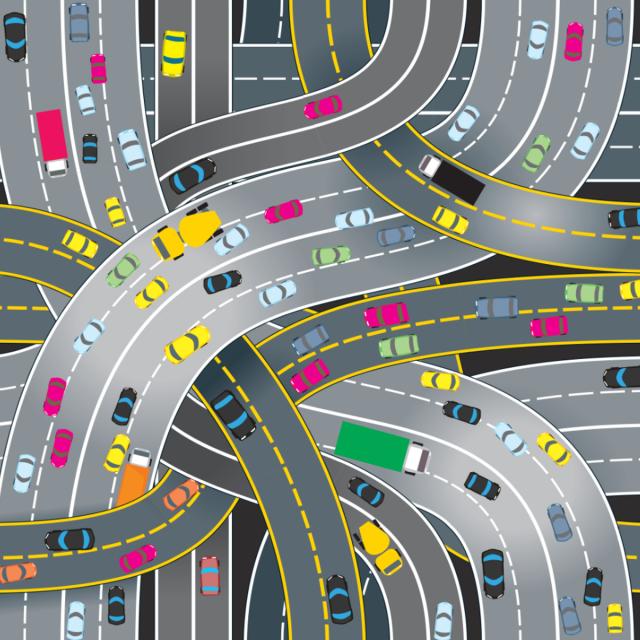
Reclaiming the Street for Livable Urban Spaces (Coursera)

Reclaiming the Street for Livable Urban Spaces (Coursera)

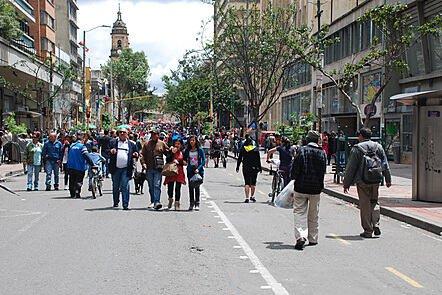
In Reclaiming the Street, you will learn about the mechanisms of change and challenges you to apply this knowledge to start creating vibrant streetscapes in your neighbourhood. This six week course will guide you through seminal academic work on the topics of transition management and street experiments while providing practical insights from practitioners from around the world. A final peer-reviewed project integrates key takeaways from each module of this course to help you write an actionable plan for change.

Class Deals by MOOC List - Click here and see Coursera's Active Discounts, Deals, and Promo Codes.

This online course is supported by the EIT Urban Mobility’s Competence Hub. EIT Urban Mobility is an initiative of the European Institute of Innovation and Technology (EIT) that has been working since January 2019 to encourage positive changes in the way people move around cities in order to make them more sustainable and liveable places.

What You Will Learn

  • Explore the street as a space for experimentation and an arena for transitioning towards a new mobility paradigm
  • Understand how tactical urbanism can be deployed for maximum effectiveness in changing the streetscape
  • Articulate the relationship between citizen activism and the bureaucratic structure
  • Re-imagine the street as a space for people rather than infrastructure for moving traffic

Syllabus

WEEK 1
1 — Understanding Transitions in Mobility
In the wake of the COVID-19 pandemic, we have seen changes to the streetscape happening in cities all around the world. While the fast pace of these changes is promising for building a world less dependent on automobiles, one unanswered question remains: Are these renewed streets here to stay? In this module, we introduce you to the "transitions framework" to understand how change happens in the mobility system at different scales in society, As we progress through this course, your understanding of this framework will help you identify where your efforts can be best applied in creating change.

WEEK 2
2 — Streets as Transition Experiments
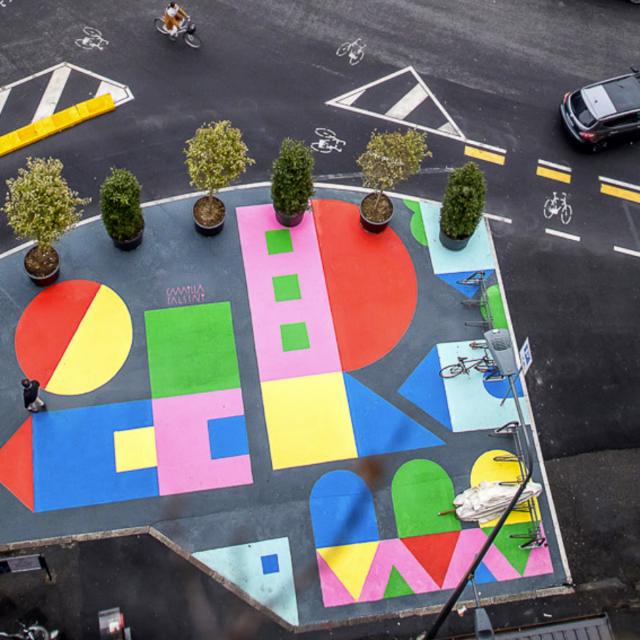
How do experiments play out on the street? You will be pleased to discover that creating change in public space can be a bottom-up process driven by temporary initiatives. We examine how temporary experiments can then be solidified into policies and permanent street changes after a successful experiment concludes. Oakland, USA and Milan, Italy are two places where policy makers have announced ambitious plans to transform their streets after witnessing a high level of political support for their experimental initiatives.

WEEK 3
3 — Living World vs. System World
What happens when citizens encounter a bureaucracy? It is no easy feat to instill a system level change in large systems, whether it is government or another large technocratic organization. But even the largest bureaucracies are staffed by individual people, just like you and me. Where front-line individuals of an organization meet their constituents, the results can be particularly interesting. With certain rules and procedures in place, street-level professional have to be creative in how they navigate the conservative system world in order to create change that matters in the dynamic living world. We go to France to understand how activist groups have deployed their tactics to create change in the bureaucracy.

WEEK 4
4 — Redefining Traffic in Cities
What is the role of traffic in our cities? While mobility (virtual and physical) is essential to accessing opportunity, is it possible to achieve mobility without traffic? In this block, you will read an academic paper that visits five cities around the world to explore creative solutions to the problem of traffic. In doing so, we find that by moving people more efficiently, we are able to repurpose the reclaimed space for more valuable uses, even in the middle of a highway. As it turns out, changing the way we talk about traffic, especially moving away from utilitarian language, is a powerful way to change perceptions of traffic for yourself and others.

WEEK 5
5 — Guerilla Style
What can individuals do to change the system? As it turns out, a connected group individuals united in a common goal is far more effective at creating change than any one person alone. You will read about how activists in London and Amsterdam leverage their internal and external relationships to mediate between themselves and the bureaucracy. We then go to New York for a reminder that traffic is not carved in stone. It is a clear sign of change when streets are eerily empty in a famous city known for its gridlock traffic.

WEEK 6
6 — Wrapping up the Course
Go to Class
MOOC List is learner-supported. When you buy through links on our site, we may earn an affiliate commission.

Related Courses

Introduction to Faecal Sludge Management (Coursera) Coursera
École Polytechnique Fédérale de Lausanne

Introduction to Faecal Sludge Management (Coursera)

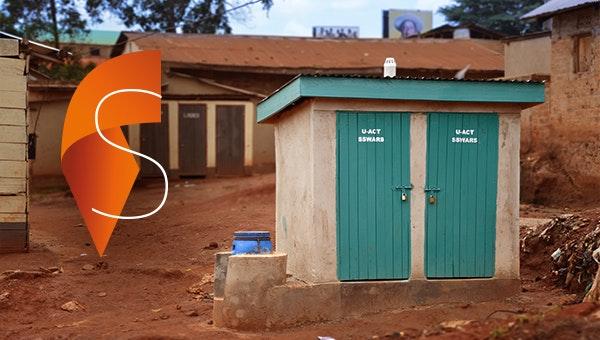
Do you want learn how to apply concepts of sustainable faecal sludge management (FSM) on a city-wide scale? This course starts with an overview of what faecal sludge is and an introduces you to the engineering fundamentals and required information for the design and selection of technologies. Sanitation solutions are prone to failure if an integrated planning approach that includes stakeholder involvement and the development of appropriate institutional, management and financial arrangements is not implemented.

Aug 10th 2026
5-12 Weeks
Electric Cars: Business (edX) EdX
Delft University of Technology,DelftX

Electric Cars: Business (edX)

Get an in-depth understanding of varied profitable business models for electric cars. Electric cars are more than a novel means of mobility. They have been recognized as an essential building block of the energy transition. Fulfilling their promise will imply a significant change in the technical, digital and social dimensions of transport and energy infrastructure. If you want to explore the business opportunities this new market offers, then this is the course for you!

Self Paced
Self-Paced
Ethical Cities: Shaping the Future of Your City (FutureLearn) FutureLearn
RMIT University

Ethical Cities: Shaping the Future of Your City (FutureLearn)

Understand the problems cities face and learn how they can be resolved with ethical solutions. On our urbanizing planet, we need inclusive city economies that work for all. Who runs your city? What makes your city liveable? Using stories from cities around the world, this course will introduce you to the importance of ethics in civic leadership, planning, and business, and citizen engagement.

Self Paced
5-12 Weeks
Transforming Urban Mobility: Introduction to Transport Planning for Sustainable Cities (FutureLearn) FutureLearn
University College London,Transforming Urban Mobility Initiative - TUMI,GIZ

Transforming Urban Mobility: Introduction to Transport Planning for Sustainable Cities (FutureLearn)

Discover the different dimensions of sustainable urban mobility, including the Avoid-Shift-Improve (ASI) framework. Good transport systems and projects are critical to the development of environmentally sustainable and socially inclusive cities. This course considers the impacts of motorisation, our current unsustainable travel patterns, and the framework for changing to sustainable urban mobility.

Self Paced
4 Weeks
Urban Design for the Public Good: Dutch Urbanism (edX) EdX
Delft University of Technology,DelftX

Urban Design for the Public Good: Dutch Urbanism (edX)

Through a unique Dutch approach learn how to design landscapes and cities in response to social and environmental challenges. Are you an urban planner, designer, policy maker or involved or interested in the creation of good living environments? This course will broaden your scope and diversify your take on the field of urban planning and design.

Self Paced
Self-Paced
Planning & Design of Sanitation Systems and Technologies (Coursera) Coursera
École Polytechnique Fédérale de Lausanne

Planning & Design of Sanitation Systems and Technologies (Coursera)

Do you want to learn how to plan affordable and context-specific sanitation solutions? Do you want to be updated on the newest developments in urban sanitation planning and programming? Do you want to get insights about best practices examples of urban sanitation systems in low- and middle-income countries? If yes, this course is for you! This course provides you with an introduction to integrated sanitation planning, both on a citywide scale and for specific contexts such as informal settlements.

Aug 10th 2026
5-12 Weeks
Global Environmental Management (Coursera) Coursera
Technical University of Denmark - DTU

Global Environmental Management (Coursera)

Learn about the best environmental technologies for a sustainable development and how they are managed in various settings around the world. This course gives you an opportunity to learn about global trends that influence our environment and the living conditions and how different management systems and approaches that are used around the world to manage the environment. This includes current environmental technologies built for the environment and technologies for sustainable soil management, groundwater protection methods and integrated Water resources management.

Aug 3rd 2026
5-12 Weeks
Packet Switching Networks and Algorithms (Coursera) Coursera
University of Colorado System

Packet Switching Networks and Algorithms (Coursera)

In this course, we deal with the general issues regarding packet switching networks. We discuss packet networks from two perspectives. One perspective involves external view of the network, and is concerned with services that the network provides to the transport layer that operates above it at the end systems. The second perspective is concerned with the internal operation of a network, including approaches directing information across the network, addressing and routing procedures, as well as congestion control inside the network.

Jul 20th 2026
5-12 Weeks
Street Experiments for Sustainable and Resilient cities (Coursera) Coursera
Technische Universität München - TUM,EIT Urban Mobility

Street Experiments for Sustainable and Resilient cities (Coursera)

Our streetscape, despite its feeling of permanence in our environment, is an ideal venue for experimentation. We have come to accept traffic movement as the default function for the street. Therefore, we need to rethink its design and space distribution, go back to its original and basic function and see them as public spaces - Transform them into places for social activities, where conversations can take place and places where kids can play.

Aug 3rd 2026
4 Weeks