Urbanisation and Health - Promoting Sustainable Solutions (Coursera)

Urbanisation and Health - Promoting Sustainable Solutions (Coursera)

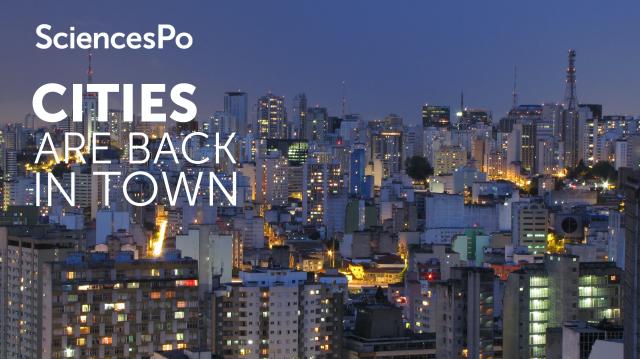
More than half of world’s population lives in cities while only 5% did so in the 18th century. The rapid urbanisation has resulted in for example inadequate infrastructure, physical inactivity, gentrification, air pollution, and growing numbers of slum dwellers. All factors challenging health and wellbeing of the people living in the cities. In addition, when addressing climate change it has become of paramount importance to look at mitigation and adaptation investments tailored to the urban context.

Class Deals by MOOC List - Click here and see Coursera's Active Discounts, Deals, and Promo Codes.

As stated in the Sustainable Development Goal 11 adopted by all United Nations member states in 2015, societies need to be at the forefront in the continuous management and design of urban spaces to secure that cities and human settlements are inclusive, safe, resilient and sustainable.
In this course, you will learn about the key determinants of urban health including demography, climate change, air pollution, noise, transport systems, public and blue and green spaces, and policies and investments affecting sense of community and public safety. You will get a historical overview of the major trends in urban planning and meet a range of stakeholders in urban planning who will provide examples of innovative methods and people-centered approaches to create sustainable solutions.
Finally, you will be provided with a series of resources to inspire you to help create awareness and action around an idea or sustainable solution in the field of urbanisation and health.
The course has been developed (with support from EIT Health) in a partnership between the University of Copenhagen, Universidad Politécnica de Madrid and University of Coimbra.
Researchers and stakeholders in urban planning will introduce you to cases from cities in Denmark, Spain, Portugal and many other urban settings across the world.
The aim of the course is to further interdisciplinary knowledge on urbanisation and health. We plan for the courses to reach citizens and activists as well planners, practitioners and decision-makers with a professional interest in sustainable urban planning from countries around the world.

Syllabus

WEEK 1
How Urbanisation, Health and Urban Planning Relate
This module will provide you with an overview of the key determinants of urban health. We will take you on a journey mainly through the European history of urbanisation and urban planning to reflect on the way health concerns and wellbeing have been considered and how general trends here have influenced the design of cities all across the world. Finally, we will dive into the causes and effects of air pollution and noise, two of the major health hazards in today’s urban settings. We hope the readings and resources will inspire you to begin exploring your own urban setting in terms of e.g. density and different kinds of pollution.

WEEK 2
Ageing and Gentrification
The world population is undergoing major changes. The share of urban population is increasing, as does that of people aged 65 or over. In this module we will focus on the concept of ageing across the lifecycle, and on how different features of urban environment influence health and the ageing process. Furthermore, we will explore the phenomenon of gentrification and its impact on health in different segments of our populations. In the reading and resources section you will find shortcuts to databases and cases from different cities.

WEEK 3
Nature-based Solutions
On many different levels evidence confirm how crucial the integration of elements of nature in the urban design is to sustain physical as well as mental health. In this module you will be introduced to blue and green planning as an instrument to promote health and mitigate and adapt to climate changes. We will look at the benefits of green space and small-scale urban farming from a community and health perspective. You will also meet examples of how new ways of designing public space motivates citizens to lead a daily physically active and healthy life. In the readings and resource section you will find more in depth material on nature based solutions and effects on climate change.

WEEK 4
Innovative Solutions
How can we align urban planning with UN’s Sustainable Development Goals? In an urban context, how can we bend the curve of obesity? How can we reduce mortality and disease associated with the layout of the urban space and namely the way we design our transport systems? In this module you will meet stakeholders who are globally engaged in the development and implementation of sustainable approaches to resolve some of the major health related challenges that cities are facing globally. Further, you will get access to tools and frameworks for your own use

WEEK 5
Innovation and Communication
Maybe you are already involved in activities that support a healthy and sustainable development in your own neighborhood or city, or even across cities. Or maybe you would like to get started or take action in a new way. Now is your chance to mature and consider how you can best convince others to engage in your idea! In the previous modules we have identified the key determinants to urban health and provided examples of prevailing methods to come up with sustainable solutions. We now add to the palette some overall principles and frameworks commonly used for innovation to improve health. You will also be introduced to some tools to effectively communicate your specific idea, including ways to visualize the data you build your arguments around. In the resource section you will find a variety of toolkits and design guides and we invite you to study each of them and consider which parts could be helpful to identify and come up with a suggestion for a sustainable solution to a specific problem you are engaged in.
Go to Class
MOOC List is learner-supported. When you buy through links on our site, we may earn an affiliate commission.

Related Courses

Planning for Climate Change in African Cities (Coursera) Coursera
Erasmus University Rotterdam,United Cities and Local Governments of Africa,African Local Government Academy,Institute for Housing and Urban Development

Planning for Climate Change in African Cities (Coursera)

Climate change poses a threat to economic growth and long-term prosperity of many countries around the world. Africa is not an exception, considering the actual and potential impacts of climate change and climate variability that will threaten its vulnerable sectors and human populations. African countries are projected to experience changing rainfall patterns, rising sea levels, and higher temperatures that will affect food security, agricultural production, water availability, and public health, among others. These climate change impacts and climate variability can further produce social and political problems, such as rural-urban migration and water resource disputes.

Aug 17th 2026
5-12 Weeks
eHealth: More than just an electronic record (Coursera) Coursera
The University of Sydney

eHealth: More than just an electronic record (Coursera)

The MOOC, "eHealth: More than just an electronic record!", is multidisciplinary in nature, and aims to equip the global audience of health clinicians, students, managers, administrators, and researchers to reflect on the overall impact of eHealth on the integration of care. It explores the breadth of technology application, current and emerging trends, and showcases both local and international eHealth practice and research.

Aug 17th 2026
5-12 Weeks
Case Studies in Personalized Medicine (Coursera) Coursera
Vanderbilt University

Case Studies in Personalized Medicine (Coursera)

Learn how advances in biomedicine hold the potential to revolutionize drug development, drug treatments, and disease prevention: where are we now, and what does the future hold? This course will present short primers in genetics and mechanisms underlying variability in drug responses. A series of case studies will be used to illustrate principles of how genetics are being brought to bear on refining diagnoses and on personalizing treatment in rare and common diseases. The ethical and operational issues around how to implement large scale genomic sequencing in clinical practice will be addressed.

Aug 17th 2026
5-12 Weeks
Impacting the Opioid Crisis: Prevention, Education, and Practice for Non-Prescribing Providers (Coursera) Coursera
University of Michigan

Impacting the Opioid Crisis: Prevention, Education, and Practice for Non-Prescribing Providers (Coursera)

This course will empower non-prescribing providers to directly impact the ongoing opioid crisis in the United States through increased knowledge and tools that will transform practice and policies. The course will inform you about the opioid epidemic and provide information and research about evidence-based strategies that are focused on prevention, intervention, education, or policy.

Aug 17th 2026
5-12 Weeks
Psychology of Popularity (Coursera) Coursera
University of North Carolina

Psychology of Popularity (Coursera)

The level of popularity you experienced in childhood and adolescence is still affecting you today in ways that you may not even realize. Learn about how psychologists study popularity and how these same concepts can be used in adulthood to be more successful at work, become better parents, and have a happier life.

Aug 17th 2026
5-12 Weeks
Disease Screening in Public Health (Coursera) Coursera
University of Geneva

Disease Screening in Public Health (Coursera)

Current and future public health is characterized by the increase of chronic and degenerative diseases, corresponding to the worldwide ageing of the population. The increasing prevalence of these conditions together with the long incubation period of the chronic diseases and the restless technological innovations, offer new opportunities to develop strategies for early diagnosis.

Aug 17th 2026
5-12 Weeks
Dopage : Sports, Organisations et Sciences (Coursera) Coursera
University of Lausanne

Dopage : Sports, Organisations et Sciences (Coursera)

L'objectif du cours est de permettre une compréhension distanciée du dopage. C’est pour atteindre cet objectif que le cours s’appuie sur une approche pluridisciplinaire qui constitue une opportunité d'observer comment diverses disciplines abordent un même objet, selon différents angles et de manière complémentaire. Il s'agit également de donner des repères permettant d'appréhender le dopage dans sa complexité.

Aug 17th 2026
4 Weeks
Career 911: Your Future Job in Medicine and Healthcare (Coursera) Coursera
Northwestern University

Career 911: Your Future Job in Medicine and Healthcare (Coursera)

This course aims to help high school students, recent graduates, and those considering career transitions explore health care career options and learn strategies for entry into the health care workforce and health related fields. There are lots of amazing job opportunities in medicine and healthcare! Join us, as we share the strategies and secrets for getting those jobs.

Aug 17th 2026
5-12 Weeks
Traditional herbal medicine in supportive cancer care: From alternative to integrative (Coursera) Coursera
Technion - Israel Institute of Technology

Traditional herbal medicine in supportive cancer care: From alternative to integrative (Coursera)

Please join us for an exciting and innovative journey, examining one of the most important and often overlooked aspects of the oncology setting: Traditional Herbal Medicine in Supportive Cancer Care. This course is presented with short lectures offering a wide range of issues related to the principles and practice of herbal medicine in cancer care.

Aug 17th 2026
13-24 Weeks