Mechanics: Motion, Forces, Energy and Gravity, from Particles to Planets (Coursera)

Mechanics: Motion, Forces, Energy and Gravity, from Particles to Planets (Coursera)

Most of the phenomena in the world around you are, at the fundamental level, based on physics, and much of physics is based on mechanics. Mechanics begins by quantifying motion, and then explaining it in terms of forces, energy and momentum. This allows us to analyse the operation of many familiar phenomena around us, but also the mechanics of planets, stars and galaxies.

Class Deals by MOOC List - Click here and see Coursera's Active Discounts, Deals, and Promo Codes.

This on-demand course is recommended for senior high school and university students, science teachers and anyone with a curiosity about basic physics. The course uses rich multimedia tutorials to present the material: film clips of key experiments, animations and worked example problems, all with a friendly narrator. You'll do a range of interesting practice problems, and in an optional component, you will use your ingenuity to complete at-home experiments using simple, everyday materials. You will need some simple high-school mathematics: arithmetic, a little algebra, quadratic equations, and the sine, cosine and tangent functions from trigonometry. The course does not use calculus. However, we do provide a study aid introducing the calculus that would accompany this course if it were taught in a university. By studying mechanics in this course, you will understand with greater depth many of the wonders around you in everyday life, in technology and in the universe at large. Meanwhile, we think you'll have some fun, too.

Syllabus

WEEK 1
Introduction and Basic Tools
This introductory section covers some basic tools you will need to solve some of the physics problems we will encounter later.

WEEK 2
Velocity and Acceleration
Here we introduce kinematics, in which we describe and quantify movement of objects through space over time. Motion is so important to mechanics (and most of physics) that we'll spend a few weeks establishing the tools and techniques we'll need. We'll leave explaining motion to the later weeks, starting with Newton's laws in week 4. Here we study the simplest case: motion in a straight line.

WEEK 3
Motion in Two Dimensions
Here we look at kinematics in two-dimensions – specifically, projectiles and objects in circular motion.

WEEK 4
Newton's Laws of Motion
After describing and quantifying motion (weeks 2 and 3), we now start explaining it with Newton's three laws of motion. Knowledge of Newton's laws and the ability to apply them to various situations will allow us to explain much of the motion we observe in the world around us. They are also very important for analysing things (like bridges) that don't move much (a subject called Statics that's important in some Engineering programs). Because Newton's laws are so important, week 4 has five lessons, as well as slightly longer quizzes than the previous chapters.

WEEK 5
Weight, Friction and Spring Forces
We return to the difference between weight and mass. We introduce Hooke's law for elastic deformations. We consider forces between objects in contact and (for convenience) resolve them into their normal and frictional components – and as usual give you some problems to solve.

WEEK 6
Work, Energy and Power
In week 6 we explore work and energy, then power – the rate of doing work. We'll use work and Newton's second law to derive the quantity called kinetic energy. Looking at where work comes from, we'll distinguish two sorts of force – conservative and non-conservative. That will allow us to introduce potential energy and mechanical energy. Power is the rate of doing work. We'll spend some time relating these quantities and their units to your everyday experience, relating Joules to kilowatt hours (the unit used by electricity companies) and kilowatts to horsepower and to human power.

WEEK 7
Momentum and Collisions
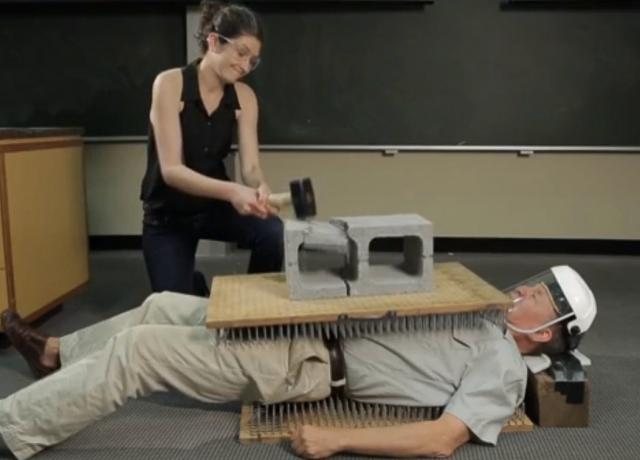
It’s time for some smashing fun! Once we've defined momentum we'll use momentum to analyse elastic and inelastic collisions. Stand by for hammers, skateboards, car crashes and a bed of nails…

WEEK 8
Gravity
For as long as history – and probably much longer – people have stared at the planets and stars and wondered. Why do they shine? What keeps them moving? Why don't they fall down? So next is gravity – and how it runs the solar system, the galaxy and the universe. Escape speed, orbits, satellite manoeuvring, black holes: yes, all of the these.
Go to Class
MOOC List is learner-supported. When you buy through links on our site, we may earn an affiliate commission.

Related Courses

Kinetics: Studying Spacecraft Motion (Coursera) Coursera
University of Colorado Boulder

Kinetics: Studying Spacecraft Motion (Coursera)

As they tumble through space, objects like spacecraft move in dynamical ways. Understanding and predicting the equations that represent that motion is critical to the safety and efficacy of spacecraft mission development. Kinetics: Modeling the Motions of Spacecraft trains your skills in topics like rigid body angular momentum and kinetic energy expression shown in a coordinate frame agnostic manner, single and dual rigid body systems tumbling without the forces of external torque, how differential gravity across a rigid body is approximated to the first order to study disturbances in both the attitude and orbital motion, and how these systems change when general momentum exchange devices are introduced.

Jun 8th 2026
4 Weeks
Exploring Light: Hands-on Activities and Strategies for Teachers (Coursera) Coursera
Exploratorium

Exploring Light: Hands-on Activities and Strategies for Teachers (Coursera)

This is an Exploratorium teacher professional development course taught by Teacher Institute staff, open to any science teacher (particularly middle or high school level) and science enthusiast. This is a hands-on workshop that explores topics and strategies teachers can use to help their students become active investigators of light.

Jun 14th 2026
4 Weeks
Electrodynamics: An Introduction (Coursera) Coursera
Korea Advanced Institute of Science and Technology - KAIST

Electrodynamics: An Introduction (Coursera)

The depth and breadth of electromagnetism, the foundation for many fields including materials science, electrical engineering, and physical chemistry, requires a long, steep, and steady learning curve. This course aims to bridge the gap between the fundamental principles taught in electromagnetism and its practical application to specific fields such as materials, physics, and chemistry related to energy storage and harvesting.

Jun 8th 2026
5-12 Weeks
Tesoros de la Física y sus Descubridores I (Coursera) Coursera
Universidad de los Andes

Tesoros de la Física y sus Descubridores I (Coursera)

¿Sabes cómo vuelan los aviones, tan pesados y no se caen mientras vuelan? ¿Sabes que viajamos por el espacio sobre el planeta Tierra que se traslada y gira muy rápido y no lo percibimos? ¿O acaso, notas efectos de su movimiento? ¿Cuál es nuestro lugar en el universo? ¿Podemos viajar en el tiempo? ¡Preguntas, muchas preguntas! Con espíritu de descubridores nuestra curiosidad nos motiva a buscar respuestas, a explorar nuestro entorno, a entrar a lo desconocido y hallar nuevo conocimiento.

Jun 8th 2026
5-12 Weeks
Photovoltaic solar energy (Coursera) Coursera
École Polytechnique

Photovoltaic solar energy (Coursera)

The course is an introduction to the photovoltaic (PV) applications in the general mix energetic context dominated by climate warming mitigation. The various uses of solar energy are firstly presented before a short description of the principle of the direct solar photon conversion into electricity (PV). The various PV technologies are reviewed in the current context dominated by crystalline silicon cells. The perspectives of the various technologies are then analysed in terms of R&D investments.

Jun 8th 2026
3 Weeks
Origens da Vida no Contexto Cósmico (Coursera) Coursera
Universidade de São Paulo, Brasil

Origens da Vida no Contexto Cósmico (Coursera)

Origens da vida no contexto cósmico é um curso desenvolvido no Instituto de Astronomia, Geofísica e Ciências Atmosféricas da Universidade de São Paulo, com o objetivo de apresentar os mais recentes avanços científicos na compreensão deste intrigante assunto. É um curso com formato multidisciplinar que o levará a compreender melhor os aspectos envolvidos no surgimento de vida na Terra e no possível surgimento de vida em outros planetas.

Jun 8th 2026
4 Weeks
The Discovery of the Higgs Boson (Coursera) Coursera
University of Edinburgh

The Discovery of the Higgs Boson (Coursera)

The discovery of a new fundamental particle at the Large Hadron Collider (LHC), CERN is the latest step in a long quest seeking to answer one of physics’ most enduring questions: why do particles have mass? The experiments’ much anticipated success confirms predictions made decades earlier by Peter Higgs and others, and offers a glimpse into a universe of physics beyond the Standard Model.

Jun 8th 2026
5-12 Weeks
Introduction to Sustainability (Coursera) Coursera
University of Illinois at Urbana-Champaign

Introduction to Sustainability (Coursera)

This course introduces the academic approach of Sustainability and explores how today’s human societies can endure in the face of global change, ecosystem degradation and resource limitations. The course focuses on key knowledge areas of sustainability theory and practice, including population, ecosystems, global change, energy, agriculture, water, environmental economics and policy, ethics, and cultural history.

Jun 8th 2026
5-12 Weeks
21st Century Energy Transition: how do we make it work? (Coursera) Coursera
University of Alberta

21st Century Energy Transition: how do we make it work? (Coursera)

Affordable, abundant and reliable energy is fundamental to human well-being and prosperity. For the past 150 years, more and more people have gained access to energy, primarily in the form of fossil fuels – coal, petroleum and natural gas. But now, even while half of humanity cannot access adequate energy supplies, we are beginning a profound transition to more diverse energy sources. Climate change, environmental sustainability, and energy poverty are all important – and sometimes conflicting – drivers as we strive to supply more energy to more people with fewer negative impacts on Earth’s environments.

Jun 8th 2026
5-12 Weeks
Evaluación de peligros y riesgos por fenómenos naturales (Coursera) Coursera
Universidad Nacional Autónoma de México

Evaluación de peligros y riesgos por fenómenos naturales (Coursera)

Reconocer el conocimiento básico sobre los factores físicos y sociales que condicionan el riesgo de una sociedad por fenómenos extremos de origen natural (sismos, huracanes, etc.) y promover las acciones necesarias para reducir el impacto de los desastres en una comunidad.

Jun 8th 2026
4 Weeks