Welcome to this on-demand MOOC “In the footsteps of Zika… approaching the unknown”. This MOOC has been produced by Université de Genève Institut Pasteur, Université Paris Descartes and Centre Virchow-Villermé. With the help of the intervention of faculty members and international experts, we will explore together the recent Zika phenomenon, a previously rare benign virus that recently turned unexpectedly into the limelight when on the 1st of February 2016 it was declared by the WHO as a Public Health Emergency of International Concern.
Class Deals by MOOC List - Click here and see Coursera's Active Discounts, Deals, and Promo Codes.
As this outbreak is still ongoing and under close investigation, this MOOC has the opportunity to be an open learning experience that will follow the marked developments and new discoveries over time. This MOOC will bring you to the heart of the Zika outbreak and invite you to this adventure in uncharted territories.
Moreover, we invite you to join the interactive dialogue among participants and facilitators through a community of practice, which promotes questions, critical thinking, participatory learning, as well as interrelated and ongoing collaborative information.
Let us learn hand in hand all together to go further in finding clues and eventually solutions!
Course description
This interdisciplinary course is divided into 8 modules available in 4 languages (subtitles in English, French, Portuguese, Spanish).
Each module is organized around a central topic that will help those who take the course to develop their skills and knowledge. Each module provides
- interviews with specialists
- quizes
- recommended readings
- online videos and web links.
This MOOC will cover a range of topics, such as epidemiology, historical and geographical dispersion of the virus and its vectors through globalization and climate change, its modes of transmission, but also the symptoms, diagnosis and treatment. The different types of preventive measures will be also covered.
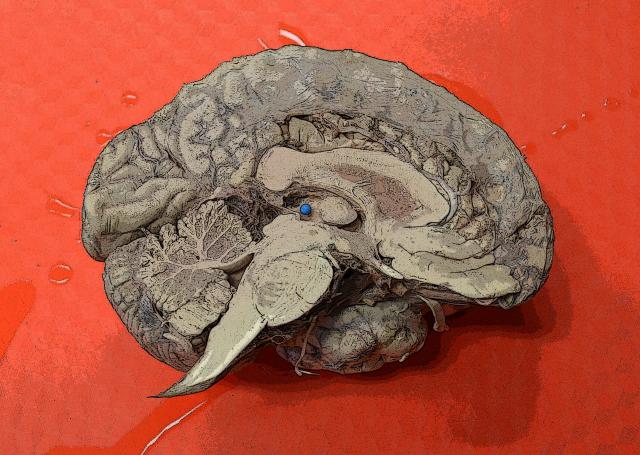
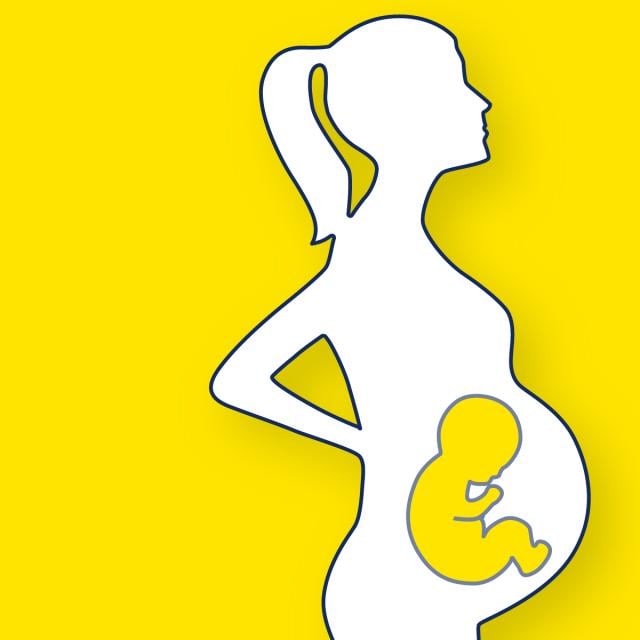
A special module will focus on possible neurological adverse effects such as the risk for birth defects (microcephaly) in pregnant women, while another one will examine the peripheral nerve paralysis called the Guillain-Barré syndrome.
The fact that Zika presents a significant threat to political and economic stabilities and thus reinforces social inequity through South America will be addressed.
The revolution in cultural, religious, and legal norms in front of the expansion of Zika will be also debated.
Finally, the last two modules will state the role, recommendations and response measures of policy makers and public health organizations under the light of medias.
Syllabus
WEEK 1
Introducing Zika virus, its vectors and its hosts
Module 1 introduces Zika virus as a whole. In this module you will increase your knowledge about the virus, its life cycle, its possible mutation, and its transmission patterns through different vectors and hosts (mosquitoes and human beings). You will learn also about its discovery and the possible origin of the current outbreak that started in Brazil and spread out through South America. Finally, we will discover together the strategy developed by this virus to develop and evolve to survive.
Prof. Duane Gubler will start by talking about the Emergence of Zika virus and its different hosts and vectors, followed by Dr. Anna-Bella Failloux who will make you discover the cycle of Zika virus and its vectors, all travelling together. Finally, Dr. Maria Van Kerkhove will close this module by covering the sexual transmission of Zika virus and its persistency in body fluids.
WEEK 2
Following the tracks of Zika virus
Module 2 relates how Zika virus left the remote African forests towards new destinations across the world partly by globalization and climate change. In this module you will increase your knowledge about the developing of a “love story” with human beings through globalisation. You will also learn how shifts in precipitation levels and temperature caused by climate change, and notably el Niño and la Niña phenomenons, may result into increased survival and/or migration of the virus through vectors into previously non-endemic geographic areas outside the tropical areas. You will also get better knowledge in the characteristics of the recent Zika outbreak in Brazil by local specialists. Dr. Frédéric Simard will start with the relationship between globalization and increased mosquito preference for humans. Then Joint Prof. Aline Philibert and Prof. Antoine Flahault will show you how climate changes can be indirectly and/or directly related to the transmission of Aedes and then Zika virus. Finally, Prof. Aluisio Cotrim Segurado and Prof. Paolo Zanotto of the University of São Paulo will describe the emergence of the outbreak as well as risks and challenges associated with.
WEEK 3
Prevention and control
Module 3 presents the different types of vector prevention and control. You will get knowledge on the history of vector control and the lessons we have learnt over time. You will also be taught about large-scale control programmes that are now taking place to eradicate mosquitoes in many parts of the world. Beside the common use of insecticides you will explore one new “ecological” technology based on a bacteria that live within the mosquito Aedes. Prof. James Webb will start by talking about the history of vector control and eradication over time. Then, Dr. Frédéric Simard will explain who should be targeted first to prevent vector and virus transmission. You will explore with Prof. John Vontas the molecular analysis of insecticide resistance in major mosquito vectors from mechanisms to resistance management. Finally, Prof. Scott O’Neill will explain you the new and ecofriendly technology of vector control with the Wolbachia bacteria.
WEEK 4
Symptoms, diagnosis and treatment
This module addresses symptoms, diagnosis and treatment regarding Zika infection. You will discover the challenges related to the two main types of diagnoses, clinical and biochemical (molecular or serological) diagnoses. You will learn that most cases are asymptomatic cases and this causes an issue to forecast virus origin and its transmission to new areas. You will also learn that currently licenced vaccines or medicines to treat Zika are missing. For now, treatment consists of relieving pain, fever, and any other symptoms. Prof. Patrice Bourée will start by listing the known symptoms and diagnosis. You will learn with Prof. Laurent Kaiser about the paradox between the limitation in clinical investigation and the strong technology currently available. Dr. Maria Van Kerkhove will explain you the different types of diagnoses and their limitations. Prof. Ester Sabino will tell you the diagnostic challenges they experienced at the beginning of the Zika outbreak in Brazil. Finally, Dr. Paulo Lee Ho and Dr. In-Kyu Yoon will close the module by telling you how the race is on to develop a Zika vaccine.
WEEK 5
Zika and neurological adverses effects
This module addresses what is known and what is unknown about the neurological adverse effects of Zika virus, especially based on observations and research studies carried out in French Polynesia and in Brazil. In this module you will gain knowledge about the association between Zika infection in mothers and microcephaly in foetus in Brazil as well as the increased Guillain-Barré Syndrome in adults during the Zika outbreak in French Polynesia in 2013-2014. Prof. Olivier Picone, gynecologist-obstetrician, will explain the mechanisms of Zika infection and its health consequences. Dr. Patricia Jungmann will present us the race against time to understand the increased of microcephaly cases in Northeastern Brazil at the beginning of the outbreak and how doctors and scientists worked hand in hand to find clues to better understand the phenomenon. You will learn how the fear of microcephaly is becoming a nightmare for pregnant Brazilian women or those who would like to fall pregnant with Prof. Aluisio Cotrim Segurado and Prof. Laura Rodrigues. Prof. Tom Solomon and Prof. Arnaud Fontanet will close the module with the neurological effects of Zika in adults, notably regarding the Guillain-Barré syndrome that recently occurred in many infected cases in French Polynesia.
WEEK 6
Inequity in front of Zika exposure and outcomes
The module 6 presents the inequity existing between poor and wealthy communities in the fight against Zika virus in Brazil and South America. You will learn that decades of rapid and chaotic urbanization have left many impoverished areas without basic sanitation, putting the poor at far greater risk of contracting Zika and other mosquito-borne viruses. Aside from the dangers that come with the spread of this disease, you will learn how inequity is aggravated by difference of access to health care, socio-economical support, and limited reproductive rights in this region. Finally, the module will make you better understand the fact that women’s rights and reproductive issues in the South America landscape are highly controversial topics. You will also better understand how Zika virus is starting a legal revolution regarding abortion right, while it has always been largely illegal and seen as a taboo in many countries in South America. Dr. Serge Rabier will start by describing the anthropological perspective related to the health crisis of Zika in South America. You will learn with Prof. Helena Ribeiro the inequity regarding exposure to virus in favelas and elsewhere. Dr. Ester Sabino will talk about contraception and abortion challenges for women in Brazil. Finally, Dr. Flávia Bulegon Pilecco will close the module by telling us how Zika is fuelling a new debate over legal and safe abortion in South America.
WEEK 7
How do deal with Zika: WHO and international health organizations' perspectives
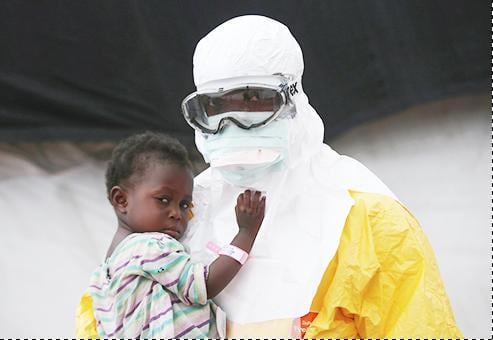
The module 7 explains how the recent Zika outbreak, the cluster of microcephaly cases and neurological events occurring at the same time and place (mainly Brazil) resulted in a public health emergency of international concern. You will learn about the role and duties of international organizations and the fact that this is the first time the global scientific community commits to sharing data on Zika. You will be exposed by discussions related to the fact that WHO and other partners seek to learn from their failure regarding the Ebola crisis, after they were heavily criticised for their slow response.
Prof. David Heymann will start by explaining how Zika became a public health emergency of international concern. Dr. Marie-Paule Kieny, Dr. Sylvie Briand and Dr. In-Kyu Yoon will debate for us on the roles and duties of international organizations to ensure that proportionate actions are taken and what lessons we learnt from the past outbreaks.
WEEK 8
The Zika phenomenon through medias and economical & political challenges
In this module you will better understand how Zika virus has been controlled or uncontrolled by the medias in the era of social networks, and what could be the role of the medias regarding prevention and control of the Zika disease in South and Latin America.The module 8 reports how the Zika phenomenon has been hitting the headlines over the past months. You will learn that aside from the health risks it poses, Zika also affects economy and politics in South America. You will be exposed to the economic adverse effects of Zika on touristic hotspots in Latin America and on the coming Olympic games in Brazil. Dr. Paul Benkimoun will start by making a summary of what has been reported in headlines in the past few months. Dr. Jean-Yves Nau will make an analysis of the different ingredients the Zika phenomenon is constructed of in the news, such as health, politics and economy. Margaret Harris will tell us the importance of the transparency and the adequacy of the messages that should be disseminated to the public. Dr. Anneliese Depoux will let us know what are the raise of awareness via social networks. Finally, Dr. Josselin Thuilliez will close the module by debating on economical issues related to the Zika phenomenon.