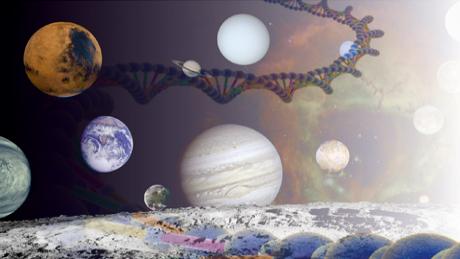
Emergent Phenomena in Science and Everyday Life (Coursera)

Emergent Phenomena in Science and Everyday Life (Coursera)

Before the advent of quantum mechanics in the early 20th century, most scientists believed that it should be possible to predict the behavior of any object in the universe simply by understanding the behavior of its constituent parts. For instance, if one could write down the equations of motion for every atom in a system, it should be possible to solve those equations (with the aid of a sufficiently large computing device) and make accurate predictions about that system’s future.

Class Deals by MOOC List - Click here and see Coursera's Active Discounts, Deals, and Promo Codes.

However, there are some systems that defy this notion. Consider a living cell, which consists mostly of carbon, hydrogen, and oxygen along with other trace elements. We can study these components individually without ever imagining how combining them in just the right way can lead to something as complex and wonderful as a living organism! Thus, we can consider life to be an emergent property of what is essentially an accumulation of constituent parts that are somehow organized in a very precise way.
This course lets you explore the concept of emergence using examples from materials science, mathematics, biology, physics, and neuroscience to illustrate how ordinary components when brought together can collectively yield unexpected, surprising behaviors.
Note: The fractal image (Sierpinkski Triangle) depicted on the course home page was generated by a software application called XaoS 3.4, which is distributed by the Free Software Foundation under a GNU General Public License.
Upon completing this course, you will be able to:

  1. Explain the difference in assumptions between an emergent versus reductive approach to science.
  2. Explain why the reductivist approach is understood by many to be inadequate as a means of describing and predicting complex systems.
  3. Describe how the length scale used to examine a phenomenon can contribute to how you analyze and understand it.
  4. Explain why the search for general principles that explain emergent phenomena make them an active locus of scientific investigation.
  5. Discuss examples of emergent phenomena and explain why they are classified as emergent.

Syllabus

WEEK 1
Welcome - Let's Get Started
In this module we'll introduce the concept of emergence and provide an orientation to how this course will proceed.

WEEK 2
The Mystery of Foam
Can a substance be both a solid and a liquid? In this module we’ll take a close look at our first emergent phenomena, complex fluids.

WEEK 3
Chaotic Dynamics
Are seemingly random events truly random? In this module, we'll examine ways that deterministic processes can produce the appearance of randomness.

WEEK 4
Pattern Formation and Systems Biology
Have you ever wondered why tigers have spots and leopards have spots? This module helps to explain how these and other patterns form in nature.

WEEK 5
Quantum Coherence, Many-Body States, and Quantum Computing
How can we study quantum events from both a reductionist and emergent perspective? This module takes a look at the atomic and quantum level of some everyday phenomena.

WEEK 6
Consciousness
One of the most awe inspiring emergent phenomena is how consciousness emerges from complex collections of atoms and molecules. In this module, we’ll take a look at how the various regions of our brain coordinate and interact to produce consciousness.

Go to Class
MOOC List is learner-supported. When you buy through links on our site, we may earn an affiliate commission.

Related Courses

Chemical Biology (Coursera) Coursera
University of Geneva

Chemical Biology (Coursera)

Chemical biology is a burgeoning field that has rapidly risen to prominence. This surge of interest has been fuelled by chemical biology’s applicability to understanding critical processes in live cells or model organisms in real time. This success has arisen because chemical biology straddles a nexus between chemistry, biology, and physics. Thus, chemical biology can harness rapid chemistry to observe or perturb biological processes, that are in turn reported using physical assays, all in an otherwise unperturbed living entity. Although its boundaries are endless, the multidisciplinary nature of chemical biology can make the field seem daunting; we beg to differ! Here, we deconstruct chemical biology into its core components, and repackage the material.

Jul 6th 2026
5-12 Weeks
Data Structures and Design Patterns for Game Developers (Coursera) Coursera
University of Colorado System

Data Structures and Design Patterns for Game Developers (Coursera)

This course is the fourth course in the specialization about learning how to develop video games using the C# programming language and the Unity game engine on Windows or Mac. Why use C# and Unity instead of some other language and game engine? Well, C# is a really good language for learning how to program and then programming professionally. Also, the Unity game engine is very popular with indie game developers; Unity games were downloaded 16,000,000,000 times in 2016! Finally, C# is one of the programming languages you can use in the Unity environment.

Jul 6th 2026
4 Weeks
Basics of Extracellular Vesicles (Coursera) Coursera
University of California, Irvine

Basics of Extracellular Vesicles (Coursera)

This course aims to provide the basic knowledge about extracellular vesicles (EV) a generic term including exosomes, microvesicles, microparticles, ectosomes, oncosomes, prostasomes, and many others. It covers areas such as EV history, nomenclature, biogenesis, EV cargo as well as the release and uptake mechanisms, collection and processing prior to isolation, different isolation methods, characterization and quantification techniques.

Jul 6th 2026
5-12 Weeks
Specialty Topics: Biology Across Disciplines (Coursera) Coursera
University of Colorado Boulder

Specialty Topics: Biology Across Disciplines (Coursera)

In this course, we will explore the applicability and relationship of biology to the arts, business, and psychology. First, we’ll discuss art as a foundational practice to biology and how biology as a science can explain how we interact with the arts, in particular, our experiences making and listening to music. Next, we will discuss the business of biology and how research is funded and the process of clinical trials and human subjects research.

Jul 6th 2026
5-12 Weeks
Agroforestry IV: Climate, Carbon Storage and Agroforestry (Coursera) Coursera
University of Florida

Agroforestry IV: Climate, Carbon Storage and Agroforestry (Coursera)

Welcome to Agroforestry IV: Climate Change, Carbon Storage and Agroforestry Systems, a detailed review of fundamental principles and best practices for successful agroforestry projects. This interdisciplinary module, presented by leading experts in the field, is the fourth in the five-module course covering the various aspects of agroforestry including the global distribution of the practices, their underlying principles, and major scientific advances during the past nearly five decades.

Jul 6th 2026
1 Week
Understanding Plants - Part I: What a Plant Knows (Coursera) Coursera
Tel Aviv University

Understanding Plants - Part I: What a Plant Knows (Coursera)

For centuries we have collectively marveled at plant diversity and form—from Charles Darwin’s early fascination with stems and flowers to Seymour Krelborn’s distorted doting in Little Shop of Horrors. This course intends to present an intriguing and scientifically valid look at how plants themselves experience the world—from the colors they see to the sensations they feel. Highlighting the latest research in genetics and more, we will delve into the inner lives of plants and draw parallels with the human senses to reveal that we have much more in common with sunflowers and oak trees than we may realize.

Jul 6th 2026
5-12 Weeks
Introduction to Biology: Biodiversity (Coursera) Coursera
Rice University

Introduction to Biology: Biodiversity (Coursera)

In this course we will examine the incredible variety of life that inhabits this planet including microorganisms, plants, and animals. For each of the major groups we’ll learn about their characteristics, functions, and how they came into existence as well as some of the roles they play in the natural world, and how they’re relevant to people. We’ll also take a close look at us humans and consider what we know about our origins and what might become of us in the future.

Jul 6th 2026
5-12 Weeks
Soul Beliefs: Causes and Consequences - Unit 2: Belief Systems (Coursera) Coursera
Rutgers University

Soul Beliefs: Causes and Consequences - Unit 2: Belief Systems (Coursera)

Throughout history, the vast majority of people around the globe have believed they have, however defined, a “soul.” While the question of whether the soul exists cannot be answered by science, what we can study are the causes and consequences of various beliefs about the soul and its prospects of surviving the death of the body. Why are soul and afterlife beliefs so common in human history? Are there adaptive advantages to assuming souls exist?

Jul 6th 2026
5-12 Weeks
Pensamiento Científico (Coursera) Coursera
Universidad Nacional Autónoma de México

Pensamiento Científico (Coursera)

¿El pensamiento científico es sólo para científicos? Su utilidad va mucho más allá, ayudando a las personas a tomar mejores decisiones todos los días. El objetivo de este curso es fomentar en pensamiento científico en los alumnos para ayudarles a tomar mejores decisiones profesionales, personales y sociales.

Jul 6th 2026
5-12 Weeks
Dynamic Programming, Greedy Algorithms (Coursera) Coursera
University of Colorado Boulder

Dynamic Programming, Greedy Algorithms (Coursera)

This course covers basic algorithm design techniques such as divide and conquer, dynamic programming, and greedy algorithms. It concludes with a brief introduction to intractability (NP-completeness) and using linear/integer programming solvers for solving optimization problems. We will also cover some advanced topics in data structures.

Jul 6th 2026
4 Weeks
Agroforestry V: Ecosystem Services, Food and Sustainability (Coursera) Coursera
University of Florida

Agroforestry V: Ecosystem Services, Food and Sustainability (Coursera)

Welcome to Agroforestry V: Ecosystem Services, Food Security and Sustainable Development, a detailed review of fundamental principles and best practices for successful agroforestry projects. This interdisciplinary module, presented by leading experts in the field, is the final in the five-module course covering the various aspects of agroforestry including the global distribution of the practices, their underlying principles, and major scientific advances during the past nearly five decades.

Jul 6th 2026
2 Weeks