RNA Biology with Eterna (Coursera)

Offered by Stanford University,
RNA Biology with Eterna (Coursera)

Through videos and gameplay, this course provides a unique introduction to RNA biology, including its uses in medicine and bioengineering. Learn how RNA powers cell growth and development by designing your own RNAs using the popular citizen science game Eterna.

Class Deals by MOOC List - Click here and see Coursera's Active Discounts, Deals, and Promo Codes.

Syllabus

Introduction to RNA
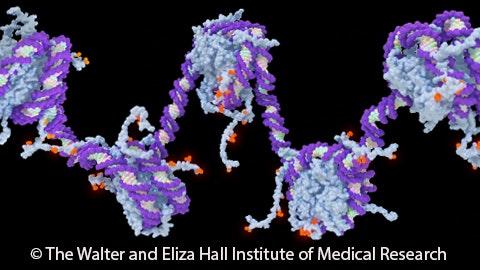
DNA gets all the glory, but RNA does the work. RNA consists of bases that form pairs to create 3D shapes. In this module, learn about the different base pairs and the chemical forces which drive them, as well as how scientists work with RNA in the lab.

The Ribosome and Translation
The ribosome is one of the oldest RNA machines in your cells! It makes all of the proteins necessary for life. In this module, learn about how RNA powers the translation process, and how scientists are rewriting the rules to design advanced polymers.

Go to Class
MOOC List is learner-supported. When you buy through links on our site, we may earn an affiliate commission.

Related Courses

Dynamical Modeling Methods for Systems Biology (Coursera) Coursera
Icahn School of Medicine at Mount Sinai

Dynamical Modeling Methods for Systems Biology (Coursera)

An introduction to dynamical modeling techniques used in contemporary Systems Biology research. We take a case-based approach to teach contemporary mathematical modeling techniques. The course is appropriate for advanced undergraduates and beginning graduate students. Lectures provide biological background and describe the development of both classical mathematical models and more recent representations of biological processes. The course will be useful for students who plan to use experimental techniques as their approach in the laboratory and employ computational modeling as a tool to draw deeper understanding of experiments.

Aug 10th 2026
5-12 Weeks
The Big Stuff: Evolution and Ecology (Coursera) Coursera
University of Colorado Boulder

The Big Stuff: Evolution and Ecology (Coursera)

In this course, we will explore how evolution works to generate new species, the wide variety of life on earth. We will also touch on the importance of biodiversity for the overall health of our planet, and for our well being as humans. Then we will discuss ecology and the interconnectedness of life and touch on one big ecological issue in today’s society, conservation.

Jul 27th 2026
4 Weeks
Evolution: A Course for Educators (Coursera) Coursera
American Museum of Natural History

Evolution: A Course for Educators (Coursera)

How are all of the species living on Earth today related? How does understanding evolutionary science contribute to our well-being? In this course, participants will learn about evolutionary relationships, population genetics, and natural and artificial selection. Participants will explore evolutionary science and learn how to integrate it into their classrooms.

Jul 27th 2026
4 Weeks
Engineering Life: Synbio, Bioethics & Public Policy (Coursera) Coursera
Johns Hopkins University

Engineering Life: Synbio, Bioethics & Public Policy (Coursera)

Synbio is a diverse field with diverse applications, and the different contexts (e.g., gain-of-function research, biofuels) raise different ethical and governance challenges. The objective of this course is to increase learners’ awareness and understanding of ethical and policy/governance issues that arise in the design, conduct and application of synthetic biology. The course will begin with a short history of recombinant DNA technology and how governance of that science developed and evolved, and progress through a series of areas of application of synbio.

Aug 10th 2026
5-12 Weeks
Bioinformatic Methods II (Coursera) Coursera
University of Toronto

Bioinformatic Methods II (Coursera)

Large-scale biology projects such as the sequencing of the human genome and gene expression surveys using RNA-seq, microarrays and other technologies have created a wealth of data for biologists. However, the challenge facing scientists is analyzing and even accessing these data to extract useful information pertaining to the system being studied. This course focuses on employing existing bioinformatic resources – mainly web-based programs and databases – to access the wealth of data to answer questions relevant to the average biologist, and is highly hands-on.

Aug 3rd 2026
5-12 Weeks
Chemical Biology (Coursera) Coursera
University of Geneva

Chemical Biology (Coursera)

Chemical biology is a burgeoning field that has rapidly risen to prominence. This surge of interest has been fuelled by chemical biology’s applicability to understanding critical processes in live cells or model organisms in real time. This success has arisen because chemical biology straddles a nexus between chemistry, biology, and physics. Thus, chemical biology can harness rapid chemistry to observe or perturb biological processes, that are in turn reported using physical assays, all in an otherwise unperturbed living entity. Although its boundaries are endless, the multidisciplinary nature of chemical biology can make the field seem daunting; we beg to differ! Here, we deconstruct chemical biology into its core components, and repackage the material.

Aug 3rd 2026
5-12 Weeks
Biology Everywhere Foundations (Coursera) Coursera
University of Colorado Boulder

Biology Everywhere Foundations (Coursera)

In this course, we will explore the nature of science and biology. We will discuss what the “biology everywhere” philosophy means and the history of the “biology everywhere” project. We will also discuss what science (and biology) are as a discipline of inquiry and how chemistry is foundational to understanding biology.

Jul 27th 2026
4 Weeks
The Little Stuff: Energy, Cells, and Genetics (Coursera) Coursera
University of Colorado Boulder

The Little Stuff: Energy, Cells, and Genetics (Coursera)

In this course, we will explore the smaller side of biology: molecular biology. We’ll cover basic topics including cell biology and how cells can go “rogue” and turn into cancer, how energy from the sun is transferred to fuel our bodies, basics of genetics and inheritance, and genetic technologies. At the end of this course, we will discuss ethical and moral implications of several exciting and new genetic technologies.

Jul 27th 2026
4 Weeks
Introduction to Systems Biology (Coursera) Coursera
Icahn School of Medicine at Mount Sinai

Introduction to Systems Biology (Coursera)

This course will introduce the student to contemporary Systems Biology focused on mammalian cells, their constituents and their functions. Biology is moving from molecular to modular. As our knowledge of our genome and gene expression deepens and we develop lists of molecules (proteins, lipids, ions) involved in cellular processes, we need to understand how these molecules interact with each other to form modules that act as discrete functional systems.

Aug 10th 2026
5-12 Weeks