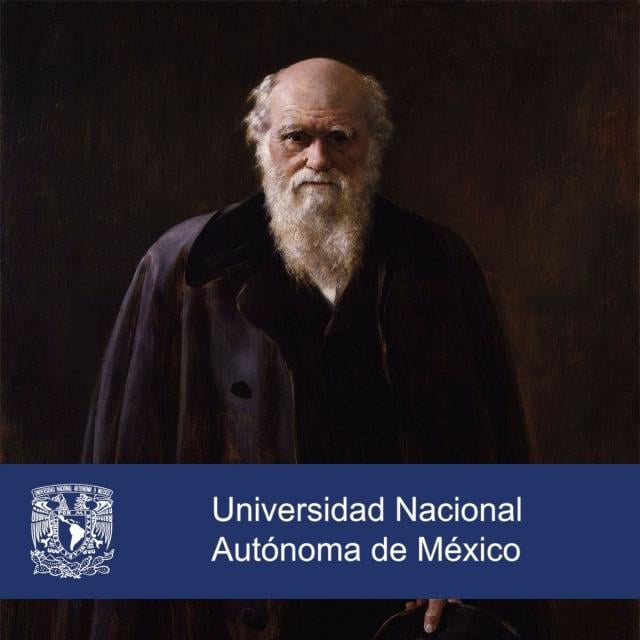
Charles Darwin: El origen del evolucionismo moderno (Coursera)

Charles Darwin: El origen del evolucionismo moderno (Coursera)

Este curso está dirigido a cualquier persona que desee conocer de manera general qué es y cómo se ha explicado la evolución de las especies. Será de gran interés para alumnos, profesores y profesionales del área de ciencias biológicas y de la salud que deseen conocer los antecedentes históricos, así como los fundamentos centrales de la teoría de Charles Darwin, que configuraron el pensamiento evolutivo moderno.

Class Deals by MOOC List - Click here and see Coursera's Active Discounts, Deals, and Promo Codes.

What You Will Learn

  • Introducir a los alumnos en el estudio de la evolución biológica y mostrar la relevancia de Charles Darwin en relación con el evolucionismo moderno.

Syllabus

WEEK 1
Introducción y antecedentes
El objetivo de este curso es introducir a los participantes en el estudio de la evolución biológica, así como mostrar la relevancia de Charles Darwin en el origen del evolucionismo moderno. En este módulo analizaremos los antecedentes históricos del evolucionismo; conocerás las aportaciones de naturalistas que posibilitaron la configuración del pensamiento evolutivo; y, de manera particular, te hablaremos sobre los planteamientos centrales de la teoría de Lamarck, un brillante naturalista francés, que a principios del siglo XIX propuso una explicación coherente y racional sobre la transformación de los seres vivos.

WEEK 2
Charles Darwin y el viaje del Beagle
En este módulo te hablaremos sobre la vida de Charles Darwin, quien en el siglo XIX argumentó con claridad el hecho de la evolución; te mostraremos las experiencias que fueron relevantes para proponer su modelo de evolución por selección natural y las condiciones que influyeron en la publicación de El origen de las especies. También conocerás la importancia que tuvo el viaje del Beagle en la formación de Darwin como naturalista y su influencia en la construcción de la teoría de la selección natural.

WEEK 3
Construcción de la selección natural
En este módulo te hablaremos sobre cómo se construyó la teoría de la selección natural y estudiaremos las influencias que posibilitaron su elaboración.

WEEK 4
El origen de las especies y el impacto de Charles Darwin
En este módulo te hablaremos sobre los conceptos centrales de la concepción darwiniana de la evolución y revisaremos las principales diferencias entre las visiones evolutivas de Darwin y Wallace. También conocerás el significado de la visión darwiniana y el impacto que ha tenido en la conformación de la biología como ciencia, en el pensamiento evolutivo moderno y en diversos campos del saber humano.


Go to Class
MOOC List is learner-supported. When you buy through links on our site, we may earn an affiliate commission.

Related Courses

Philosophy, Science and Religion: Religion and Science (Coursera) Coursera
University of Edinburgh

Philosophy, Science and Religion: Religion and Science (Coursera)

Philosophy, Science and Religion mark three of the most fundamental modes of thinking about the world and our place in it. Are these modes incompatible? Put another way: is the intellectually responsible thing to do to ‘pick sides’ and identify with one of these approaches at the exclusion of others? Or, are they complementary or mutually supportive? As is typical of questions of such magnitude, the devil is in the details. For example, it is important to work out what is really distinctive about each of these ways of inquiring about the world. In order to gain some clarity here, we’ll be investigating what some of the current leading thinkers in philosophy, science and religion are actually doing.

Jun 16th 2026
5-12 Weeks
Specialty Topics: Biology Across Disciplines (Coursera) Coursera
University of Colorado Boulder

Specialty Topics: Biology Across Disciplines (Coursera)

In this course, we will explore the applicability and relationship of biology to the arts, business, and psychology. First, we’ll discuss art as a foundational practice to biology and how biology as a science can explain how we interact with the arts, in particular, our experiences making and listening to music. Next, we will discuss the business of biology and how research is funded and the process of clinical trials and human subjects research.

Jun 8th 2026
5-12 Weeks
Introduction to Genetics and Evolution (Coursera) Coursera
Duke University

Introduction to Genetics and Evolution (Coursera)

Introduction to Genetics and Evolution is a college-level class being offered simultaneously to new students at Duke University. The course gives interested people a very basic overview of some principles behind these very fundamental areas of biology. We often hear about new "genome sequences," commercial kits that can tell you about your ancestry (including pre-human) from your DNA or disease predispositions, debates about the truth of evolution, why animals behave the way they do, and how people found "genetic evidence for natural selection." This course provides the basic biology you need to understand all of these issues better, tries to clarify some misconceptions, and tries to prepare students for future, more advanced coursework in Biology (and especially evolutionary genetics). No prior coursework is assumed.

Jun 8th 2026
5-12 Weeks
Paleontology: Early Vertebrate Evolution (Coursera) Coursera
University of Alberta

Paleontology: Early Vertebrate Evolution (Coursera)

Paleontology: Early Vertebrate Evolution is a four-lesson course teaching a comprehensive overview of the origin of vertebrates. Students will explore the diversity of Palaeozoic lineages within a phylogenetic and evolutionary framework .This course examines the evolution of major vertebrate novelties including the origin of fins, jaws, and tetrapod limbs. Students also explore key Canadian fossil localities, including the Burgess Shale (British Columbia), Miguasha (Quebec), and Man On The Hill (Northwest Territories).

Jun 10th 2026
4 Weeks
The Little Stuff: Energy, Cells, and Genetics (Coursera) Coursera
University of Colorado Boulder

The Little Stuff: Energy, Cells, and Genetics (Coursera)

In this course, we will explore the smaller side of biology: molecular biology. We’ll cover basic topics including cell biology and how cells can go “rogue” and turn into cancer, how energy from the sun is transferred to fuel our bodies, basics of genetics and inheritance, and genetic technologies. At the end of this course, we will discuss ethical and moral implications of several exciting and new genetic technologies.

Jun 15th 2026
4 Weeks
Bioinformatic Methods II (Coursera) Coursera
University of Toronto

Bioinformatic Methods II (Coursera)

Large-scale biology projects such as the sequencing of the human genome and gene expression surveys using RNA-seq, microarrays and other technologies have created a wealth of data for biologists. However, the challenge facing scientists is analyzing and even accessing these data to extract useful information pertaining to the system being studied. This course focuses on employing existing bioinformatic resources – mainly web-based programs and databases – to access the wealth of data to answer questions relevant to the average biologist, and is highly hands-on.

Jun 8th 2026
5-12 Weeks
Finding Hidden Messages in DNA (Bioinformatics I) (Coursera) Coursera
University of California, San Diego

Finding Hidden Messages in DNA (Bioinformatics I) (Coursera)

This course begins a series of classes illustrating the power of computing in modern biology. Please join us on the frontier of bioinformatics to look for hidden messages in DNA without ever needing to put on a lab coat. In the first half of the course, we investigate DNA replication, and ask the question, where in the genome does DNA replication begin? We will see that we can answer this question for many bacteria using only some straightforward algorithms to look for hidden messages in the genome.

Jun 8th 2026
5-12 Weeks
Introduction to Biology: Biodiversity (Coursera) Coursera
Rice University

Introduction to Biology: Biodiversity (Coursera)

In this course we will examine the incredible variety of life that inhabits this planet including microorganisms, plants, and animals. For each of the major groups we’ll learn about their characteristics, functions, and how they came into existence as well as some of the roles they play in the natural world, and how they’re relevant to people. We’ll also take a close look at us humans and consider what we know about our origins and what might become of us in the future.

Jun 8th 2026
5-12 Weeks
Network Analysis in Systems Biology (Coursera) Coursera
Icahn School of Medicine at Mount Sinai

Network Analysis in Systems Biology (Coursera)

An introduction to data integration and statistical methods used in contemporary Systems Biology, Bioinformatics and Systems Pharmacology research. The course covers methods to process raw data from genome-wide mRNA expression studies (microarrays and RNA-seq) including data normalization, differential expression, clustering, enrichment analysis and network construction. The course contains practical tutorials for using tools and setting up pipelines, but it also covers the mathematics behind the methods applied within the tools.

Jun 8th 2026
5-12 Weeks