Sex from Molecules to Elephants (Coursera)

Sex from Molecules to Elephants (Coursera)

Sexual reproduction can be defined as the sort of reproduction by which each organism arises from the fusion of two cells. This generally implies, with some exceptions, that each organism has two parents. This description might sound trivial it is however not at all. Before the appearance of sex, organisms reproduced solely by division. One cell divided into two cells, no partners, no fusion, just simple cell division.

Class Deals by MOOC List - Click here and see Coursera's Active Discounts, Deals, and Promo Codes.

This simple cell division is still here. In fact, the trillions of cells that make up your body are all the descendants of a single cell that underwent several dozens of cell divisions. Surprisingly, most multicellular, as well as, many unicellular organisms reproduce by sex. We might take it thus for granted but this course will show you that it is a rather peculiar and enigmatic process.
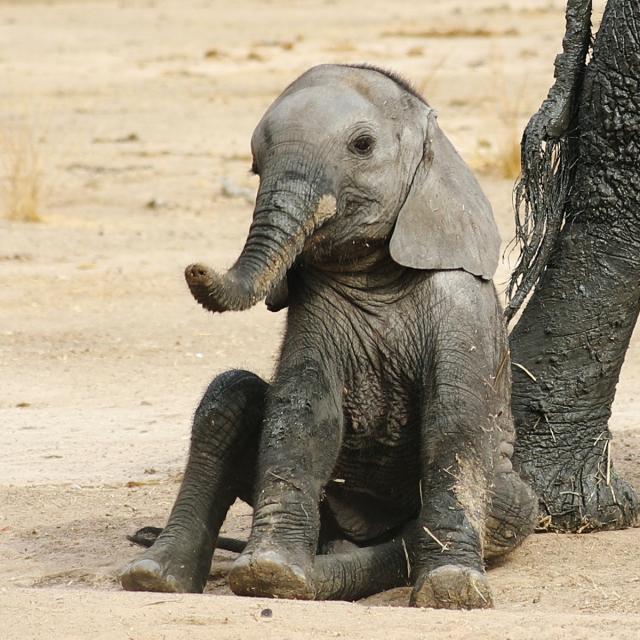
This course will provide you with the necessary tools to understand how sex works and to marvel at its mysteries. We will start by meeting the actors of this greatest drama in their native habitats, from ancient bacteria that live in thermal geysers in Yellowstone national park to the great mammals that roam the African savanna. We will also briefly discuss the history of life on earth and its contemporary state.
The second unit defines the rules of the game explaining the mechanisms of heredity and evolution.
The third unit focuses on meiosis, the fundamental and conserved molecular event that forms the basis of sex. And that might have led to the appearance of sex in the first place. We will also explain the fertility cycle and male and female germ cell development. The fourth unit describes the striking variability of sex determination throughout the animal kingdom. We will discuss the requirement for two genders and their considerable cost. Finally, we will dive in the gulf of Aqaba to meet organisms that are both male and female either at the same, or at different times.
Sex requires cooperation between two individuals – a male and a female – that are in a basic conflict of interest. Furthermore, males and females compete among themselves. This complex network of cooperation and conflict forms the fascinating plot we will tell in the fifth unit that will discuss the patterns of reproduction and social behavior of different animals – corals, insects, spiders, fish, birds, and mammals. We will be intrigued to discover that the same basic conflict is resolved by a huge range of approaches, from altruistic behavior all the way to open warfare and infanticide.
The sixth unit takes us to fertilization and beyond. Starting at an IVF clinic we follow embryonic development throughout the animal kingdom from insects to tadpoles and humans.
The seventh unit is dedicated to flowering plants that made our world colorful, sweet-smelling and tasty and that produce almost all animal food.

What You Will Learn

  • An introduction to biology from cells to higher multicellular organisms, past, present and future.
  • The principles of heredity and evolution.
  • The significance of meiosis and how germ cells are generated.
  • Sex determination and why there are (usually) two sexes and how this affects the natural history of living organisms.

Syllabus

WEEK 1
Introduction to the Course

WEEK 2
Chapter 1 - Biodiversity
In this module we will meet the players of the grand play of sexual reproduction.

WEEK 3
Chapter 2 - Evolution and Genetics
In this module we will learn about the rules of the game - how living organisms evolve and transfer their genetic information to their offsprings.

WEEK 4
Chapter 3 - Meiosis and Gametes
In this module we will learn about germ cells and how they are produced.

WEEK 5
Chapter 4 - Females, Males, Etc.
In this module we will learn about females and males and the differences between them.

WEEK 6
Chapter 5 - Sociality
In this module we will learn about the different social structures of animals and how they affect and are affected by sexual reproduction.

WEEK 7
Chapter 6 - Embryonic Development
In this module we will learn how the fertilized egg evolves into a multicellular organism.

WEEK 8
Chapter 7 - Flowers
In this module we will learn about sexual reproduction of plants.
Go to Class
MOOC List is learner-supported. When you buy through links on our site, we may earn an affiliate commission.

Related Courses

Evolution Today (Coursera) Coursera
Leiden University,Naturalis Biodiversity Center

Evolution Today (Coursera)

In this course you will learn how evolution works. You will develop an understanding of evolutionary processes and their formative power. You will see how evolution has shaped biodiversity, and continuously influences our daily life. Evolution impacts human endeavors as varied as medicine, agriculture, psychology, economy, and culture. It is the major unifying principle for biology and a fundamental natural law.

Aug 10th 2026
5-12 Weeks
Ecosystem Services: a Method for Sustainable Development (Coursera) Coursera
University of Geneva

Ecosystem Services: a Method for Sustainable Development (Coursera)

Ecosystem services are a way of thinking about – and evaluating – the goods and services provided by nature that contribute to the well-being of humans. This MOOC will cover scientific (technical), economic, and socio-political dimensions of the concept through a mix of theory, case-studies, interviews with specialists and a serious-game.

Aug 10th 2026
5-12 Weeks
Introduction to Systems Biology (Coursera) Coursera
Icahn School of Medicine at Mount Sinai

Introduction to Systems Biology (Coursera)

This course will introduce the student to contemporary Systems Biology focused on mammalian cells, their constituents and their functions. Biology is moving from molecular to modular. As our knowledge of our genome and gene expression deepens and we develop lists of molecules (proteins, lipids, ions) involved in cellular processes, we need to understand how these molecules interact with each other to form modules that act as discrete functional systems.

Aug 10th 2026
5-12 Weeks
Network Analysis in Systems Biology (Coursera) Coursera
Icahn School of Medicine at Mount Sinai

Network Analysis in Systems Biology (Coursera)

An introduction to data integration and statistical methods used in contemporary Systems Biology, Bioinformatics and Systems Pharmacology research. The course covers methods to process raw data from genome-wide mRNA expression studies (microarrays and RNA-seq) including data normalization, differential expression, clustering, enrichment analysis and network construction. The course contains practical tutorials for using tools and setting up pipelines, but it also covers the mathematics behind the methods applied within the tools.

Aug 3rd 2026
5-12 Weeks
Emergence of Life (Coursera) Coursera
University of Illinois at Urbana-Champaign

Emergence of Life (Coursera)

How did life emerge on Earth? How have life and Earth co-evolved through geological time? Is life elsewhere in the universe? Take a look through the 4-billion-year history of life on Earth through the lens of the modern Tree of Life. This course will evaluate the entire history of life on Earth within the context of our cutting-edge understanding of the Tree of Life. This includes the pioneering work of Professor Carl Woese on the University of Illinois Urbana-Champaign campus which revolutionized our understanding with a new "Tree of Life."

Aug 10th 2026
5-12 Weeks
Basics of Extracellular Vesicles (Coursera) Coursera
University of California, Irvine

Basics of Extracellular Vesicles (Coursera)

This course aims to provide the basic knowledge about extracellular vesicles (EV) a generic term including exosomes, microvesicles, microparticles, ectosomes, oncosomes, prostasomes, and many others. It covers areas such as EV history, nomenclature, biogenesis, EV cargo as well as the release and uptake mechanisms, collection and processing prior to isolation, different isolation methods, characterization and quantification techniques.

Aug 3rd 2026
5-12 Weeks
Introduction to Genetics and Evolution (Coursera) Coursera
Duke University

Introduction to Genetics and Evolution (Coursera)

Introduction to Genetics and Evolution is a college-level class being offered simultaneously to new students at Duke University. The course gives interested people a very basic overview of some principles behind these very fundamental areas of biology. We often hear about new "genome sequences," commercial kits that can tell you about your ancestry (including pre-human) from your DNA or disease predispositions, debates about the truth of evolution, why animals behave the way they do, and how people found "genetic evidence for natural selection." This course provides the basic biology you need to understand all of these issues better, tries to clarify some misconceptions, and tries to prepare students for future, more advanced coursework in Biology (and especially evolutionary genetics). No prior coursework is assumed.

Aug 3rd 2026
5-12 Weeks
Aeroecology: Exploring Biodiversity with Radar (Coursera) Coursera
University of Leeds

Aeroecology: Exploring Biodiversity with Radar (Coursera)

Learn how aeroecology, a discipline that studies airborne life forms, has been revolutionised with the use of radar with this unique course. This course is designed to help scientists, researchers as well as ecology enthusiasts to develop skills in using radar to explore biodiversity. You will explore the origins and evolution of radar from a military technology to a powerful tool with multiple scientific applications, including aeroecology. You will then be introduced to studying global biodiversity trends and learn how to evaluate traditional methods and emerging technologies used by scientists to monitor the natural world.

Aug 10th 2026
2 Weeks
Nanotechnology and Nanosensors, Part 2 (Coursera) Coursera
Technion - Israel Institute of Technology

Nanotechnology and Nanosensors, Part 2 (Coursera)

Learn about novel sensing tools that make use of nanotechnology to screen, detect and monitor various events in personal or professional life. Together, we will lay the groundwork for infinite innovative applications, starting from diagnosis and treatments of diseases, continuing with quality control of goods and environmental aspects, and ending with monitoring security issues.

Aug 10th 2026
5-12 Weeks
Introduction to Reproduction (Coursera) Coursera
Northwestern University

Introduction to Reproduction (Coursera)

Do you have questions about sex hormones or menstrual cycles? This is a crash-course in human reproductive health through fact and biology-based information on a variety of topics. "Sex 101" will cover reproductive anatomy, key biological changes during puberty, sexual biology and contraceptive methods, reproductive disorders, and a special introduction to the exciting field of Oncofertility. Specific lecture titles are as follows: 1) Reproductive Anatomy & Hormones, 2) Menstrual Cycle, Oocyte Maturation, & Sperm Activation, 3) Sexual Biology, Fertilization, & Contraception, and 4) Reproductive Health & Disorders.

Aug 3rd 2026
4 Weeks
Engineering Life: Synbio, Bioethics & Public Policy (Coursera) Coursera
Johns Hopkins University

Engineering Life: Synbio, Bioethics & Public Policy (Coursera)

Synbio is a diverse field with diverse applications, and the different contexts (e.g., gain-of-function research, biofuels) raise different ethical and governance challenges. The objective of this course is to increase learners’ awareness and understanding of ethical and policy/governance issues that arise in the design, conduct and application of synthetic biology. The course will begin with a short history of recombinant DNA technology and how governance of that science developed and evolved, and progress through a series of areas of application of synbio.

Aug 10th 2026
5-12 Weeks