Bioinformatic Methods I (Coursera)

Offered by University of Toronto,
Bioinformatic Methods I (Coursera)

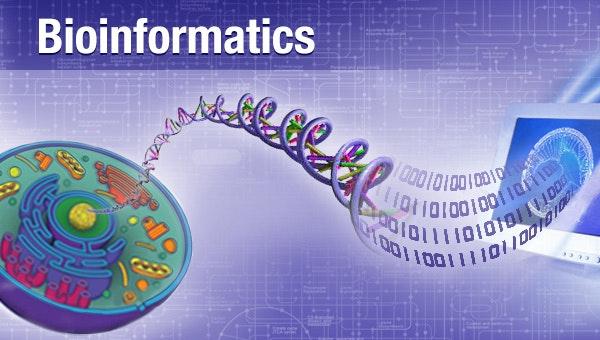
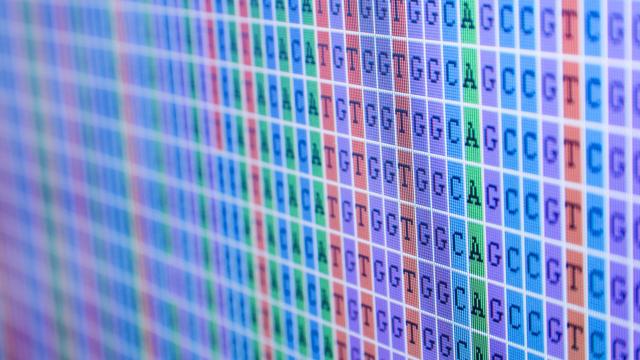
Large-scale biology projects such as the sequencing of the human genome and gene expression surveys using RNA-seq, microarrays and other technologies have created a wealth of data for biologists. However, the challenge facing scientists is analyzing and even accessing these data to extract useful information pertaining to the system being studied. This course focuses on employing existing bioinformatic resources – mainly web-based programs and databases – to access the wealth of data to answer questions relevant to the average biologist, and is highly hands-on.

Class Deals by MOOC List - Click here and see Coursera's Active Discounts, Deals, and Promo Codes.

Topics covered include multiple sequence alignments, phylogenetics, gene expression data analysis, and protein interaction networks, in two separate parts.
The first part, Bioinformatic Methods I (this one), deals with databases, Blast, multiple sequence alignments, phylogenetics, selection analysis and metagenomics.
The second part, Bioinformatic Methods II, covers motif searching, protein-protein interactions, structural bioinformatics, gene expression data analysis, and cis-element predictions.
This pair of courses is useful to any student considering graduate school in the biological sciences, as well as students considering molecular medicine. Both provide an overview of the many different bioinformatic tools that are out there.
These courses are based on one taught at the University of Toronto to upper-level undergraduates who have some understanding of basic molecular biology. No programming is required for this course.
Course 1 of 4 in the Plant Bioinformatic Methods Specialization.

Syllabus

WEEK 1
NCBI/Blast I
In this module we'll be exploring the amazing resources available at NCBI, the National Centre for Biotechnology Information, run by the National Library of Medicine in the USA. We'll also be doing a Blast search to find similar sequences in the enormous NR sequence database. We can use similar sequences to infer homology, which is the primary predictor of gene or protein function.

WEEK 2
Blast II/Comparative Genomics
In this module we'll continue exploring the incredible resources available at NCBI, the National Centre for Biotechnology Information. We will be performing several different kinds of Blast searches: BlastP, PSI-Blast, and Translated Blast. We can use similar sequences identified by such methods to infer homology, which is the primary predictor of gene or protein function. We'll also be comparing parts of the genomes of a couple of different species, to see how similar they are.

WEEK 3
Multiple Sequence Alignments
In this module we'll be doing multiple sequence alignments with Clustal (as implemented in MEGA), DiAlign, and MAFFT. Multiple sequences alignments can tell you where in a sequence the conserved and variable regions are, which is important for understanding the biology of the sequences under investigation. It also has practical applications, such as being able to design PCR primers that will amplify sequences from a number of different species, for example.

WEEK 4
Review: NCBI/Blast I, Blast II/Comparative Genetics, and Multiple Sequence Alignments

WEEK 5
Phylogenetics
In this module we'll be using the multiple sequence alignments we generated last lab to do some phylogenetic analyses with both neighbour-joining and maximum likelihood methods. The tree-like structure generated by such analyses tells us how closely sequences are related one to another, and suggests when in evolutionary time a speciation or gene duplication event occurred.

WEEK 6
Selection Analysis
In this module we'll take a set of orthologous sequences from bacteria and use DataMonkey to analyze them for the presence of certain sites under positive, negative or neutral selection. Such an analysis can help understand the biology of a set of protein coding sequences by identifying residues that might be important for biological function (those residues under negative selection) or those that might be involved in response to external influences, such as drugs, pathogens or other factors (residues under positive selection).

WEEK 7
'Next Gen' Sequence Analysis (RNA-Seq) / Metagenomics
In this module we'll explore some of the data that have been generated as a result of the rapid decrease in the cost of sequencing DNA. We'll be exploring a couple of RNA-Seq data sets that can tell us where any given gene is expressed, and also how that gene might be alternatively spliced. We'll also be looking at a couple of metagenome data sets that can tell us about the kinds of species (especially microbial species that might otherwise be hard to culture) that are in a given environmental niche.

WEEK 8
Review: Phylogenetics, Selection Analysis, and 'Next Gen' Sequence Analysis (RNA-seq)/Metagenomics + Final Assignment
Go to Class
MOOC List is learner-supported. When you buy through links on our site, we may earn an affiliate commission.

Related Courses

Business Intelligence and Competitive Analysis (Coursera) Coursera
Rutgers University

Business Intelligence and Competitive Analysis (Coursera)

By the end of 2019, it is clear that American Airlines (AAL), the world’s largest airline group, is in trouble. With the growth rate of its stock price ranked at the bottom of all major US airlines and going in the opposite direction from the SP500 index, AAL needs to find out what is going on, and how to turn the company and its stock price around.

Aug 3rd 2026
4 Weeks
Synapses, Neurons and Brains (Coursera) Coursera
Hebrew University of Jerusalem

Synapses, Neurons and Brains (Coursera)

These are very unique times for brain research. The aperitif for the course will thus highlight the present “brain-excitements” worldwide. You will then become intimately acquainted with the operational principles of neuronal “life-ware” (synapses, neurons and the networks that they form) and consequently, on how neurons behave as computational microchips and how they plastically and constantly change - a process that underlies learning and memory.

Jul 27th 2026
5-12 Weeks
Soul Beliefs: Causes and Consequences - Unit 2: Belief Systems (Coursera) Coursera
Rutgers University

Soul Beliefs: Causes and Consequences - Unit 2: Belief Systems (Coursera)

Throughout history, the vast majority of people around the globe have believed they have, however defined, a “soul.” While the question of whether the soul exists cannot be answered by science, what we can study are the causes and consequences of various beliefs about the soul and its prospects of surviving the death of the body. Why are soul and afterlife beliefs so common in human history? Are there adaptive advantages to assuming souls exist?

Aug 3rd 2026
5-12 Weeks
Data Processing Using Python (Coursera) Coursera
Nanjing University

Data Processing Using Python (Coursera)

This course is mainly for non-computer majors. It starts with the basic syntax of Python, to how to acquire data in Python locally and from network, to how to present data, then to how to conduct basic and advanced statistic analysis and visualization of data, and finally to how to design a simple GUI to present and process data, advancing level by level.

Aug 10th 2026
5-12 Weeks
Introduction to Genetics and Evolution (Coursera) Coursera
Duke University

Introduction to Genetics and Evolution (Coursera)

Introduction to Genetics and Evolution is a college-level class being offered simultaneously to new students at Duke University. The course gives interested people a very basic overview of some principles behind these very fundamental areas of biology. We often hear about new "genome sequences," commercial kits that can tell you about your ancestry (including pre-human) from your DNA or disease predispositions, debates about the truth of evolution, why animals behave the way they do, and how people found "genetic evidence for natural selection." This course provides the basic biology you need to understand all of these issues better, tries to clarify some misconceptions, and tries to prepare students for future, more advanced coursework in Biology (and especially evolutionary genetics). No prior coursework is assumed.

Aug 3rd 2026
5-12 Weeks
Network Analysis in Systems Biology (Coursera) Coursera
Icahn School of Medicine at Mount Sinai

Network Analysis in Systems Biology (Coursera)

An introduction to data integration and statistical methods used in contemporary Systems Biology, Bioinformatics and Systems Pharmacology research. The course covers methods to process raw data from genome-wide mRNA expression studies (microarrays and RNA-seq) including data normalization, differential expression, clustering, enrichment analysis and network construction. The course contains practical tutorials for using tools and setting up pipelines, but it also covers the mathematics behind the methods applied within the tools.

Aug 3rd 2026
5-12 Weeks
Fundamentos de estadística aplicada (Coursera) Coursera
Universidad de los Andes

Fundamentos de estadística aplicada (Coursera)

El curso está orientado a profesionales de diferentes campos, que estén interesados en adquirir conceptos fundamentales de estadística aplicada. El contenido del curso será particularmente útil para profesionales que estén interesados en adelantar estudios de postgrado en ingeniería, administración o economía, entre otras profesiones, y que requieran de una adecuada fundamentación en estadística.

Aug 3rd 2026
4 Weeks
Pensamiento Científico (Coursera) Coursera
Universidad Nacional Autónoma de México

Pensamiento Científico (Coursera)

¿El pensamiento científico es sólo para científicos? Su utilidad va mucho más allá, ayudando a las personas a tomar mejores decisiones todos los días. El objetivo de este curso es fomentar en pensamiento científico en los alumnos para ayudarles a tomar mejores decisiones profesionales, personales y sociales.

Aug 3rd 2026
5-12 Weeks
Case studies in business analytics with ACCENTURE (Coursera) Coursera
ESSEC Business School

Case studies in business analytics with ACCENTURE (Coursera)

This course is RESTRICTED TO LEARNERS ENROLLED IN Strategic Business Analytics SPECIALIZATION as a preparation to the capstone project. During the first two MOOCs, we focused on specific techniques for specific applications. Instead, with this third MOOC, we provide you with different examples to open your mind to different applications from different industries and sectors. The objective is to give you an helicopter overview on what's happening in this field. You will see how the tools presented in the two previous courses of the Specialization are used in real life projects.

Jul 27th 2026
3 Weeks
Evolution: A Course for Educators (Coursera) Coursera
American Museum of Natural History

Evolution: A Course for Educators (Coursera)

How are all of the species living on Earth today related? How does understanding evolutionary science contribute to our well-being? In this course, participants will learn about evolutionary relationships, population genetics, and natural and artificial selection. Participants will explore evolutionary science and learn how to integrate it into their classrooms.

Jul 27th 2026
4 Weeks