Telehealth Best Practices and Uses (Coursera)

Telehealth Best Practices and Uses (Coursera)

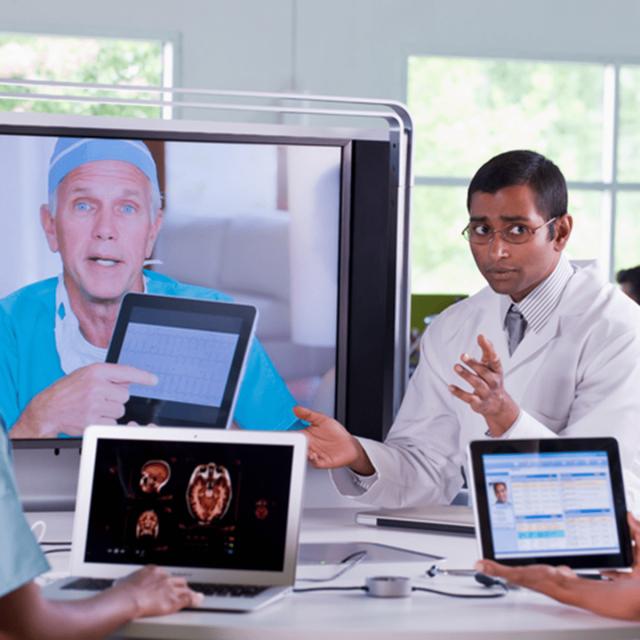
Telehealth uses technology tools such as a cellphone or laptop to give patients and doctors the ability to support healthcare communication and services remotely. The field of telehealth has seen tremendous growth, with telehealth use increasing across all specialties and becoming even more accessible. This course is designed for healthcare professionals and employees in organizations that practice telehealth or are aspiring to work within the field. As a leading pioneer in the field of telehealth, UC Davis Health began offering telehealth services in 1992 and providing a formal telehealth academic curriculum in 1999.

Class Deals by MOOC List - Click here and see Coursera's Active Discounts, Deals, and Promo Codes.

Go beyond the foundational knowledge of technology tools employed and telehealth applications. Learn about the most effective practices in implementation, regulatory compliance, and how to practice with a health equity lens. With insight from the CEO of UC Davis Health, David Lubarsky, you will leave the course better able to improve your telehealth practice and focus on the elements of telehealth that matter most to your organization and to the patients you serve.

What You Will Learn
Examine the real-world application of telehealth from a world-class, research university medical center with over 30-years of practice.

Syllabus

WEEK 1
Getting Started and Telehealth: Operations
In this module, you will be able to understand the role of telehealth in the healthcare continuum and recognize the three types of telehealth. You will be able to explain the different roles and relationships of the participants in different encounter types. You will be able understand the benefits to the participants in the different encounter types and explain how telehealth can address the six domains of healthcare quality. You will be able to identify who can benefit from telehealth using different perspectives and review common applications of telehealth. You will also be able to explore the return on investment in specific settings.

WEEK 2
Telehealth: Equity
In this module, you'll be able to define health equity and discuss the components of it. You will also be able to define health disparities and discuss the impact of health inequity on health disparities. You will be able to understand the ways in which telehealth is designed to promote health equity and recognize the ways in which it has also promote health equity. You will be able to understand the importance of monitoring the impacts that telehealth technology has on relevant outcomes and understand that although these technologies have potential to promote health equity, we must recognize the ways in which telehealth does not equitably benefit diverse populations. Finally, you will be able to recognize that telehealth equity issues are an understudied area and, as a result, we must be aware of the possible unintended consequences of these tools so that these innovative technologies improve, rather than exacerbate, existing disparities.

WEEK 3
Telehealth: Best Practices
In this module, you will be able to recognize the role of Institutional Culture plays in telemedicine and be able to explore the cultural framework for your organization and establish expectations. You will be able to recognize different telehealth modalities and understand the dynamics of a telehealth visit. You will be able to recognize and apply best practices for a provider during a telehealth visit and be able to standardize the approach to both the physical and virtual office space. You will be able to implement Clinical Practice Guidelines and recognize the steps in the coordination of care. You will be able to prepare for support, explore both the SPIKES and NURSE protocols, and be able to communicate bad news empathetically and effectively.

WEEK 4
Telehealth: Elements of Success
In this module, you will be able to recognize the effect of organizational design on a telehealth program. You will be able to determine drivers for program utilization and be able to monitor program using Continuous Quality Improvement (CQI) methods. You will also be able to identify elements of appropriate program management and plan for technical needs of users. You will be able to compare and contrast licensure and credentialing and follow state licensure compacts. You will be able to recognize the different state and federal policies for reimbursement, prescribing, privacy and security as well as be able to explore other laws and regulations that impact telehealth.


Go to Class
MOOC List is learner-supported. When you buy through links on our site, we may earn an affiliate commission.

Related Courses

Data and Health Indicators in Public Health Practice (Coursera) Coursera
Johns Hopkins University

Data and Health Indicators in Public Health Practice (Coursera)

Epidemiology is often described as the cornerstone science in public health. Epidemiology in public health practice uses study design and analyses to identify causes in an outbreak situation, guides interventions to improve population health, and evaluates programs and policies. In this course, we'll define the role of the professional epidemiologist as it relates to public health services, functions, and competencies. With that foundation in mind, we'll introduce you to the problem solving methodology and demonstrate how it can be used in a wide variety of settings to identify problems, propose solutions, and evaluate interventions.

Oct 5th 2026
4 Weeks
Lymphoedema: Monitoring & Intervention After Breast Cancer (Coursera) Coursera
Macquarie University

Lymphoedema: Monitoring & Intervention After Breast Cancer (Coursera)

Lymphoedema following breast cancer treatment is a poorly understood and under-researched condition which can significantly impact physical and psychological function, reduce quality of life and result in substantial cost burdens to both patients and the healthcare system. In these interactive modules we will cover an introduction to lymphoedema, lymphatic physiology and anatomy, assessment and treatment, as well as utilise case studies to understand the prospective surveillance and early intervention model of care in breast cancer rehabilitation.

Oct 5th 2026
4 Weeks
Introduction to Dental Medicine (Coursera) Coursera
University of Pennsylvania

Introduction to Dental Medicine (Coursera)

The mouth is the window into human health. This course provides an overview of dental medicine to engage, educate, excite and assist you in improving the oral health of your patients and members of your community. We will review topics in dental medicine including scope of the field, what to expect in function, and some of the many ways that dysfunction may present for different patients.

Oct 5th 2026
5-12 Weeks
Community Awareness Course: Sexuality and Disability (Coursera) Coursera
University of Minnesota

Community Awareness Course: Sexuality and Disability (Coursera)

This community awareness course from the University of Minnesota Program on Human Sexuality will provide you with a solid introduction to human sexuality for those living with disabilities. Often there are assumptions that the disabled or differently abled people are not sexual, do not have sexual needs, or cannot be involved sexually. In this professionally produced one-hour course, you'll learn about the basics of disabilities and human sexuality.

Oct 5th 2026
5-12 Weeks
PrEParing: PrEP for Providers and Patients (Coursera) Coursera
Johns Hopkins University

PrEParing: PrEP for Providers and Patients (Coursera)

Pre-Exposure Prophylaxis (PrEP) using the antiretroviral medication emtricitibine/tenofovir approved in countries around the world is a highly effective means of reducing transmission of HIV through sexual encounters and needle sharing. This Johns Hopkins University course PrEPares you with essential information, concepts and practical advice regarding PrEP from leaders in the field. A first of its kind learning opportunity, both providers and patients learn from the same experts through content that meets the needs of both audiences, while facilitating the opportunity for a shared community space.

Oct 12th 2026
5-12 Weeks
Global Health Policy (Coursera) Coursera
The University of Tokyo

Global Health Policy (Coursera)

In this course, learners will become familiar with principles and theories of global health problems, and major challenges and controversies in improving global population health as well as practical applications of quantitative methods to analyze and interpret issues and challenges for policy. Topics will include health and foreign policy, health governance, acute disease surveillance, non-communicable diseases, burden of disease, universal health coverage, health systems strengthening, health financing, and human resources for health and ageing.

Oct 5th 2026
4 Weeks
Introduction to Systems Biology (Coursera) Coursera
Icahn School of Medicine at Mount Sinai

Introduction to Systems Biology (Coursera)

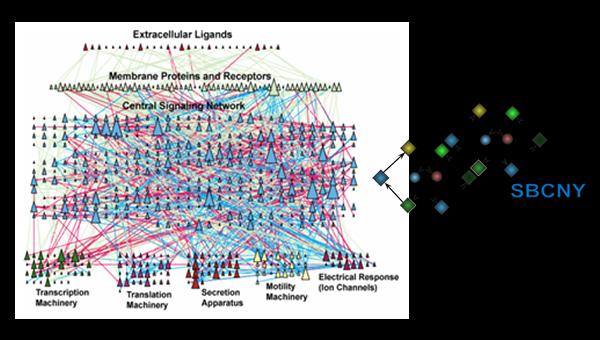
This course will introduce the student to contemporary Systems Biology focused on mammalian cells, their constituents and their functions. Biology is moving from molecular to modular. As our knowledge of our genome and gene expression deepens and we develop lists of molecules (proteins, lipids, ions) involved in cellular processes, we need to understand how these molecules interact with each other to form modules that act as discrete functional systems.

Oct 5th 2026
5-12 Weeks
Population Health: Alternative Payment Models (Coursera) Coursera
Leiden University

Population Health: Alternative Payment Models (Coursera)

The way we currently pay our care providers lead to suboptimal outcomes and unnecessary spending. Consequently, we fail to maximize the value of our health care services. We need to change provider payment models in order to keep health care systems financial sustainability. Doing nothing is not an option. But the question is, how do we do it?

Oct 5th 2026
4 Weeks
Everyday Chinese Medicine 2 (Coursera) Coursera
The Chinese University of Hong Kong

Everyday Chinese Medicine 2 (Coursera)

This course, Everyday Chinese Medicine II offered by the Chinese University of Hong Kong, aims to show to the public, as well as the healthcare professionals about the basic principles of Chinese medicine. Our primary goal is to empower healthcare choices by promoting awareness and practical application on Chinese medicine diagnostic and therapeutic approaches, and to facilitate interprofessional education between Chinese and conventional clinicians.

Oct 5th 2026
5-12 Weeks
Sustainable Food Production Through Livestock Health Management (Coursera) Coursera
University of Illinois at Urbana-Champaign

Sustainable Food Production Through Livestock Health Management (Coursera)

Learn about the impact of infectious disease on sustainable animal-based food production by understanding the science of growth, immunity, and infection and by learning the problem-solving skills needed to advance animal health and food production through optimal management practices. In this course we will explore the effect of infectious disease on sustainable animal-based food production. The content and learning outcomes of this new course will be designed to be relevant across different food production sectors (i.e., beef, dairy, poultry, and pigs).

Oct 5th 2026
5-12 Weeks
Hacking Exercise For Health. The surprising new science of fitness. (Coursera) Coursera
McMaster University

Hacking Exercise For Health. The surprising new science of fitness. (Coursera)

Renowned exercise physiologists Martin Gibala and Stuart Phillips of McMaster University teach the surprising new science of cardio fitness and strength-building—and then provide you with hacks to get fit and strong (and healthy!) in less time than you ever thought possible. What’s the right mix of exercise between cardio and strength? How do you know if you’re working out hard enough? What’s better, heavy or light weights? These questions and more are addressed through a course designed to provide even the most inexperienced of exercisers the tools you need to design time-efficient workouts that can be done virtually anywhere, from your own home to a city park or even at your workplace.

Oct 5th 2026
4 Weeks