Cuidado de heridas en el ámbito hospitalario (Coursera)

Cuidado de heridas en el ámbito hospitalario (Coursera)

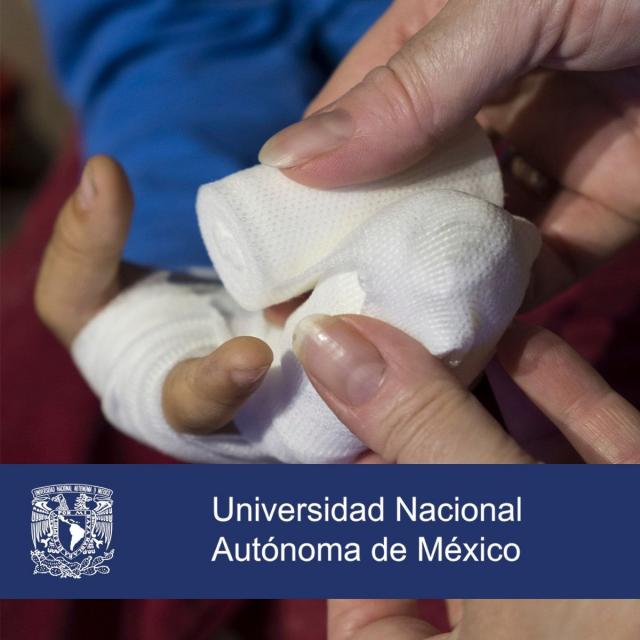
El manejo de heridas ha cambiado radicalmente en los últimos años, a través del desarrollo de evidencia científica. A lo largo de su vida profesional, todo personal de la salud se enfrentará al paciente con heridas, lo cual requiere conocimientos actualizados y efectivos. Por ello, en este curso UNAM encontrarás los conocimientos básicos para el manejo de pacientes con heridas con la finalidad de brindar un cuidado de calidad y seguro.

Class Deals by MOOC List - Click here and see Coursera's Active Discounts, Deals, and Promo Codes.

Syllabus

WEEK 1
Generalidades de las Heridas
En este primer módulo, harás un estudio rápido de la piel, su proceso de cicatrización y, de acuerdo con ello, revisarás la clarificación de las heridas. Por ello, se abordan conceptos muy importantes como la piel, lo que es una herida, entre otros.

WEEK 2
Valoración del Paciente con Heridas
En este módulo, se abordarán los conceptos básicos para la valoración del paciente con heridas, es decir, la historia clínica, inspección de la herida y registro clínico. Lo anterior se basa en la revisión de los tipos de tejido y la identificación de distintos elementos en el lecho de la herida.

WEEK 3
Cuidados al Paciente con Heridas
En este módulo, encontrarás los principios básicos para el cuidado local de las heridas. Revisarás conceptos como preparación del lecho de la herida, limpieza de la herida y selección del apósito adecuado.

WEEK 4
Cuidados a las Heridas más Frecuentes
En este último módulo, revisarás el cuidado específico de tres tipos de heridas: herida quirúrgica no complicada, lesiones por presión y generalidades de las quemaduras. También encontrarás su clasificación, fisiopatología y puntos clave para su cuidado.


Go to Class
MOOC List is learner-supported. When you buy through links on our site, we may earn an affiliate commission.

Related Courses

Public Involvement in Research (Coursera) Coursera
Imperial College London

Public Involvement in Research (Coursera)

This course focuses on participatory approaches in research, known as 'public involvement' in the UK. You'll specifically, consider why citizens and patients would be involved in research and explore participatory approaches across and within the research cycle in more detail, diving into questions such as: What kinds of participation can be undertaken at each of the 7 stages of the cycle? How can you utilise participation in research? What examples of using participatory approaches exist in research?

Jun 10th 2026
4 Weeks
Big Data, Genes, and Medicine (Coursera) Coursera
The State University of New York

Big Data, Genes, and Medicine (Coursera)

This course distills for you expert knowledge and skills mastered by professionals in Health Big Data Science and Bioinformatics. You will learn exciting facts about the human body biology and chemistry, genetics, and medicine that will be intertwined with the science of Big Data and skills to harness the avalanche of data openly available at your fingertips and which we are just starting to make sense of.

Jun 8th 2026
5-12 Weeks
Service Transformed: Lessons in U.S. Veteran Centered Care (Coursera) Coursera
University of Michigan

Service Transformed: Lessons in U.S. Veteran Centered Care (Coursera)

Improving health care for veterans has become a matter of national attention and has gained increasing attention from the medical community. With the current surge of veterans reintegrating into civilian society it is critical to improve the training of the next cadre of providers who will provide care for our veterans. It is widely known that veterans receive care in all aspects of the health system, thus providers in veteran focused care facilities, military health serves and civilian locals must be aware of the unique needs of veterans. It is perhaps even more important to educate civilian providers who may be unfamiliar with the unique physical, mental and emotional needs related to military service.

Jun 8th 2026
5-12 Weeks
Water Supply and Sanitation Policy in Developing Countries Part 1: Understanding Complex Problems (Coursera) Coursera
University of Manchester

Water Supply and Sanitation Policy in Developing Countries Part 1: Understanding Complex Problems (Coursera)

Our course explores what can be done to solve the complex problem that half a billion people worldwide do not have improved water supplies and two billion do not have improved sanitation. We look forward to you joining us. We want to help you develop the skills you need to address this major global challenge of the 21st century.

Jun 8th 2026
5-12 Weeks
HI-FIVE: Health Informatics For Innovation, Value & Enrichment (Social/Peer Perspective) (Coursera) Coursera
Columbia University

HI-FIVE: Health Informatics For Innovation, Value & Enrichment (Social/Peer Perspective) (Coursera)

HI-FIVE (Health Informatics For Innovation, Value & Enrichment) Training is an approximately 10-hour online course designed by Columbia University in 2016, with sponsorship from the Office of the National Coordinator for Health Information Technology (ONC). The training is role-based and uses case scenarios. Our nation’s healthcare system is changing at a rapid pace. Transformative health care delivery programs depend heavily on health information technology to improve and coordinate care, maintain patient registries, support patient engagement, develop and sustain data infrastructure necessary for multi-payer value-based payment, and enable analytical capacities to inform decision making and streamline reporting.

Jun 8th 2026
4 Weeks
PrEParing: PrEP for Providers and Patients (Coursera) Coursera
Johns Hopkins University

PrEParing: PrEP for Providers and Patients (Coursera)

Pre-Exposure Prophylaxis (PrEP) using the antiretroviral medication emtricitibine/tenofovir approved in countries around the world is a highly effective means of reducing transmission of HIV through sexual encounters and needle sharing. This Johns Hopkins University course PrEPares you with essential information, concepts and practical advice regarding PrEP from leaders in the field. A first of its kind learning opportunity, both providers and patients learn from the same experts through content that meets the needs of both audiences, while facilitating the opportunity for a shared community space.

Jun 8th 2026
5-12 Weeks
Understanding Clinical Research: Behind the Statistics (Coursera) Coursera
University of Cape Town

Understanding Clinical Research: Behind the Statistics (Coursera)

If you’ve ever skipped over`the results section of a medical paper because terms like “confidence interval” or “p-value” go over your head, then you’re in the right place. You may be a clinical practitioner reading research articles to keep up-to-date with developments in your field or a medical student wondering how to approach your own research. Greater confidence in understanding statistical analysis and the results can benefit both working professionals and those undertaking research themselves.

Jun 8th 2026
5-12 Weeks
Positive Psychology Specialization Project: Design Your Life for Well-hebeing (Coursera) Coursera
University of Pennsylvania

Positive Psychology Specialization Project: Design Your Life for Well-hebeing (Coursera)

You are encouraged to take the first four courses of the Foundations of Positive Psychology Specialization before starting this course and completing the Specialization Project. This course, taught by Dr. Martin E.P. Seligman brings all the key concepts from the first four courses to practice as you develop and test a new positive intervention for an audience of your choice.

Jun 8th 2026
4 Weeks
Genomics: Decoding the Universal Language of Life (Coursera) Coursera
University of Illinois at Urbana-Champaign

Genomics: Decoding the Universal Language of Life (Coursera)

What is a genome? A genome contains all of the information that a cell needs to develop, function, and reproduce itself, and all the information needed for those cells to come together to form a person, plant, or animal. Genomes contain an organism’s complete set of genes, and also the even tinier genetic structures that help regulate when and how those genes are used. The ability to regrow a torn ligament, the clues that might predict the onset of mental illness, the nutritional potential of crops, and even the history of life itself, are all encoded in genomes. By taking this course, you will discover how scientists are deciphering the language of genomes to learn how to develop sustainable food and fuel supplies, improve disease treatment and prevention, and protect our environment.

Jun 8th 2026
5-12 Weeks
Soul Beliefs: Causes and Consequences - Unit 3: How Does It All End? (Coursera) Coursera
Rutgers University

Soul Beliefs: Causes and Consequences - Unit 3: How Does It All End? (Coursera)

Throughout history, the vast majority of people around the globe have believed they have, however defined, a “soul.” While the question of whether the soul exists cannot be answered by science, what we can study are the causes and consequences of various beliefs about the soul and its prospects of surviving the death of the body. Why are soul and afterlife beliefs so common in human history? Are there adaptive advantages to assuming souls exist?

Jun 8th 2026
5-12 Weeks