Curanderismo: Traditional Healing of the Body (Coursera)

Curanderismo: Traditional Healing of the Body (Coursera)

As the second of four courses on Curanderismo, the art of Hispanic/Latino traditional medicine, this course focuses specifically on traditional healing of the body. As an educational and cultural platform, this course will share a number of traditional body therapies.

Class Deals by MOOC List - Click here and see Coursera's Active Discounts, Deals, and Promo Codes.

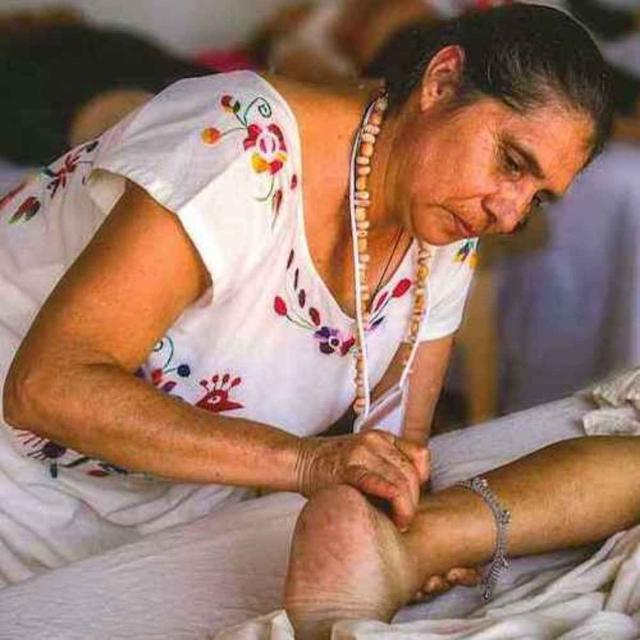
Learners will not become certified traditional healers at the completion of this course but will be able apply basic principles or traditional medicine for health and illnesses. They will become familiar specifically with the traditional treatment of Empacho (intestinal blockage), Manteadas (shawl alignments), Ventosas (fire cupping), Hidroterapia (healing with water), and other topics such as the Huesero (bone setter).
Future Curanderismo courses include:
Traditional Healing of the Mind, Energy and Spirit: Temazcal (sweatlodge), Limpias (energetic/spiritual cleansings), Risaterapia (laugh therapy) and other topics.
Global and Cultural Influences of Traditional Healing: African tradition, Afro Latino from Cuba and Puerto Rico, Native American spiritual cleansings and Mayan acupuncture and other topics.

What you will learn

  • Provide information on the traditions, rituals and remedies of Curanderismo, a healing tradition with emphasis on treatments of the body.
  • Recognize the importance of traditional methods of healing intestinal blockage and shawl alignments.
  • Explore different traditional hands on techniques and their impact on bodies ailments.
  • Demonstrate traditional healing methods for special populations such as infants and the aging community.

Syllabus

WEEK 1
Intestinal blockage (empacho) & Shawl alignments (manteadas)
In this module, students will recognize different types of intestinal blockage empacho as demonstrated by Tana. Rita indicates a number of benefits of the shawl alignment manteada, traditional healing technique.

WEEK 2
Fire cupping (ventosas) & bone setter (huesero)
This module explains the benefits of fire cupping ventosas. Rita gives a demonstration and description about different methods of ventosas. Agustin, the bonesetter, huesero, shows a traditional body treatment ventosa technique to treat sciatica combined with a brief demonstration of intestinal blockage, empacho and magical fright, espanto (similar to susto).

WEEK 3
Mayan abdominal massage & body asjustment
Alex demonstrates a Mayan massage and the benefits for the body. Roberto shows how the body can adjust through muscle adjustments.

WEEK 4
Spinal alignment & hydrotherapy
Felipa demonstrates a body treatment to improve spinal and body mobility. Rita shows how we can use hydrotherapy, water and its therapeutic benefits.

WEEK 5
Traditional healing of infants & tradicional healing for the ageing community
Rita and Tonita show traditional healing techniques and their benefits for a special population such as infants and the aging community. Professor Torres concludes the course by summarizing the modules.
Go to Class
MOOC List is learner-supported. When you buy through links on our site, we may earn an affiliate commission.

Related Courses

Global Energy and Climate Policy (Coursera) Coursera
University of London,SOAS University of London

Global Energy and Climate Policy (Coursera)

The Global Energy and Climate Policy course offers an introduction to the theoretical and practical understanding of how energy and climate change policies are designed, shaped, advocated and implemented. As energy markets go truly global, domestic energy policies are becoming more and more entangled with wider issues of international governance. Concurrently, the urgent need to mitigate and adapt to climate change and transition to a low-carbon future is adding a further layer of complexity.

Jun 1st 2026
5-12 Weeks
Understanding the Brain: The Neurobiology of Everyday Life (Coursera) Coursera
University of Chicago

Understanding the Brain: The Neurobiology of Everyday Life (Coursera)

Learn how the nervous system produces behavior, how we use our brain every day, and how neuroscience can explain the common problems afflicting people today. We will study functional human neuroanatomy and neuronal communication, and then use this information to understand how we perceive the outside world, move our bodies voluntarily, stay alive, and play well with others.

Jun 1st 2026
5-12 Weeks
General Chemistry: Concept Development and Application (Coursera) Coursera
Rice University

General Chemistry: Concept Development and Application (Coursera)

This course will cover the topics of a full year, two semester General Chemistry course. We will use a free on-line textbook, Concept Development Studies in Chemistry, available via Rice’s Connexions project. The fundamental concepts in the course will be introduced via the Concept Development Approach developed at Rice University. In this approach, we will develop the concepts you need to know from experimental observations and scientific reasoning rather than simply telling you the concepts and then asking you to simply memorize or apply them.

Jun 1st 2026
5-12 Weeks
Global Warming I: The Science and Modeling of Climate Change (Coursera) Coursera
University of Chicago

Global Warming I: The Science and Modeling of Climate Change (Coursera)

This class describes the science of global warming and the forecast for humans’ impact on Earth’s climate. Intended for an audience without much scientific background but a healthy sense of curiosity, the class brings together insights and perspectives from physics, chemistry, biology, earth and atmospheric sciences, and even some economics—all based on a foundation of simple mathematics (algebra).

Jun 1st 2026
5-12 Weeks
In the footsteps of Zika… approaching the unknown (Coursera) Coursera
University of Geneva

In the footsteps of Zika… approaching the unknown (Coursera)

Welcome to this on-demand MOOC “In the footsteps of Zika… approaching the unknown”. This MOOC has been produced by Université de Genève Institut Pasteur, Université Paris Descartes and Centre Virchow-Villermé. With the help of the intervention of faculty members and international experts, we will explore together the recent Zika phenomenon, a previously rare benign virus that recently turned unexpectedly into the limelight when on the 1st of February 2016 it was declared by the WHO as a Public Health Emergency of International Concern.

Jun 1st 2026
5-12 Weeks
Global Health at the Human-Animal-Ecosystem Interface (Coursera) Coursera
University of Geneva

Global Health at the Human-Animal-Ecosystem Interface (Coursera)

The University of Geneva, Institute Pasteur, University of Montreal and Centre Virchow-Villermé/University Paris Descartes welcome you to this new MOOC on "Global Health at the Human-Animal-Ecosystem Interface"! Over the next 5 weeks, you will explore and learn about some of the major and current Global Health Challenges at the Human-Animal-Ecosystem Interface: zoonotic emerging infections (e.g. Ebola, Nipah, MERS, Avian Influenza), antimicrobial resistance, neglected tropical diseases (e.g. rabies, leishmaniasis, zoonotic TB), snakebite and other human-animal conflicts etc.

Jun 1st 2026
5-12 Weeks
Dentistry 101 (Coursera) Coursera
University of Michigan

Dentistry 101 (Coursera)

Dentistry 101 is an introduction to the exciting and diverse field of dentistry through the lens of its many practitioners. If you’re interested in exploring dentistry as a profession, or if you’re ready to pursue a career in it and want to prepare yourself for dental school and the profession that lies ahead, Dentistry 101 will help you better envision the paths you can take.

Jun 3rd 2026
4 Weeks
Planet Earth ... and You! (Coursera) Coursera
University of Illinois at Urbana-Champaign

Planet Earth ... and You! (Coursera)

Earthquakes, volcanoes, mountain building, ice ages, landslides, floods, life evolution, plate motions—all of these phenomena have interacted over the vast expanses of deep time to sculpt the dynamic planet that we live on today. Planet Earth presents an overview of several aspects of our home, from a geological perspective. We begin with earthquakes—what they are, what causes them, what effects they have, and what we can do about them. We will emphasize that plate tectonics—the grand unifying theory of geology—explains how the map of our planet's surface has changed radically over geologic time, and why present-day geologic activity—including a variety of devastating natural disasters such as earthquakes—occur where they do. We consider volcanoes, types of eruptions, and typical rocks found there.

Jun 1st 2026
5-12 Weeks
Systems Science and Obesity (Coursera) Coursera
Johns Hopkins University

Systems Science and Obesity (Coursera)

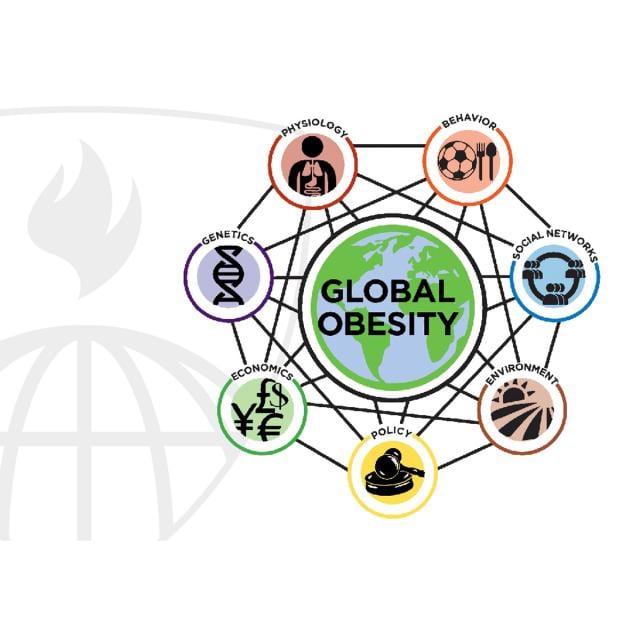
Systems science has been instrumental in breaking new scientific ground in diverse fields such as meteorology, engineering and decision analysis. However, it is just beginning to impact public health. This seminar is designed to introduce students to basic tools of theory building and data analysis in systems science and to apply those tools to better understand the obesity epidemic in human populations.

Jun 1st 2026
4 Weeks
Villes africaines: Environnement et enjeux de développement durable (Coursera) Coursera
École Polytechnique Fédérale de Lausanne

Villes africaines: Environnement et enjeux de développement durable (Coursera)

Le cours propose une lecture de l’environnement urbain en Afrique à travers les thématiques les plus pertinentes pour mesurer le niveau de développement d’un pays : eau et vie urbaine, assainissement (eaux usées et pluviales), gestion des déchets solides, agriculture urbaine. Après avoir analysé les différents enjeux de celles-ci, nous aborderons les liens entre environnement urbain et santé.

Jun 1st 2026
5-12 Weeks