Lesson Planning with the ELL in Mind (Coursera)

Lesson Planning with the ELL in Mind (Coursera)

In this course you will learn how to design lesson plans around the needs of your ELL students and their language level through the analysis of content language and cognitive demands. You will learn how to align language objectives to the adopted standards of your school and content area. You will learn how to modify existing course materials as well as develop graphic organizers and languages frames to support ELLs’ access to content. Analysis of second language acquisition theories will be applied to lesson planning.

Class Deals by MOOC List - Click here and see Coursera's Active Discounts, Deals, and Promo Codes.

Upon completing this course, you will be able to:

  • Conceptualize theories of second language acquisition as they apply to the planning of lessons through annotation
  • Assess the linguistic needs of your students using BICS and CALP
  • Identify content specific vocabulary, grammatical structures, and language functions necessary for a student to succeed in your classroom
  • Write language learning outcomes that align to your student’s linguistic and cognitive ability and your school’s adopted standards
  • Adapt a lesson plan that accomplishes the learning outcomes outlined in the lesson objectives
  • Modify materials to support ELLs’ access to content
  • Use a wide variety of graphic organizer templates and language frames to support ELLs’ access to content * Develop activity types appropriate to the cognitive and linguistic abilities of ELLs
  • Incorporate community and culture into lesson planning

Course 1 of 4 in the ELL Success in the Content Classroom: Teacher Toolbox Series Specialization

Syllabus

WEEK 1
ELL Language and Communication Skills Across the Curriculum
Welcome to week 1! This module is very important as it introduces you to the basics of second language acquisition. By the end of this module, you will be able to: conceptualize theories of SLA as they apply to ELL students in your mainstream classrooms, assess your student’s language skills and abilities using BICS and CALP, classify vocabulary types specific to your content, identify grammar structures specific to your content, identify language functions specific to your content and strategically pre-plan vocabulary and language functions necessary for lessons in your mainstream classroom. Lots to learn! Let's get started!

WEEK 2
ELL Cognitive and Learning SKills Across the Curriculum
Welcome to week 2! This week you will continue to work through pre-planning stages of lesson design as you keep in mind your ELLs. By the end of this module, you will be able to engage cognitive skills of ELLs through the learning of content, develop ELL autonomy by teaching students how to learn, evaluate the affective filter of your ELL students, strategically design classroom environment to reduce affective filter and strategically pre-plan cognitive and learning skills necessary for lessons in your mainstream classroom.

WEEK 3
Lesson Planning with the ELL in Mind
Welcome to week 3! We are excited to begin writing and creating the lesson plan and activities to support our students' learning of content and development of language. By the end of this module, you will be able to write language learning outcomes to support your content learning outcomes, plan/adapt lesson activities that support cognitive and linguistic access for ELLs, identify language demands of existing activities, lessons, textbooks and content and strategically plan lesson objectives and activities in your mainstream classroom with your ELL in mind. Happy Lesson Planning!

WEEK 4
Materials and Lesson Delivery
Welcome to week 4! Now that you have created your lesson, it is time to start thinking about the materials you will need to make sure that the lesson is successful. By the end of this module, you will be able to apply thoughtful criteria for selecting materials in your mainstream classroom (meet input and cognition demands), adapt materials for ELLs using a word level, sentence level and text level analysis, modify existing text to provide linguistic access to your ELLs, create materials to provide linguistic access to your ELLs and strategically select and adapt materials in lesson planning with your ELL in mind. Let's get started!

WEEK 5
ELL Lesson Planning in Action
Welcome to week 5! This is a unique module in that you will have a chance to see some lesson plans in action. We will share 3 lesson plans fully developed with the ELL in mind. By the end of this module, you will be able to: identify key aspects of Second Language Acquisition in 3 fully developed lesson plans, analyze ways to select vocabulary, grammatical structures, language functions, cognitive skills, and learning skills within these 3 model lessons, recognize alignment of learning outcomes to state standards within these 3 model lessons, identify modified texts and materials for ELLs and apply these same concepts to your own lessons, objectives, and materials.

WEEK 6
Assessment
Welcome to week 6! Congratulations and well done. It is now time to apply the many strategies for lesson planning with the ELL in mind to your own teaching context. By the end of this module, you will be able to synthesize course material, complete the final exam and complete the optional peer review. Good luck!


Go to Class
MOOC List is learner-supported. When you buy through links on our site, we may earn an affiliate commission.

Related Courses

Innovative Teaching with ChatGPT (Coursera) Coursera
Vanderbilt University

Innovative Teaching with ChatGPT (Coursera)

Despite what you may have heard, ChatGPT offers exciting possibilities for supporting innovative teaching and personalized education. This course provides practical techniques that any educator, from K-12 to higher education, can use to help support their teaching. No experience with ChatGPT, prompt engineering, or Generative AI is required.

Oct 12th 2026
1 Week
Formación docente basada en la práctica para desarrollar habilidades del siglo XXI (Coursera) Coursera
Pontificia Universidad Católica de Chile

Formación docente basada en la práctica para desarrollar habilidades del siglo XXI (Coursera)

El curso presenta, en primer lugar, las habilidades del siglo XXI y su relevancia para la formación docente con el fin de preparar docentes para la sociedad del conocimiento, capaces de pensar de manera crítica y creativa y con habilidades de comunicación y colaboración para promover oportunidades de aprendizaje equitativas y de calidad en los contextos escolares. En segundo lugar, se discute sobre el enfoque basado en la práctica para la formación docente y la necesidad de ofrecer andamiajes que les permitan a los docentes aprender a poner en acto prácticas generativas complejas que requieren conocimientos especializados.

Oct 12th 2026
5-12 Weeks
Interpersonal Communication for Engineering Leaders (Coursera) Coursera
Rice University

Interpersonal Communication for Engineering Leaders (Coursera)

This course covers communication skills that engineering leaders use every day to motivate, inspire, and support the people in their organizations. Speaking and writing are basic leadership communication skills. (We covered these topics in the Specialization course 1 and 3.) However, leaders also need to be skillful interpersonal communicators.

Oct 12th 2026
4 Weeks
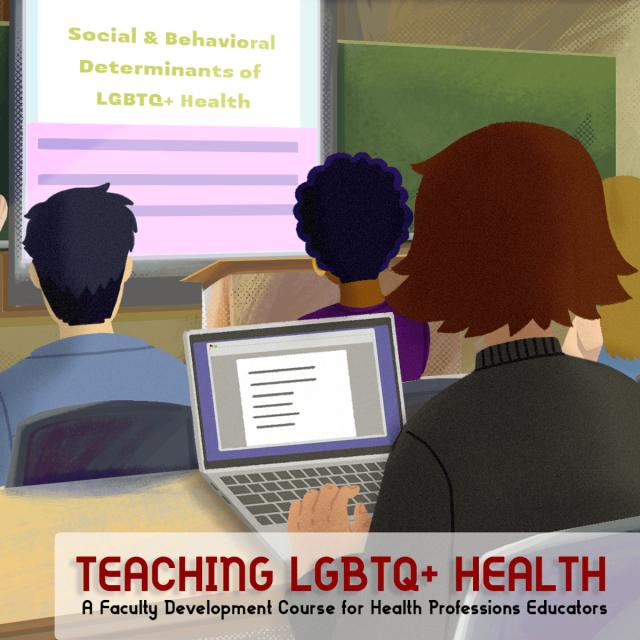
Teaching LGBTQ+ Health (Coursera) Coursera
Stanford University

Teaching LGBTQ+ Health (Coursera)

This curriculum is designed for faculty members and health professions educators. The course goals are to improve your knowledge, teaching skills, and attitudes pertaining to the provision of health care to LGBTQ+ patients.e.g. This is primarily aimed at first- and second-year undergraduates interested in engineering or science, along with high school students and professionals with an interest in programming.

Oct 12th 2026
2 Weeks
Try RRI! A guide for Responsible Research and Innovation (Coursera) Coursera
University of Amsterdam

Try RRI! A guide for Responsible Research and Innovation (Coursera)

In this online course you will learn how to apply Responsible Research and Innovation (RRI) in your own work. First by understanding why it is important to act responsibly in your research and innovation processes at all. In a second step, you will get introduced to several tools that will help make your own work in research and/or innovation more aware by introducing concepts of RRI.

Oct 12th 2026
3 Weeks
ICT in Primary Education: Transforming children's learning across the curriculum (Coursera) Coursera
University of London

ICT in Primary Education: Transforming children's learning across the curriculum (Coursera)

Why and how are teachers integrating ICT (Information and Communication Technology) into primary education? In this course we analyse examples from schools in different parts of the world, and bring professional teachers, headteachers and policymakers together to share their best ideas and inspiring stories. The materials in the course are based on studies carried out for the UNESCO Institute of IT in Education, Moscow.

Oct 5th 2026
5-12 Weeks
Engaging ELLs and Their Families in the School and Community (Coursera) Coursera
Arizona State University

Engaging ELLs and Their Families in the School and Community (Coursera)

In this course, you will learn how to better and more successfully engage your ELL(s) and their families in the school and community. You will learn how to engage your ELL student in the classroom setting as well as in various aspects of the school including extracurricular activities and the inner workings of the school and education system. You will also be introduced to strategies for engaging the families of your ELL students in the school community and the wider community of your city and state.

Oct 5th 2026
5-12 Weeks
Introduction to Academic Writing (Coursera) Coursera
O.P. Jindal Global University

Introduction to Academic Writing (Coursera)

Welcome to the Introduction to Academic Writing course! By the end of this course, you will gain an in-depth understanding of reading and writing as essential skills to conduct robust and critical research. This course introduces you to critical reading and writing skills within the conventions of academic writing.

Oct 12th 2026
4 Weeks
Philosophy, Science and Religion: Philosophy and Religion (Coursera) Coursera
University of Edinburgh

Philosophy, Science and Religion: Philosophy and Religion (Coursera)

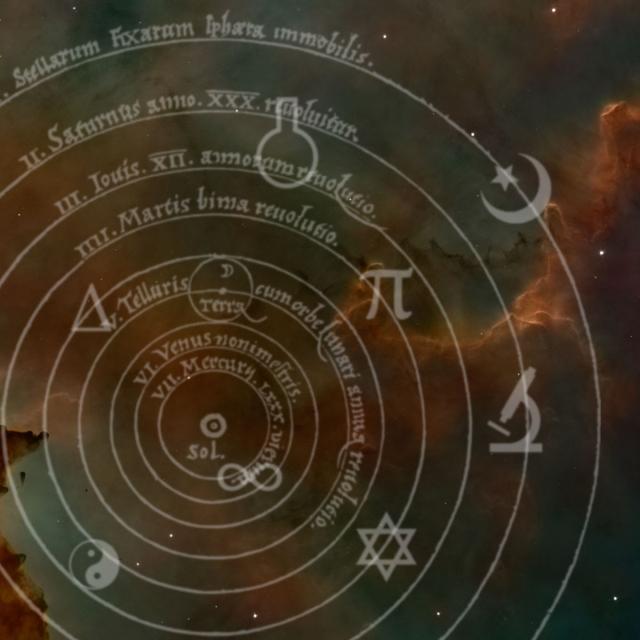
Philosophy, Science and Religion mark three of the most fundamental modes of thinking about the world and our place in it. Are these modes incompatible? Put another way: is the intellectually responsible thing to do to ‘pick sides’ and identify with one of these approaches at the exclusion of others? Or, are they complementary or mutually supportive? As is typical of questions of such magnitude, the devil is in the details. For example, it is important to work out what is really distinctive about each of these ways of inquiring about the world. In order to gain some clarity here, we’ll be investigating what some of the current leading thinkers in philosophy, science and religion are actually doing.

Oct 12th 2026
5-12 Weeks
Aboriginal Worldviews and Education (Coursera) Coursera
University of Toronto

Aboriginal Worldviews and Education (Coursera)

Intended for both Aboriginal and non-Aboriginal learners, this course will explore indigenous ways of knowing and how they can benefit all students. Topics include historical, social, and political issues in Aboriginal education; terminology; cultural, spiritual and philosophical themes in Aboriginal worldviews; and how Aboriginal worldviews can inform professional programs and practices, including but not limited to the field of education.

Oct 5th 2026
5-12 Weeks
Cultures et pédagogies (Coursera) Coursera
University of Geneva

Cultures et pédagogies (Coursera)

Dans ce cours, nous explorons des alternatives pédagogiques qui s'inscrivent dans des contextes historiques, culturels et politiques différents. Vous découvrirez des pédagogies et des pédagogues qui opèrent une rupture avec les approches pédagogiques dominantes de notre société. Nous verrons ensemble les fondements pratiques et théoriques des apports de pédagogues à portée internationale, tels que P. Freire (Brésil) ou J. Krishnamurti (Inde).

Oct 12th 2026
5-12 Weeks
Alexander Technique: Balanced Posture for Ease and Comfort (Coursera) Coursera
University of Michigan

Alexander Technique: Balanced Posture for Ease and Comfort (Coursera)

Many of us spend our days sitting at a desk, looking down at our phones, or moving in ways that cause significant discomfort for our bodies. In the Alexander Technique: Balanced Posture for Ease and Comfort, explore how this novel approach to your body’s organization and coordinated movement can help relieve pain and tension, promote calm, improve sleep, and allow you to breathe fully and easily without effort.

Oct 12th 2026
5-12 Weeks