Introduction to Academic Writing (Coursera)

Introduction to Academic Writing (Coursera)

Welcome to the Introduction to Academic Writing course! By the end of this course, you will gain an in-depth understanding of reading and writing as essential skills to conduct robust and critical research. This course introduces you to critical reading and writing skills within the conventions of academic writing.

Class Deals by MOOC List - Click here and see Coursera's Active Discounts, Deals, and Promo Codes.

In this course, you will learn to effectively communicate your research questions and findings to an interested audience using reading and writing skills. With writing being an important method of thinking, you will learn how the practice of writing allows you to arrive at complex insights about your research area and develop your arguments systematically. This course focuses on the process of developing an argument through the examination of claims and evidence. It also familiarizes you with the structure of academic writing, which will help you better grasp the process of reading academic articles and writing your research. Through a mix of presentations and practice questions, this course provides you with a solid foundation for approaching the process of critical reading and writing in your respective disciplines. It will also cover other writing genres that are relevant to you, including writing for popular media and policy briefs, allowing you to explain how the writing process differs in these areas.

What You Will Learn

  • Identify the structural parts of an academic paper.
  • Construct evidence-based arguments and articulate them within conventions of academic writing.
  • Describe basic skills of writing policy briefs and writing for popular media.
  • Explain how to structure a dissertation or journal article.

Syllabus

WEEK 1
Introduction to Academic Reading and Writing
This module introduces you to the genre of academic writing and its distinction from other writing genres by focusing on the structure of an academic paper. You will learn how to develop your arguments based on claims and evidence. Through a detailed annotation of a sample academic paper, you will learn the basic building blocks of making an evidence-based argument.

WEEK 2
Literature Review and Referencing
Literature review and referencing are two fundamental aspects of research writing. In this module, you will learn how literature review can help you assimilate insights from multiple texts into clear insights. You will discover that referencing is a technical requirement in academic writing and a crucial way to show the credibility of the evidence. This module focuses on the logic and place of literature review and citation in an academic text.

WEEK 3
Writing Policy Briefs and Writing for Popular Media
This module introduces you to a different writing genre, which will enable you to communicate with a wider audience. You will learn about writing policy briefs and writing for popular media in the form of op-eds and blogs. You will gain insights into the useful guidelines for formulating arguments and thinking about diverse audiences.

WEEK 4
Dissertation Writing
In this module, you will learn about the process of writing a dissertation. You will build upon the skills learned in the earlier modules and focus on the stages of dissertation development. You will learn how to arrive at a research question. This module discusses some writing guidelines for publication in peer-reviewed academic journals.

Go to Class
MOOC List is learner-supported. When you buy through links on our site, we may earn an affiliate commission.

Related Courses

Literacy Teaching and Learning: Aims, Approaches and Pedagogies (Coursera) Coursera
University of Illinois at Urbana-Champaign

Literacy Teaching and Learning: Aims, Approaches and Pedagogies (Coursera)

This course opens with an exploration of the social context and aims of literacy teaching and learning. It goes on to describe a range of historical and contemporary approaches to literacy pedagogy, including didactic, authentic, functional, and critical approaches. The course takes has a 'Multiliteracies' perspective, which aims to expand the definition of literacy to encompass today's multimodal communications, and the diversity of literacies across different social and culltural contexts.

Oct 5th 2026
4 Weeks
Assessing Achievement with the ELL in Mind (Coursera) Coursera
Arizona State University

Assessing Achievement with the ELL in Mind (Coursera)

In this course, you will learn how to design assessments around the needs of your ELL students and their language level. You will learn how to incorporate language and content requirements for both formative and summative assessment types. You will learn to assess your ELL students through the use of project and task-based assignments.

Oct 5th 2026
5-12 Weeks
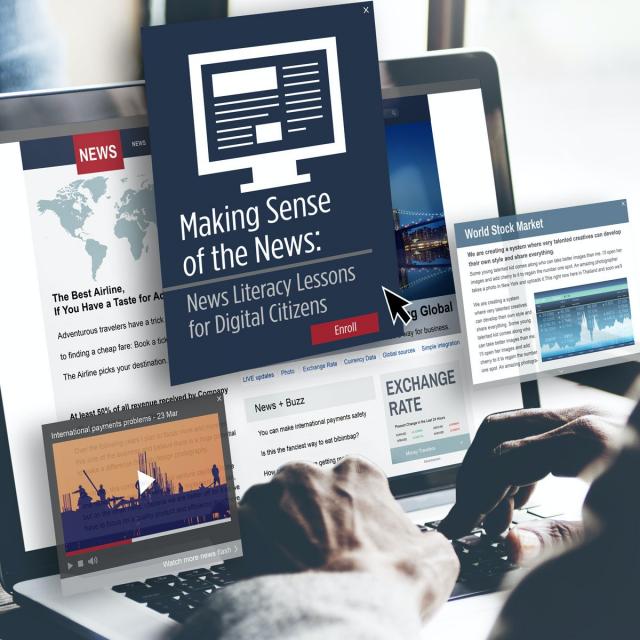
Making Sense of the News: News Literacy Lessons for Digital Citizens (Coursera) Coursera
University of Hong Kong,The State University of New York

Making Sense of the News: News Literacy Lessons for Digital Citizens (Coursera)

Never before has the need for News Literacy been more urgent. As news consumers are bombarded with a constant stream of fake news, propaganda, hoaxes, rumors, satire, and advertising — that often masquerade as credible journalism — it is becoming more and more difficult to distinguish fact from fiction. While the public’s faith in the news media erodes, purveyors of misinformation have helped give rise to troubling cultural trends and alarming political movements.

Oct 5th 2026
5-12 Weeks
Teaching Children with Visual Impairment: Creating Empowering Classrooms (Coursera) Coursera
University of Cape Town

Teaching Children with Visual Impairment: Creating Empowering Classrooms (Coursera)

In the education of children with visual impairment, there is at present a global movement away from segregated special schooling, and towards inclusive neighbourhood schools. Inclusion provides an opportunity for everyone, teachers as well as learners, to become more acquainted about life with visual impairment and to overcome some of the barriers of difference which have existed in the past. But if it is to be successful, teachers and others require key skills and insights in order to create classroom environments which fully accommodate the learning needs of children with visual impairment.

Oct 5th 2026
4 Weeks
Becoming a Language Friendly Teacher (Coursera) Coursera
Erasmus University Rotterdam

Becoming a Language Friendly Teacher (Coursera)

Attention teachers worldwide! Get ready to embark on an exciting journey into the world of language diversity in classrooms. As the global landscape changes, more and more children are speaking languages different from the ones used for instruction. You might have already noticed the rich tapestry of languages spoken by your students and their families, creating a wonderfully diverse environment within your school.

Oct 5th 2026
5-12 Weeks
Serious Gaming (Coursera) Coursera
Erasmus University Rotterdam

Serious Gaming (Coursera)

Have you ever wondered how playing games can help us to train people, deal with societal challenges or raise awareness of contemporary social issues? In this MOOC you will learn the ins and outs of games that are designed with exactly those purposes in mind: serious games. We will define serious games and discuss the different types that have been developed. We will explain why people like to play them and what impact they may have.

Oct 12th 2026
5-12 Weeks
e-Learning Ecologies: Innovative Approaches to Teaching and Learning for the Digital Age (Coursera) Coursera
University of Illinois at Urbana-Champaign

e-Learning Ecologies: Innovative Approaches to Teaching and Learning for the Digital Age (Coursera)

For three decades and longer we have heard educators and technologists making a case for the transformative power of technology in learning. However, despite the rhetoric, in many ways and at most institutional sites, education is still relatively untouched by technology. Even when technologies are introduced, the changes sometimes seem insignificant and the results seem disappointing. If the print textbook is replaced by an e-book, do the social relations of knowledge and learning necessarily change at all or for the better?

Oct 5th 2026
4 Weeks
Aboriginal Worldviews and Education (Coursera) Coursera
University of Toronto

Aboriginal Worldviews and Education (Coursera)

Intended for both Aboriginal and non-Aboriginal learners, this course will explore indigenous ways of knowing and how they can benefit all students. Topics include historical, social, and political issues in Aboriginal education; terminology; cultural, spiritual and philosophical themes in Aboriginal worldviews; and how Aboriginal worldviews can inform professional programs and practices, including but not limited to the field of education.

Oct 5th 2026
5-12 Weeks
Get Interactive: Practical Teaching with Technology (Coursera) Coursera
University of London,Bloomsbury Learning Environment

Get Interactive: Practical Teaching with Technology (Coursera)

This course is designed to help you create dynamic, interactive online courses through the use of multimedia tools, student collaboration opportunities, and formative assessment and feedback. Each week we will focus on a particular topic: Using multimedia for teaching and learning; Encouraging student collaboration; Formative assessment and feedback.

Oct 4th 2026
3 Weeks
Arranging for Songwriters (Coursera) Coursera
Berklee College of Music

Arranging for Songwriters (Coursera)

You've created a song. You wrote the lyrics, decided on the melody, and maybe even recorded a simple demo. Now what? If you have a basic knowledge of how to use a digital audio workstation (DAW) and are passionate about being a songwriter, this course will help you take your song from a simple recording on your phone to a fully arranged song ready for the recording studio.

Oct 5th 2026
4 Weeks
Niños y Adolescentes en la cultura audiovisual y digital (Coursera) Coursera
Pontificia Universidad Católica de Chile

Niños y Adolescentes en la cultura audiovisual y digital (Coursera)

Le damos la más cordial bienvenida al MOOC “Niños y Adolescentes en la cultura audiovisual y digital”, desarrollado por la Facultad de Comunicaciones de la Pontificia Universidad Católica de Chile. Este curso está enfocado en mostrar el rol que tienen los medios de comunicación y las tecnologías frente a los niños y los adolescentes que en la actualidad crecen en una cultura audiovisual y digital.

Oct 5th 2026
4 Weeks