The Learning Innovation Network (Coursera)

Offered by Politecnico di Milano,
The Learning Innovation Network (Coursera)

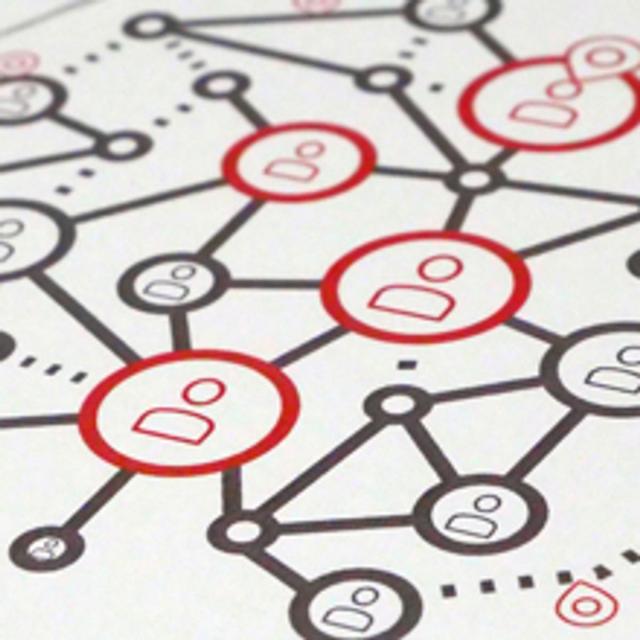
Where to start to innovate your teaching? But before that, what does it mean to innovate in the classroom? Designing Learning Innovation aims to put the designing culture at the service of learning innovation, supporting those who do not have a specific pedagogical background and those who wish to learn the basic tools of a good teaching design then to continue exploring the frontiers of innovation.

Class Deals by MOOC List - Click here and see Coursera's Active Discounts, Deals, and Promo Codes.

Where to start to innovate your teaching? But before that, what does it mean to innovate in the classroom? Designing Learning Innovation aims to put the designing culture at the service of learning innovation, supporting those who do not have a specific pedagogical background and those who wish to learn the basic tools of a good teaching design then to continue exploring the frontiers of innovation.
A set of logical and methodological tools to innovate teaching, finding the most suitable approaches with one’s own vision of the teaching-learning experience.
INTENDED LEARNING OUTCOMES (ILOs)
If you actively participate in this course, at the end you will be able to:

  • apply the Learning Innovation Network framework to describe and design your course;
  • design your course taking into consideration the characteristics of all the actors involved in the network;
  • apply simple strategies for managing an active approach in small, medium and large classrooms;
  • design and produce quality teaching materials also enhancing the availability of “Open Educational Resources”;
  • leverage the external world to design and manage your course.

In the course you will find video lessons and infographic articulated as in the book. You will also encounter different types of activities which will contribute to make your experience richer and more complete.

What you'll learn

  • How to manage active classroom methodologies
  • How to design and produce quality teaching materials also enhancing the availability of “Open Educational Resources”
  • How to design your course taking into consideration the characteristics of all the actors involved in the network
  • How to leverage the external world to design and manage your course

Syllabus

Why Learning Innovation
Module 1
In this first week you will have an introduction to the course.

The Learning Innovation Network: active classroom
Module 2
In this week we will focus, in particular, on the use of Networked Learning to plan learning innovation, starting by identifying and representing the subjects of teaching and learning experience and the definition and description of learning activities for active classes.

The Learning Innovation Network: contents and useful connections
Module 3
In the third week we are going to focus on the planning related to content, channels of communication and strategies to integrate the “outside world” as well as monitoring finalized to assess the efficacy of teaching innovation interventions.

Go to Class
MOOC List is learner-supported. When you buy through links on our site, we may earn an affiliate commission.

Related Courses

Diversity and Inclusion in Education (Coursera) Coursera
University of Glasgow

Diversity and Inclusion in Education (Coursera)

Student diversity is becoming the rule rather than the exception in education systems across the world. Students bring to classroom different characteristics such as ability and disability, socio-economic background, race, ethnicity, and cultural background, beliefs and religion, and gender characteristics. The United Nations’ Sustainable Development Goal 4 aims to ensure inclusive and equitable quality education and promote lifelong learning opportunities for all (United Nations, 2015).

Nov 2nd 2026
4 Weeks
Uncommon Sense Teaching (Coursera) Coursera
Deep Teaching Solutions

Uncommon Sense Teaching (Coursera)

Do your students spend too much (or too little) time learning, with disappointing results? Do they procrastinate in their study because it’s boring and they’re easily distracted? Are you working to make your teaching even more inclusive? Uncommon Sense Teaching will give you practical new insights that will help you solve these goals and challenges, and many more.

Nov 2nd 2026
4 Weeks
Formación docente basada en la práctica para desarrollar habilidades del siglo XXI (Coursera) Coursera
Pontificia Universidad Católica de Chile

Formación docente basada en la práctica para desarrollar habilidades del siglo XXI (Coursera)

El curso presenta, en primer lugar, las habilidades del siglo XXI y su relevancia para la formación docente con el fin de preparar docentes para la sociedad del conocimiento, capaces de pensar de manera crítica y creativa y con habilidades de comunicación y colaboración para promover oportunidades de aprendizaje equitativas y de calidad en los contextos escolares. En segundo lugar, se discute sobre el enfoque basado en la práctica para la formación docente y la necesidad de ofrecer andamiajes que les permitan a los docentes aprender a poner en acto prácticas generativas complejas que requieren conocimientos especializados.

Nov 9th 2026
5-12 Weeks
Assessment in Higher Education: Professional Development for Teachers (Coursera) Coursera
Erasmus University Rotterdam

Assessment in Higher Education: Professional Development for Teachers (Coursera)

Are you a teacher in higher education wanting to get the best out of your students and assessments? Then on behalf of Risbo, Erasmus University Rotterdam, we would like to welcome you to this MOOC on Assessment in Higher Education. In this MOOC we will guide you through the different phases of preparing, creating and evaluating the assessments in your course.

Nov 9th 2026
5-12 Weeks
ICT in Primary Education: Transforming children's learning across the curriculum (Coursera) Coursera
University of London

ICT in Primary Education: Transforming children's learning across the curriculum (Coursera)

Why and how are teachers integrating ICT (Information and Communication Technology) into primary education? In this course we analyse examples from schools in different parts of the world, and bring professional teachers, headteachers and policymakers together to share their best ideas and inspiring stories. The materials in the course are based on studies carried out for the UNESCO Institute of IT in Education, Moscow.

Nov 2nd 2026
5-12 Weeks
Teaching Children with Visual Impairment: Creating Empowering Classrooms (Coursera) Coursera
University of Cape Town

Teaching Children with Visual Impairment: Creating Empowering Classrooms (Coursera)

In the education of children with visual impairment, there is at present a global movement away from segregated special schooling, and towards inclusive neighbourhood schools. Inclusion provides an opportunity for everyone, teachers as well as learners, to become more acquainted about life with visual impairment and to overcome some of the barriers of difference which have existed in the past. But if it is to be successful, teachers and others require key skills and insights in order to create classroom environments which fully accommodate the learning needs of children with visual impairment.

Nov 2nd 2026
4 Weeks
What future for education? (Coursera) Coursera
University of London,UCL Institute of Education

What future for education? (Coursera)

Through this course you will start to critically examine your own ideas about education, teaching and learning. The critique will be developed through engagement with theories and ideas developed through educational research. You will be encouraged to use these ideas to challenge or support your own ideas about education. Each week we will focus on one key question, using video lectures, key readings and challenges to explore some commonplace notions about education.

Nov 9th 2026
5-12 Weeks
Try RRI! A guide for Responsible Research and Innovation (Coursera) Coursera
University of Amsterdam

Try RRI! A guide for Responsible Research and Innovation (Coursera)

In this online course you will learn how to apply Responsible Research and Innovation (RRI) in your own work. First by understanding why it is important to act responsibly in your research and innovation processes at all. In a second step, you will get introduced to several tools that will help make your own work in research and/or innovation more aware by introducing concepts of RRI.

Nov 9th 2026
3 Weeks
Multimodal Literacies: Communication and Learning in the Era of Digital Media (Coursera) Coursera
University of Illinois at Urbana-Champaign

Multimodal Literacies: Communication and Learning in the Era of Digital Media (Coursera)

Whereas the focus of traditional literacy pedagogy has been the written word in its standard and literary forms, this courser expands the scope of literacy learning to encompass contemporary multimodal texts and the wide range of ways of making meaning that occur in different social and cultural contexts. Another course, "Literacy Teaching and Learning: Aims, Approaches and Pedagogies" addresses pedagogical aspects of literacies. This "Multimodal Literacies" learning module does not require or expect that participants will have already completed the "Literacy Teaching and Learning" module.

Nov 9th 2026
4 Weeks
THINK GLOBAL: TEACHERS TRAINING COURSE (IDP-ICE) (Coursera) Coursera
University of Barcelona

THINK GLOBAL: TEACHERS TRAINING COURSE (IDP-ICE) (Coursera)

A group of seven European partners from Catalonia, Belgium, and Wales worked together on the Erasmus+ funded ‘Think Global’ project on global competence. The project seeks to address the following research question through development and piloting of practical classroom activities: What is global competence, and how can it be learned effectively?

Nov 9th 2026
5-12 Weeks
Cultures et pédagogies (Coursera) Coursera
University of Geneva

Cultures et pédagogies (Coursera)

Dans ce cours, nous explorons des alternatives pédagogiques qui s'inscrivent dans des contextes historiques, culturels et politiques différents. Vous découvrirez des pédagogies et des pédagogues qui opèrent une rupture avec les approches pédagogiques dominantes de notre société. Nous verrons ensemble les fondements pratiques et théoriques des apports de pédagogues à portée internationale, tels que P. Freire (Brésil) ou J. Krishnamurti (Inde).

Nov 9th 2026
5-12 Weeks